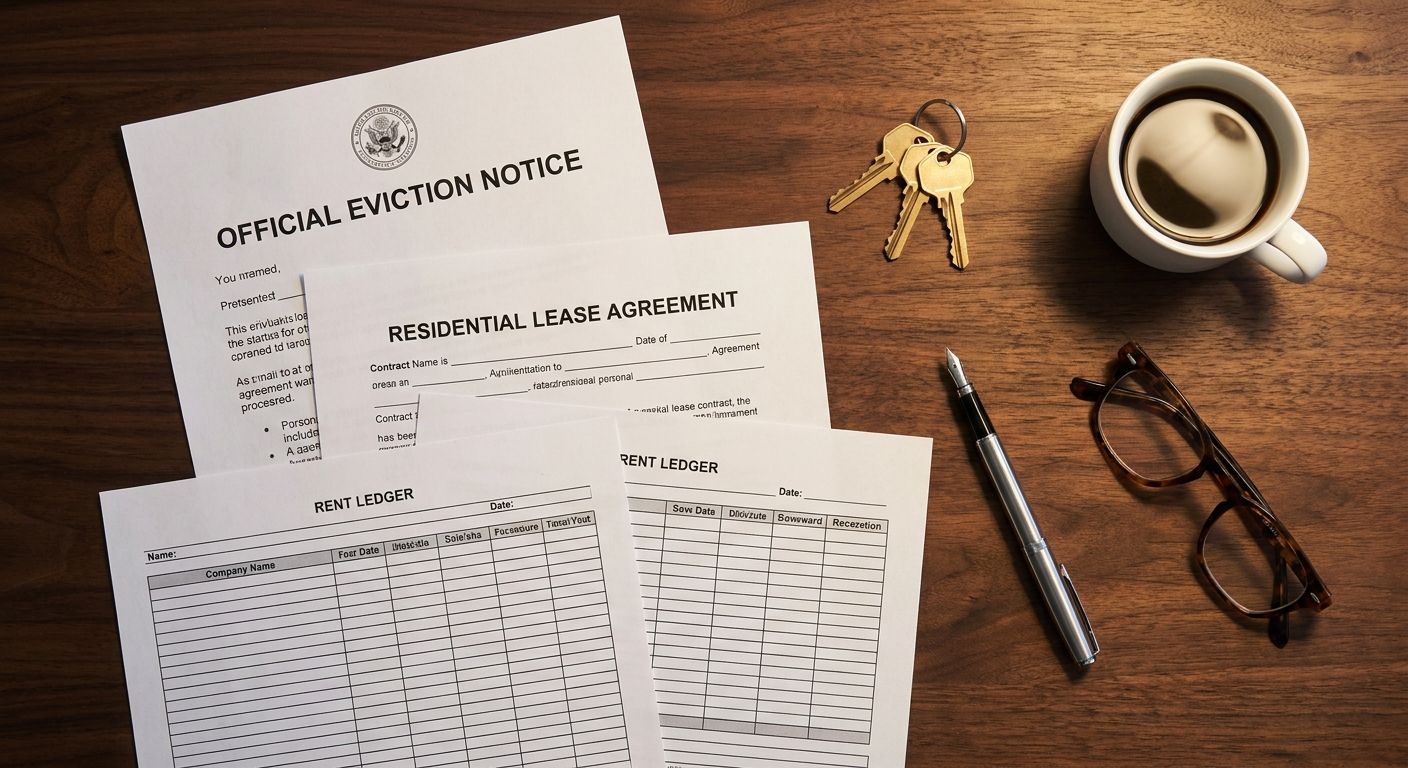
What Every Nassau County Landlord Must Know About Evictions Under HSTPA
Evicting a tenant in Nassau or Suffolk County under HSTPA requires careful compliance with predicate notice requirements, accurate rent ledger documentation, proper service of process, and adherence to the substantive and procedural protections HSTPA created in 2019. The law extended cure periods, required specific notice formats, capped security deposits at one month's rent, restricted certain late fees, and added procedural protections in housing court. Landlords who file evictions without strict HSTPA compliance face dismissals that delay the case for months and increase costs significantly. The right approach is to involve experienced landlord-tenant counsel BEFORE filing to ensure every required step is properly handled.
Key Takeaways
- HSTPA fundamentally changed New York eviction law in 2019 — and most procedural mistakes by landlords now result in case dismissals.
- Predicate notices (the formal notices a landlord must send before filing) are the single most common reason eviction cases are dismissed in Nassau and Suffolk County.
- Security deposits are now capped at one month's rent — and certain late fees are now restricted.
- Nonpayment and holdover proceedings require different predicate notices and follow different procedural paths — choosing the wrong proceeding type leads to dismissal.
- HSTPA extended cure periods, restricted self-help evictions, and added procedural protections in housing court.
- Landlords who try to handle evictions without experienced counsel almost always face dismissals, delays, and lost rent. Working with an attorney before filing is dramatically cheaper than fixing a dismissed case.
How HSTPA Changed Long Island Eviction Law
The Housing Stability and Tenant Protection Act, signed into law in June 2019, was the most significant overhaul of New York landlord-tenant law in decades. For Nassau and Suffolk County landlords, the practical effect has been dramatic:
- Predicate notices now require strict format and content compliance
- Cure periods have been extended significantly
- Security deposits are capped at one month's rent
- Late fees are now restricted
- Procedural protections in housing court have expanded for tenants
- Self-help evictions remain prohibited and now carry expanded penalties
Landlords who learned the eviction process before 2019 — or who base their understanding on outdated guidance from online forums or generic websites — frequently make mistakes that result in dismissals. Cases that should have taken 60-90 days end up taking 6 months or more.
In 27 years of representing Long Island landlords across Nassau District Court, Suffolk District Court, and New York City Housing Court, I have seen every variation of HSTPA-related dismissal. Almost all of them are preventable.
The Two Eviction Proceeding Types
Before discussing the procedural requirements, it's critical to understand the two types of summary proceedings used to evict tenants in New York:
Nonpayment Proceeding
Filed when the tenant has failed to pay rent. The landlord seeks a money judgment for the unpaid rent and possession of the premises. The tenant can typically cure by paying the full amount owed before judgment. Nonpayment proceedings require a 14-day rent demand notice as the predicate notice.
Holdover Proceeding
Filed when the tenant's right to possession has ended for a reason other than nonpayment of rent — for example:
- Expiration of the lease term without renewal
- Material breach of the lease (such as illegal activity, unauthorized occupants, or substantial damage to the property)
- Termination of a month-to-month tenancy
- Nuisance tenancy
Holdover proceedings cannot be cured by paying rent. They require different predicate notices, and the type of notice depends on the reason for termination and the length of the tenancy.
Choosing the wrong proceeding type — or trying to combine them — is one of the most common reasons cases are dismissed.
Predicate Notice Requirements
Predicate notices are the formal written notices a landlord must send to a tenant before filing an eviction proceeding. HSTPA imposed strict requirements on the content, format, and service of these notices.
Nonpayment: 14-Day Rent Demand Notice
Before filing a nonpayment proceeding, the landlord must serve a 14-day rent demand notice. The notice must:
- State the exact amount of rent due
- Itemize the periods covered (e.g., "January 2026 rent: $2,500; February 2026 rent: $2,500")
- Demand payment within 14 days
- State that failure to pay will result in eviction proceedings
- Be served properly
Common defects:
- Demanding amounts other than rent (late fees, attorney's fees, damages) which makes the demand defective
- Mathematical errors in the rent amount
- Missing the period covered
- Improper service
Holdover: Notice of Termination
The required notice depends on the type of tenancy and the reason for termination:
- Month-to-month tenancy: 30-90 day notice depending on length of tenancy under HSTPA
- Lease expiration: Notice requirements depend on lease length and HSTPA tiers (30-90 days)
- Material breach holdover: 10-day notice to cure (for curable breaches) followed by 7-10 day notice of termination
- Nuisance holdover: 7-day notice of termination (for non-curable nuisance behavior)
- Other categories: Specific timing depending on factual posture
Each notice type has specific content and format requirements.
Service of Process Requirements
Predicate notices must be served properly under New York law. Acceptable service methods include:
- Personal delivery to the tenant
- Substituted service on a person of suitable age and discretion at the premises, with mailing
- "Nail and mail" service if personal service cannot be made after diligent effort
Improper service is a frequent ground for dismissal.
Documentation Requirements: The Rent Ledger
A clean, accurate, contemporaneous rent ledger is critical to a successful nonpayment case. The ledger should reflect:
- Each month's rent due and the amount paid
- Dates of each payment
- Any partial payments and how they were applied
- Late fees charged (where permitted) and how they were assessed
- Any prior demand notices and the periods they covered
- Any judgments, payment plans, or stipulations from prior proceedings
A messy or inaccurate rent ledger gives tenants ammunition to challenge the demand, raise affirmative defenses, and seek dismissal. Many Long Island landlord clients I work with have learned to maintain meticulous ledgers specifically because of HSTPA's strictness.
Security Deposit and Late Fee Restrictions
HSTPA imposed significant new restrictions:
- Security deposits are capped at one month's rent. Holding more is illegal.
- Itemized statements of any deductions from the security deposit must be provided within 14 days of move-out.
- Late fees are restricted. Generally late fees may only be charged after a 5-day grace period and are capped (typically the lesser of $50 or 5% of the rent).
Landlords who continue to follow pre-HSTPA practices on these points face statutory penalties and potential damages claims.
Self-Help Evictions Are Strictly Prohibited
New York has long prohibited "self-help" evictions, and HSTPA strengthened these protections. Landlords cannot:
- Change the locks
- Remove the tenant's belongings
- Shut off utilities
- Threaten or intimidate the tenant into leaving
- Take any action to physically displace the tenant without a warrant of eviction issued by a court
Self-help evictions expose landlords to:
- Damages claims by the tenant
- Statutory penalties
- Potential criminal liability under certain circumstances
- Court orders restoring the tenant to possession
The only legal way to evict a tenant in New York is through a court proceeding ending in a warrant of eviction executed by a marshal or sheriff.
Common Mistakes Long Island Landlords Make
In 27 years of practice, the same mistakes keep recurring:
- Using outdated forms and notices. Pre-HSTPA forms result in dismissals.
- Demanding non-rent items in the rent demand notice. This makes the demand defective.
- Filing holdover when nonpayment was the right vehicle, or vice versa.
- Failing to maintain accurate rent ledgers.
- Improper service of predicate notices.
- Holding security deposits exceeding one month's rent.
- Imposing impermissible late fees.
- Engaging in self-help evictions out of frustration.
- Trying to handle the case without an attorney to "save money" — only to face dismissal and start over.
How an Experienced Long Island Landlord-Tenant Attorney Helps
Eviction in Nassau and Suffolk County is procedural — and procedure is where landlord cases live or die. The right attorney:
- Reviews the lease and tenancy structure before any notice is sent
- Drafts predicate notices that comply with HSTPA
- Ensures proper service of process
- Maintains the rent ledger and documentation that will hold up in court
- Files the correct proceeding type (nonpayment vs holdover)
- Appears in Nassau District Court, Suffolk District Court, or NYC Housing Court
- Handles tenant defenses, motion practice, and trial if necessary
- Coordinates with the marshal or sheriff for the warrant of eviction
I have spent 27 years representing Long Island landlords through every variation of these proceedings. Clients work directly with me from intake through warrant of eviction — no paralegal-driven assembly line. The investment in proper legal representation pays for itself in saved time, prevented dismissals, and recovered rent.
If you are a Nassau County or Suffolk County landlord facing a tenant problem — whether it's nonpayment, holdover, lease violations, or any other landlord-tenant matter — call my office for a free consultation BEFORE you file or send a notice.
Long Island Landlord Facing a Tenant Problem? Get the Procedural Compliance That Protects Your Property.
Schedule a free consultation with Thomas A. Sirianni, Esq. — 27 years of landlord-tenant experience across Nassau District Court, Suffolk District Court, and NYC Housing Court.
📞 Call (516) 314-1343
📧 Email tommysirianni@aol.com
Free consultations. Direct attorney access — you work with Tom personally.
Attorney Advertising. Prior results do not guarantee a similar outcome. The information provided in this article is for general informational purposes only and does not constitute legal advice. Reading or interacting with this content does not create an attorney-client relationship. Every landlord-tenant matter is fact-specific. An attorney-client relationship is formed only by a written agreement signed by both Thomas A. Sirianni, Esq. and the client.
More Common Questions
How long does an eviction take in Nassau and Suffolk County?
Evictions in Nassau District Court and Suffolk District Court typically take 2-6 months from filing to warrant of eviction, depending on the type of proceeding, court calendar, and whether the tenant raises defenses. Nonpayment proceedings are usually faster than holdover proceedings. The Housing Stability and Tenant Protection Act (HSTPA) of 2019 added significant procedural requirements that lengthened the process — including mandatory predicate notices, longer cure periods, and stricter pleading standards. Landlords who attempt to file evictions without proper predicate notices, accurate rent ledgers, and complete documentation often face dismissals that further delay the case.
What's the difference between a nonpayment and a holdover proceeding?
A nonpayment proceeding is filed when a tenant has failed to pay rent and the landlord seeks both a money judgment for the unpaid rent and possession of the premises. The tenant can typically cure by paying the full amount owed before judgment. A holdover proceeding is filed when the tenant's right to possession has ended for a reason other than nonpayment — for example, expiration of the lease term, breach of a substantial lease obligation, or a nuisance tenancy. Holdover proceedings cannot be cured by paying rent and require different predicate notices. Choosing the wrong proceeding type, or drafting defective predicate notices, results in dismissals that significantly delay the case in Long Island landlord-tenant courts from Babylon to Smithtown.
Can my landlord lock me out of my apartment in New York?
No. New York prohibits "self-help" evictions. A landlord cannot legally change locks, remove a tenant's belongings, shut off utilities, or otherwise force a tenant out of an apartment without first obtaining a warrant of eviction through a court proceeding. Tenants who experience unlawful lockouts can pursue claims for damages, injunctive relief restoring possession, and in some cases statutory penalties under New York law. Tenants in Nassau or Suffolk County who have been illegally locked out should contact an attorney immediately — the remedies available diminish over time.
What is HSTPA and how did it change New York eviction law?
The Housing Stability and Tenant Protection Act of 2019 (HSTPA) was a sweeping reform of New York landlord-tenant law that significantly expanded tenant protections. Key changes include longer notice periods before eviction, restrictions on security deposits to one month's rent maximum, prohibitions on certain late fees, expanded protections against eviction for low-income tenants, mandatory predicate notices with strict format requirements, and enhanced procedural protections in housing court. HSTPA also expanded rent stabilization protections and tightened restrictions on landlord conduct. Both landlords and tenants need to understand HSTPA's requirements — landlords risk dismissal of cases that fail to comply, and tenants may have defenses they don't realize they have.
What predicate notices does a landlord need to file an eviction in Nassau or Suffolk County?
Predicate notices are formal written notices that landlords must send to tenants before filing an eviction proceeding. The required notice depends on the type of proceeding: nonpayment cases require a 14-day rent demand notice; holdover cases require either a notice to cure (for breach of lease) followed by a notice of termination, or a notice of termination based on the lease type and length of tenancy. HSTPA imposed stricter content requirements, format requirements, and service requirements on predicate notices. Defective predicate notices are one of the most common reasons evictions are dismissed in Nassau District Court and Suffolk District Court.
What is a warrant of eviction and how is it executed?
A warrant of eviction is the court order that authorizes a marshal or sheriff to physically remove a tenant from the premises and restore possession to the landlord. The warrant is typically issued after the landlord obtains a final judgment of possession in housing court. In Nassau and Suffolk County, the warrant is executed by a marshal or sheriff after providing the tenant with a 14-day notice of eviction (the "marshal's notice"). The tenant has the option to vacate voluntarily during this period, or in limited circumstances may apply for a stay. Once the warrant is executed, the tenant's lease is permanently terminated.
Thomas A. Sirianni, Esq.
Long Island Attorney · 27 Years Experience
- Admitted to the New York State Bar (1999)
- Juris Doctor, Touro Law Center (Jacob D. Fuchsberg Law Center), 1998
- Practicing in Nassau County Supreme Court, Suffolk County Supreme Court, Nassau District Court, and Suffolk District Court