Foreclosure Defense Attorney in Flushing, NY (Served with Papers? Start Here)
Flushing homeowners have 20 days to answer a foreclosure summons handed to them and 30 days to answer one served any other way, and the case is heard at Queens County Supreme Court on Sutphin Boulevard in Jamaica, about 25 minutes south. Flushing has more condominium units in foreclosure than any other part of Queens, and a condo owner can be foreclosed twice: by the mortgage lender, and by the condominium board for unpaid common charges under Real Property Law 339-aa. I have defended both for 27 years.
Key Takeaways
- Flushing is in Queens; mortgage and common charge foreclosures are both heard at Queens County Supreme Court, 88-11 Sutphin Boulevard in Jamaica.
- A condominium board's lien for unpaid common charges under Real Property Law 339-z is foreclosed like a mortgage, but it is subordinate to a first mortgage recorded before the charges fell due.
- A Flushing unit owner sued by the board still has the mortgage lender's RPAPL 1304 and 1306 defenses in the lender's case, and the board's case has its own notice and lien-filing requirements.
- Boards settle: a common charge foreclosure is almost always resolved by a payment plan, because the board recovers nothing at auction ahead of the first mortgage.
- The 20 or 30 day answer deadline applies in each action separately, and a default in one does not excuse the other.
- Flushing units carry equity; a sale before either auction pays the mortgage and the common charge lien at closing and keeps the balance for the owner.
Can my Flushing condominium board really foreclose on my unit?
Yes. Under Real Property Law 339-z, unpaid common charges become a lien on the unit once the board files a notice of lien with the City Register, and Real Property Law 339-aa lets the board foreclose it like a mortgage. The action is filed at Queens County Supreme Court in Jamaica and can end in a referee's auction.
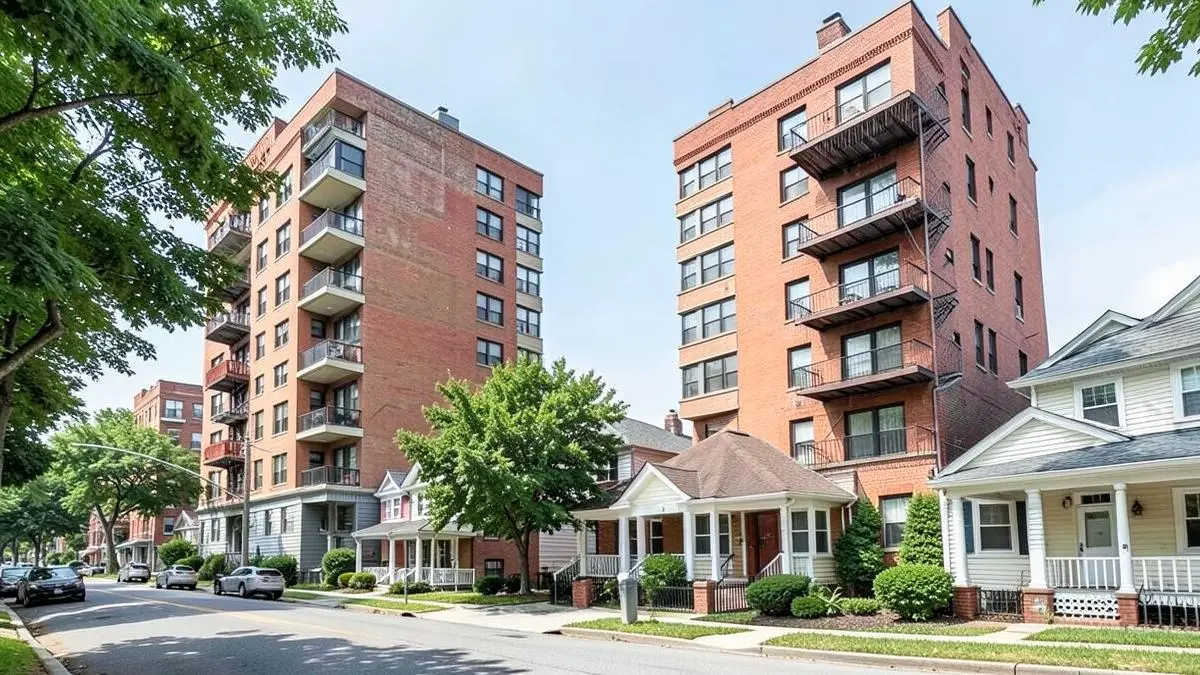
Flushing's condominium stock, from the towers along Main Street to the six-story buildings off Kissena Boulevard, is governed by the Condominium Act, and every unit owner signed on to a declaration and bylaws that make common charges a personal obligation and a charge against the unit. When an owner falls behind, the board's managing agent sends demand letters, then the board's attorney files a notice of lien with the City Register under Real Property Law 339-z. Interest, late fees and the board's attorney's fees are added if the bylaws allow. Six months of arrears is a common trigger for the lawsuit, though nothing in the statute requires the board to wait.
The complaint looks like a mortgage foreclosure and follows the same procedure: summons, notice of pendency, an answer due in 20 or 30 days, motions, an order of reference and a judgment of foreclosure and sale. What is different is the economics. Real Property Law 339-z subordinates the board's lien to a first mortgage of record, so at auction the buyer takes the Flushing unit subject to the mortgage, and the board is paid only from what a bidder will pay for equity above it. In a building where the units are heavily mortgaged, that is little or nothing, and boards know it. The suit is leverage to force payment, not a route to owning the unit, and a unit owner who answers and proposes a realistic plan usually ends the case with a stipulation. A unit owner who ignores it hands the board a judgment for the full arrears, fees and interest, and a lien that must be paid at any sale or refinance.
What happens when the bank and the board both sue over my Flushing unit?
Two separate cases run on two clocks in the same courthouse. The mortgage case carries the RPAPL 1304 and 1306 conditions precedent, the CPLR 3408 conference and the standing and limitations defenses. The board's action carries none of those but is subordinate to the mortgage, and often pauses once the lender sues. Each must be answered on its own deadline.
The two actions interact in ways that a Flushing owner can use. The mortgage lender, once it sues, names the condominium board as a defendant because the board's lien is junior, and the board's answer in the lender's case typically asserts its lien and asks for payment from any surplus. Many boards, having been named, slow their own case, because a judgment of foreclosure in the lender's action will wipe out the board's lien anyway and the board's better route is to insist that the lender pay common charges accruing during the case. Under Real Property Law 339-z as amended, a first mortgagee who takes title at auction is liable for up to six months of unpaid common charges in certain buildings, which gives boards a reason to press the lender rather than the owner.
In the lender's action the full set of defenses applies: the RPAPL 1304 90-day notice mailed separately to each borrower with a Queens County counselor list, the RPAPL 1306 filing within three business days, standing, the six-year CPLR 213(4) limitations period, and the mandatory CPLR 3408 settlement conference for an owner-occupied unit. In the board's action the defenses are narrower but real: whether the notice of lien was properly filed and served, whether the charges were levied in accordance with the bylaws, whether special assessments were validly adopted, and whether the fees and interest claimed are authorized. I answer both cases, keep the lender's case in the conference part where a modification is negotiated, and negotiate the board's arrears into a plan that runs alongside it. A Flushing owner who settles with the board while the lender's case is pending removes the board's motive to push and keeps the building's management from making the mortgage negotiation harder than it needs to be.
Where are Flushing foreclosure cases heard?
Flushing mortgage and common charge foreclosures are both heard at Queens County Supreme Court, 88-11 Sutphin Boulevard in Jamaica, about 25 minutes away by the Q44 or the Van Wyck. CPLR 3408 conferences in the lender's case run in the settlement conference part, the assigned justice decides motions in both actions, and any auction is at the courthouse.
Flushing residents are far from the Sutphin Boulevard courthouse in Jamaica in every sense but the map, and the Queens court system has adapted: interpreters in Mandarin, Cantonese and Korean are available in the conference part on request, and the court's foreclosure documents are published in translation. I have practiced foreclosure defense for 27 years, and I have watched the Jamaica courthouse become one of the more accommodating in the state for homeowners whose first language is not English, which matters when a settlement conference turns on whether the servicer's application checklist was understood.
The court attorney referees in the conference part supervise the CPLR 3408 conferences in the lender's case, record whether the servicer negotiates in good faith, and are accustomed to Flushing files where the unit's common charges and a building assessment are part of the affordability picture. The assigned justices decide the ordinary motions, standing, RPAPL 1304, CPLR 213(4) and the amount due in the mortgage case, and the validity of the lien and the charges in the board's case. A contested Flushing mortgage foreclosure runs two to four years from the summons to any auction; a board's action moves faster on paper but almost always settles. An unanswered case of either kind reaches judgment far sooner, and an unanswered common charge case leaves a judgment for fees that can double the arrears.
Did the lender comply with RPAPL 1304 and 1306 on a Flushing condo loan?
Yes. A mortgage on a Flushing condominium unit that is the borrower's principal residence is a home loan, so the lender had to mail each borrower a separate RPAPL 1304 90-day notice by certified and regular mail with a counselor list and file under RPAPL 1306 within three business days. The board's action has no such requirement.
Condominium lenders sometimes argue that the statute was written for houses, and the argument fails; RPAPL 1304 defines a home loan by the borrower's occupancy and the loan's purpose, not the form of ownership, and unit mortgages across Flushing are covered. The Second Department, which hears appeals from Queens, requires strict compliance and puts the burden on the plaintiff to prove the mailing by a witness with personal knowledge or a standard practice the witness actually follows. Flushing loans were originated in volume by a handful of lenders during the 2000s condo boom and sold repeatedly, and the current plaintiff frequently cannot produce that witness. Notices sent to two borrowers in a single envelope, notices mailed to the unit when the borrower had given a different mailing address, and boilerplate affidavits have each been rejected. RPAPL 1304 also requires the notice to be available in the borrower's language where the servicer has that information, and a Mandarin-speaking Flushing borrower who received only English is a fact worth developing.
RPAPL 1306 requires the electronic filing with the Department of Financial Services within three business days of mailing, proven by the confirmation, and a complaint that pleads the filing without the confirmation has not established it. Failure on either statute ends the lender's case without prejudice and forces a restart of the 90-day process. None of this reaches the board's case, which has its own requirements under Real Property Law 339-z and the bylaws, and a Flushing owner facing both cannot let a strong notice defense in the lender's case become an excuse to ignore the board's.
What is the deadline to answer, and do I answer both cases?
Each case has its own deadline: 20 days after personal delivery or 30 days after other service, with substituted service complete ten days after the affidavit is filed with the Queens County Clerk. A Flushing owner served in both actions answers both, pleading standing, CPLR 213(4), RPAPL 1304 and 1306 against the lender and disputing the board's lien.
The two summonses may arrive weeks apart and look alike, and a Flushing owner who answers the bank and assumes the board is covered, or the reverse, defaults in the other case. Each default has consequences. In the lender's action a default forfeits standing, the notice defenses and the statute of limitations, eliminates the mandatory settlement conference, and moves the unit toward auction in about a year. In the board's action a default produces a judgment for the arrears plus every fee and interest charge the bylaws allow, and that judgment becomes a lien the owner must satisfy to sell, refinance or even complete a modification, since lenders will not modify a loan on a unit with an unresolved board judgment.
The lender's answer pleads standing first or it is waived, the six-year limitations period as an affirmative defense, the RPAPL 1304 and 1306 conditions precedent, and a specific denial of the amount claimed, and it states that the owner occupies the Flushing unit so the CPLR 3408 conference is required. The board's answer challenges the lien filing and its service, the adoption of any special assessment, the calculation of interest and late fees, and the reasonableness of the attorney's fees claimed, and it may counterclaim where the board has failed in its own obligations to the unit. Nothing said to the managing agent or the servicer extends either deadline; a written stipulation from the plaintiff's attorney does, and I obtain them in both cases when an owner needs time to assemble records. Miss a deadline and a motion to vacate is still available, but it costs more than answering did.
What are my options for keeping or selling the Flushing unit?
You own the Flushing unit until a referee delivers a deed in either action, and until then you can reinstate the mortgage, modify through the CPLR 3408 conference part, settle the common charges on a payment plan, sell with the lender and the board paid at closing, or short sell with an RPAPL 1371 waiver and the board's release.
For the Flushing owner who wants to stay, the mortgage is modified through the conference part on Sutphin Boulevard, and the modification application must show the common charges as a housing expense; a servicer that ignores them produces a payment the household cannot carry, and a court attorney referee will send it back. The board's arrears are settled separately, usually on a plan of twelve to twenty-four months with the board's fees reduced in exchange for reliable payment, and the two agreements are timed so that one does not break the other. A reinstatement of the mortgage combined with a board plan ends both cases at once.
For the owner who is leaving, a sale while the cases are pending is the clean exit. Flushing units bought before 2015 carry real equity, the buyer's title company pays the mortgage and the board's lien at closing, the board issues its estoppel letter and waiver of the right of first refusal, and the balance is the owner's. The auction is the outcome to avoid in either case: a discounted price, default interest, the board's fees and the lender's fees off the top, and any surplus deposited with the Queens County Clerk until an RPAPL 1361 claim is filed. Where the unit is worth less than the mortgage, a short sale needs the lender's consent, a written RPAPL 1371 waiver of the deficiency, and the board's agreement to release its lien for what the sale can pay, which boards give when the alternative is a bank-owned unit that pays nothing. I coordinate all three parties for Flushing owners, and the sale closes.
How a foreclosure moves through Queens County Supreme Court
- Default and the 90-day notice
At about 90 days delinquent the servicer mails the RPAPL 1304 notice to each Flushing borrower with a Queens County counselor list and files under RPAPL 1306; federal rules bar suit until more than 120 days of delinquency. The board, separately, may file its notice of lien at any time after common charges go unpaid.
- Summons and notice of pendency, in one or both actions
The lender or the board files at Queens County Supreme Court, records a notice of pendency against the unit with the City Register, and serves you. Twenty days to answer after hand delivery, 30 otherwise, in each case; the answer preserves every defense.
- CPLR 3408 conferences on Sutphin Boulevard
In the lender's action, about 60 days after proof of service the owner-occupied unit gets its first conference. The court attorney referee supervises the modification review, with common charges counted, and records the servicer's good faith. Board arrears are negotiated in parallel.
- Summary judgment and RPAPL 1321 referee
If nothing settles, the plaintiff moves for summary judgment and an order of reference. The assigned justice decides standing, notice and limitations defenses in the lender's case and lien validity in the board's; the referee computes the debt subject to objections.
- Judgment of foreclosure and sale
Once the referee's computation is confirmed, the Flushing judgment is signed and the sale advertised. A completed modification, board settlement or unit sale can still close before the auction, and defects in service or notice support a motion to vacate.
- Auction and post-sale
The referee sells the Flushing unit at the courthouse and delivers a deed, subject to the first mortgage in a board's action. Any surplus is recovered under RPAPL 1361, a deficiency needs an RPAPL 1371 motion within 90 days of the deed, and no Flushing occupant is removed except through Housing Court.
Frequently Asked Questions
My condo board in Flushing filed a lien and is threatening to foreclose. Can they take my apartment?
They can sue and, if you never answer, obtain a judgment and sale, but the sale is subject to your first mortgage, so the board recovers little at auction and nearly always settles for a payment plan. Answer the case, challenge the fees, and propose a plan. Call (516) 314-1343 before the answer deadline runs.
I got two summonses, one from the bank and one from the board. Do I need to answer both?
Yes. They are separate actions with separate deadlines, and a default in either has its own consequences: loss of every defense and the settlement conference in the lender's case, and a judgment for arrears and fees that blocks any sale or modification in the board's.
Does the 90-day notice law apply to a condominium mortgage?
Yes. RPAPL 1304 covers a loan secured by a Flushing condominium unit that is the borrower's principal residence. The lender had to mail each borrower a separate notice by certified and first-class mail with a counselor list and file under RPAPL 1306. The board's common charge action has no such requirement.
How long does a Flushing foreclosure take?
A contested mortgage case generally runs two to four years from the summons to any auction at the Sutphin Boulevard courthouse, through the CPLR 3408 conferences, motions, the RPAPL 1321 order of reference and the judgment. A board's common charge action moves faster on paper but almost always ends in a stipulated payment plan.
Will the servicer count my common charges when it reviews me for a modification?
It must, and I make sure it does. Common charges and any assessment are a housing expense in the affordability calculation. A modification that ignores them produces a payment you cannot carry, and the court attorney referee at the conference will require the servicer to redo it.
Can I sell my Flushing condo while the cases are pending?
Yes. You hold title until a referee's deed is delivered after an auction, and you can contract and close at any time before then. The lender and the board are paid at closing, the board issues its estoppel letter and waiver, and the remaining equity is yours.
Is the first consultation free for Flushing homeowners?
Yes. Call (516) 314-1343 and bring every summons and complaint you received, the 90-day notice and its envelope, mortgage statements, the board's lien notice and arrears ledger, and recent income documents. I will tell you what each plaintiff must prove and how the two cases fit together.
More on New York foreclosure defense
- How Long Does Foreclosure Take in New York? The Complete Timeline for Long Island Homeowners (2026)
Most New York foreclosures take 1 to 3 years, and Long Island cases often run longer. A breakdown of all 7 stages and the deadlines that matter.
- What Happens If You Don't Answer a Foreclosure Summons in New York? A Long Island Defense Attorney Explains Your 3 Ways Back In (2026)
In New York you have 20 to 30 days to answer a foreclosure summons. Miss it and you are in default, but three routes back into the case remain open...
- How to Stop a Foreclosure Sale in Nassau County: A Step-by-Step Guide from a Long Island Foreclosure Defense Attorney
A foreclosure sale date is not the end of the road. New York gives homeowners multiple legal tools to stop, delay, or dismiss a foreclosure, but...
- How Much Does a Quiet Title Action Cost in New York? The Real Numbers and the Timeline (2026)
Court fees for a New York quiet title action run about $400, and attorney fees depend on who fights back. The real numbers and the timeline.
- Can a Sibling Force the Sale of an Inherited House in New York? RPAPL 901 and the Heirs Property Buyout (2026)
Under RPAPL 901 any co-owner can force the sale of an inherited house in New York. The buyout right that can stop the sale and who pays the costs.
- How to Protect Your Long Island Home From Nursing Home Costs
The biggest threat to most Long Island homes isn't foreclosure, it's the cost of long-term care. Here is how a Medicaid Asset Protection Trust, New...
Served with foreclosure papers in Flushing? Call for a free consultation.
Queens homeowners: I will review where your case actually sits, which deadlines are live, and which options are still open, at no cost for the initial consultation. I answer my own phone, 7 days a week, 6:00 AM to 8:00 PM.
Attorney advertising. This page is general information about New York law only, not legal advice, and does not create an attorney-client relationship. Prior results do not guarantee a similar outcome.