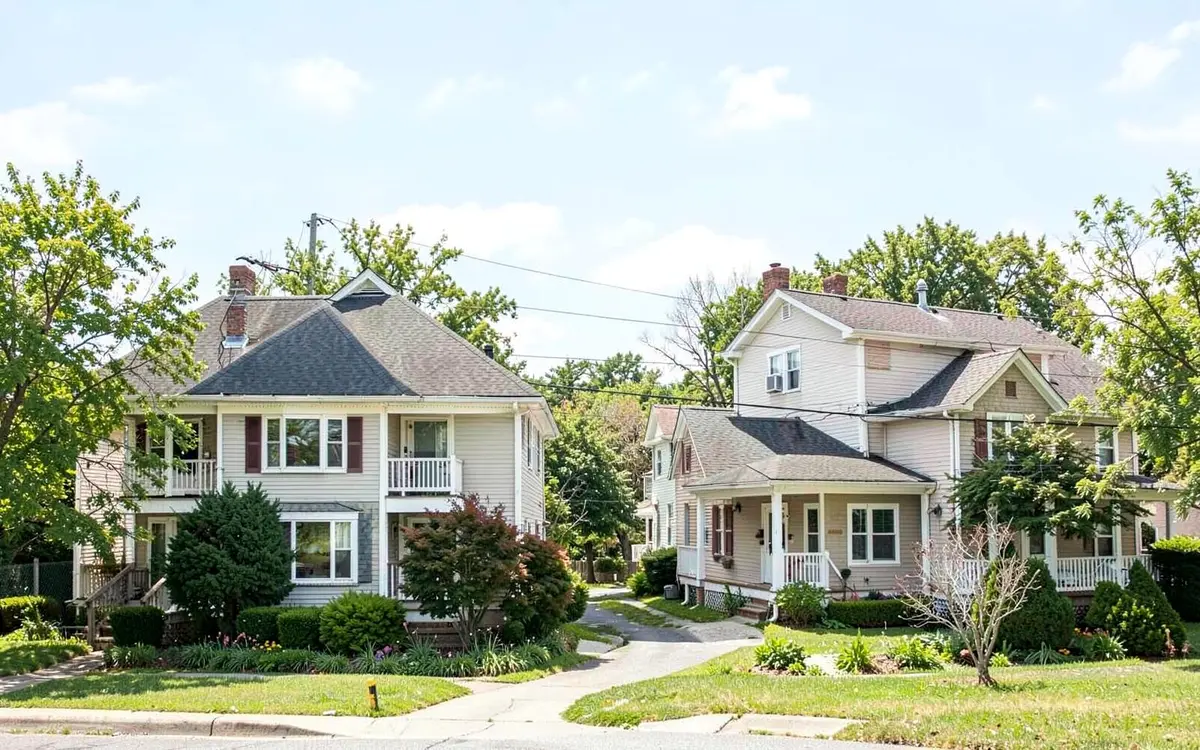
Patchogue Foreclosure Lawyer: Your Deadlines, the Riverhead Court, and Your Options
Patchogue homeowners served with a foreclosure summons have 20 days to answer after personal delivery and 30 days after any other service, and that answer buys the two to four years a contested Suffolk County case takes to reach an auction. The case is heard in Suffolk County Supreme Court in Riverhead, where the lender must prove a proper RPAPL 1304 notice and its own standing and negotiate in good faith under CPLR 3408. Many Patchogue homeowners in foreclosure have equity, and protecting it starts with answering.
Key Takeaways
- Patchogue is in the Town of Brookhaven; the Village of Patchogue adds its own tax lien on top of town, county and school taxes.
- All Patchogue foreclosures are heard in Suffolk County Supreme Court in Riverhead, about 30 minutes east on Sunrise Highway.
- Rising Patchogue values mean many homeowners in foreclosure have equity that an auction will destroy and a planned sale will preserve.
- Owners who live in one unit of a two-family get the CPLR 3408 conference; pure investors do not as of right.
- Surplus after an auction is yours under RPAPL 1361 only if you file a claim; deficiency under RPAPL 1371 has a 90-day window.
- The Foreclosure Abuse Prevention Act closed the de-acceleration loophole; older refiled Patchogue cases are often time-barred.
What happens to my equity if the house sells at auction?
Most of it disappears. At a Riverhead auction bidders pay a discount, and the lender's fees, years of default interest and referee costs come off the top before a Patchogue homeowner sees a dollar. Any surplus is yours under RPAPL 1361, but a planned sale before the auction almost always preserves far more equity.
Patchogue is a different place than it was fifteen years ago. The Main Street revival brought restaurants, new apartments and a lot of buyers, and it pushed assessed values and village taxes up with them. For a longtime homeowner on a fixed income, or a family whose escrow jumped by several hundred dollars a month when the tax bills reset, that appreciation is a mixed blessing. It also means many Patchogue homeowners in foreclosure have significant equity, and equity changes the entire strategy.
If you have equity, an auction is the worst possible outcome. Auction buyers in Riverhead pay a discount, the lender's fees and years of default interest come off the top, and what should have been your money becomes theirs. A homeowner with equity should be answering the complaint to buy time, and then either curing the default or selling on the open market. Both are far better than letting the referee's gavel decide the price.
Where are Patchogue foreclosure cases heard?
Patchogue foreclosures, inside or outside the village, are heard in Suffolk County Supreme Court in Riverhead, about 30 minutes east on Sunrise Highway. The foreclosure part there runs CPLR 3408 conferences before court attorney referees and the assigned justice decides the lender's motions. It rewards preparation and is unforgiving of homeowners who never appear.
Patchogue cases are heard in Suffolk County Supreme Court in Riverhead, about a half hour east on Sunrise Highway. I have been appearing in that courthouse since the late 1990s, and I will tell a Patchogue client the same thing I tell everyone: the foreclosure part in Riverhead is fair, it is experienced, and it is unforgiving of homeowners who do not show up. The referees who run the CPLR 3408 conferences will push a servicer hard when I can document months of stalling on a complete modification package, and the justices will deny a lender's summary judgment motion when the standing affidavit is hearsay dressed up as business records. None of that happens for a homeowner who let the case default. Appear, prepare, and Riverhead is a court where Patchogue families keep their homes or leave them whole.
Who else has a lien on my Patchogue home besides the bank?
Inside the Village of Patchogue, a homeowner owes village taxes plus Town of Brookhaven, Suffolk County and Patchogue-Medford school taxes, and each unpaid bill becomes a lien. A servicer will require taxes current or escrowed in any modification, and every lien must be paid or negotiated at a short sale closing.
Homes inside the Village of Patchogue pay village taxes on top of Town of Brookhaven and Suffolk County taxes and Patchogue-Medford school taxes. When a homeowner stops paying the mortgage, those bills do not stop, and if the loan has no escrow they pile up as separate liens. In a modification review, the servicer will require taxes to be current or escrowed, and in a short sale every one of those liens has to be paid or negotiated at closing. I map out every lien on a Patchogue property at the start of a case so there are no surprises when we are trying to close a resolution.
What is the 90 day notice under RPAPL 1304, and did my lender send it correctly?
Before suing on a Patchogue loan, the lender must mail each borrower a separate 90-day notice under RPAPL 1304 in 14-point type by certified and first-class mail, and file it with the Department of Financial Services within three business days under RPAPL 1306. Both are conditions precedent that Suffolk judges enforce strictly.
Every New York foreclosure lender must send a compliant 90-day notice under RPAPL 1304 and file it with the Department of Financial Services within three business days under RPAPL 1306 before it files suit. Those are conditions precedent, and Suffolk County judges dismiss cases where the lender cannot prove strict compliance. The lender must also prove standing, meaning it held the note when it filed, and Patchogue mortgages from the boom years changed hands enough times that this is a real issue.
The defense that ends cases outright is the statute of limitations. Under CPLR 213(4) the lender has six years from acceleration. The Foreclosure Abuse Prevention Act, effective December 2022, closed the loophole lenders used to reset that clock by discontinuing and refiling. If your loan was accelerated in an earlier case that was dismissed, and the six years have run, the current action can be dismissed and the mortgage may be cancelled of record. I check every Patchogue file's history in the county clerk's index for that reason.
What if my Patchogue home is a two-family or has tenants?
A Patchogue owner who lives in one unit of a two-family still gets the mandatory CPLR 3408 conference and can count rental income toward a modification. Tenants keep their bona fide lease or at least 90 days under RPAPL 1305 after a sale. A pure investor has no conference as of right and real deficiency exposure under RPAPL 1371.
Patchogue has a deep stock of two-family homes and small rental properties, and I represent a lot of owners who live in one unit and rent the other. Two things to know. First, the mandatory settlement conference under CPLR 3408 applies to owner-occupied residential property, so if you live there, you get the conference even if you also rent out a unit. Second, your tenant's rights and yours run on separate tracks. Under RPAPL 1305, a bona fide tenant can stay for the remainder of the lease or 90 days after title transfers, whichever is longer, regardless of what happens to your mortgage.
For a pure investor, the analysis is harder-edged. There is no CPLR 3408 conference as of right on non-owner-occupied property, the modification programs are thinner, and the deficiency judgment exposure under RPAPL 1371 is real. Investors in foreclosure on Patchogue rentals should be thinking about a negotiated sale or short sale with a deficiency waiver early, not late.
What is a deficiency judgment, and can the lender come after me?
After a Patchogue auction the lender may move for a deficiency judgment under RPAPL 1371 within 90 days of the referee's deed, limited to the amount the debt exceeds the property's fair market value. Given Patchogue values, deficiencies are less common than surplus claims under RPAPL 1361, but a written waiver in any short sale eliminates the risk.
If a Patchogue property is sold at auction, the referee delivers a deed to the buyer and the case moves into its final phase. If the sale brought more than the total debt and costs, the surplus is yours, and you claim it by a surplus money proceeding under RPAPL 1361; in Patchogue, with the values here, that surplus can be a life-changing sum, and it does not get sent to you automatically. If the sale brought less, the lender can move for a deficiency judgment under RPAPL 1371, but only within 90 days of delivery of the deed and only for the amount by which the debt exceeds the property's fair market value. A homeowner still living in the house after the sale cannot be removed without further court process, but the clock at that point is short and the options are few. The time to make decisions is years earlier, at the answer stage.
How a foreclosure moves through Suffolk County Supreme Court
- The 90-day notice and pre-suit window
The servicer mails the RPAPL 1304 notice to each Patchogue borrower and files it under RPAPL 1306 with the state. Suit cannot be filed until the period runs and the loan is over 120 days delinquent. Village, town and school tax arrears should be mapped now, because they affect every later option.
- Summons, complaint and notice of pendency
The lender files in Suffolk County Supreme Court in Riverhead and records a notice of pendency against the Patchogue property, which is what triggers the flood of investor letters. Twenty days to answer after personal delivery, 30 otherwise. Defenses not pleaded may be waived.
- CPLR 3408 conferences
For owner-occupied Patchogue homes, Riverhead sets the first conference within about 60 days after proof of service. A court attorney referee supervises the modification review and documents good faith on both sides. This phase commonly lasts six months to a year in Suffolk.
- Summary judgment and RPAPL 1321 referee
If no resolution, the lender moves for summary judgment and an order of reference. The assigned justice decides opposition based on notice, standing and CPLR 213(4). A referee then computes the debt, and the homeowner can object to fees, escrow items and interest.
- Judgment of foreclosure and sale
With the referee's report confirmed, the court signs the judgment and the sale is noticed. This is the last practical window for a Patchogue homeowner with equity to close a conventional sale rather than lose that equity at auction.
- Auction, surplus and deficiency
Surplus must be claimed under RPAPL 1361. A deficiency motion under RPAPL 1371 is due within 90 days of the deed. Former owners and RPAPL 1305 tenants can be removed only through further court process.
Frequently Asked Questions
How long can I stay in my Patchogue home during foreclosure?
Until title actually transfers at the auction and, in practice, usually some weeks beyond that, because a new owner needs a further court order to remove a former owner who remains. In a contested Suffolk County case that typically means two to four years from the summons. During that entire time you remain the legal owner, with the right to live in, rent, or sell the property.
What is a notice of pendency and why is one filed on my Patchogue property?
A notice of pendency, sometimes called a lis pendens, is a document the lender records with the Suffolk County Clerk when it files the foreclosure. It warns anyone dealing with the property that a lawsuit is pending. It does not transfer ownership or prevent you from selling, but any buyer takes the property subject to the outcome of the case, which is why the lender's lien must be paid or released at any closing.
Do landlords get a settlement conference in Suffolk County foreclosure?
The mandatory CPLR 3408 conference applies to residential foreclosures where the borrower lives in the property. An owner who lives in one unit of a two-family Patchogue home qualifies. A pure investor who does not reside there is not entitled to the conference as of right, although the court may still refer the case for settlement, and negotiation with the lender remains possible.
Can I get a loan modification if I have already been denied once?
Often, yes. Denials are frequently driven by incomplete files, expired documents, or income calculations that can be corrected. A change in circumstances, such as a new job or a household member's income, also supports a new application. At the settlement conference the servicer must review a complete application and explain a denial, and a documented pattern of unjustified denials can be raised with the court as a good faith issue.
Is it worth hiring a foreclosure defense attorney if I plan to sell anyway?
Usually. An attorney answering the complaint preserves the time you need to sell at a fair price rather than at auction, handles the lender's payoff and any short sale approval, negotiates a written deficiency waiver if you are underwater, and makes sure a surplus is claimed if there is one. Selling under a foreclosure deadline without counsel is how equity disappears.
Is there a free consultation for Patchogue homeowners facing foreclosure?
Yes. A free consultation for Patchogue homeowners starts with a call to (516) 314-1343. Bring the summons, the 90-day notice, recent mortgage statements, your village and town tax bills, and any leases if the property has tenants. For Patchogue owners with equity, the first meeting is usually about how to protect that equity, not just how to fight the case.
Can a statute of limitations defense end my Patchogue foreclosure?
It can. CPLR 213(4) gives the lender six years from acceleration, and the Foreclosure Abuse Prevention Act of 2022 prevents lenders from discontinuing and refiling to restart that period. If an earlier foreclosure on your Patchogue loan was filed and dismissed more than six years ago, the current action may be time-barred and the mortgage may be cancelled of record.
More on New York foreclosure defense
- How Long Does Foreclosure Take in New York? The Complete Timeline for Long Island Homeowners (2026)
Most New York foreclosures take 1 to 3 years, and Long Island cases often run longer. A breakdown of all 7 stages and the deadlines that matter.
- What Happens If You Don't Answer a Foreclosure Summons in New York? A Long Island Defense Attorney Explains Your 3 Ways Back In (2026)
In New York you have 20 to 30 days to answer a foreclosure summons. Miss it and you are in default, but three routes back into the case remain open...
- How to Stop a Foreclosure Sale in Nassau County: A Step-by-Step Guide from a Long Island Foreclosure Defense Attorney
A foreclosure sale date is not the end of the road. New York gives homeowners multiple legal tools to stop, delay, or dismiss a foreclosure, but...
- Surplus Money Proceedings in New York Foreclosure: How to Claim the Excess
How surplus money proceedings work after a New York foreclosure sale: who gets the excess, how to file a claim, and the deadlines Nassau & Suffolk...
- Partition Action New York: Forcing the Sale of Inherited or Jointly Owned Property
Long Island home values have made buyouts of co-owned and inherited property hard. Here is how a partition action in New York actually forces a sale...
- How Long Does It Take to Get Surplus Funds After a New York Foreclosure? The Real Payout Timeline (2026)
Most former homeowners wait six months to a year to receive foreclosure surplus funds in New York. Each stage of the payout and what slows it down.
Served with foreclosure papers in Patchogue? Call for a free consultation.
Suffolk County homeowners: I will review where your case actually sits, which deadlines are live, and which options are still open, at no cost for the initial consultation. I answer my own phone, 7 days a week, 6:00 AM to 8:00 PM.
Attorney advertising. This page is general information about New York law only, not legal advice, and does not create an attorney-client relationship. Prior results do not guarantee a similar outcome.