How Long Does Adverse Possession Take in New York? 10 Years, and Why Most Long Island Fence Disputes Still Fail (2026)
Adverse possession in New York takes 10 years. That is the limitations period in CPLR 212(a), and RPAPL 501 says title passes to the adverse possessor only when that period runs out. But the clock is the easy part. Since July 2008, New York also requires that the possession be actual, open and notorious, exclusive, continuous, and under a claim of right, which the statute defines as a reasonable basis for believing the land was yours. And RPAPL 543 now says that fences, hedges, shrubs, sheds, and lawn mowing across a boundary line are permissive, not adverse. In my experience most Long Island neighbor disputes fail on those two rules, not on the calendar.
Key Takeaways
- The period is 10 years of continuous possession under CPLR 212(a). Nothing shorter works, and the ten years must be complete before the true owner sues to recover the land.
- Time alone is not enough. RPAPL 501(2) requires possession that is adverse, under claim of right, open and notorious, continuous, exclusive, and actual, all at once, for the entire period.
- Since the 2008 amendments, "claim of right" means a reasonable basis for believing the property belongs to you. Knowingly grabbing a neighbor's strip of land generally no longer ripens into title.
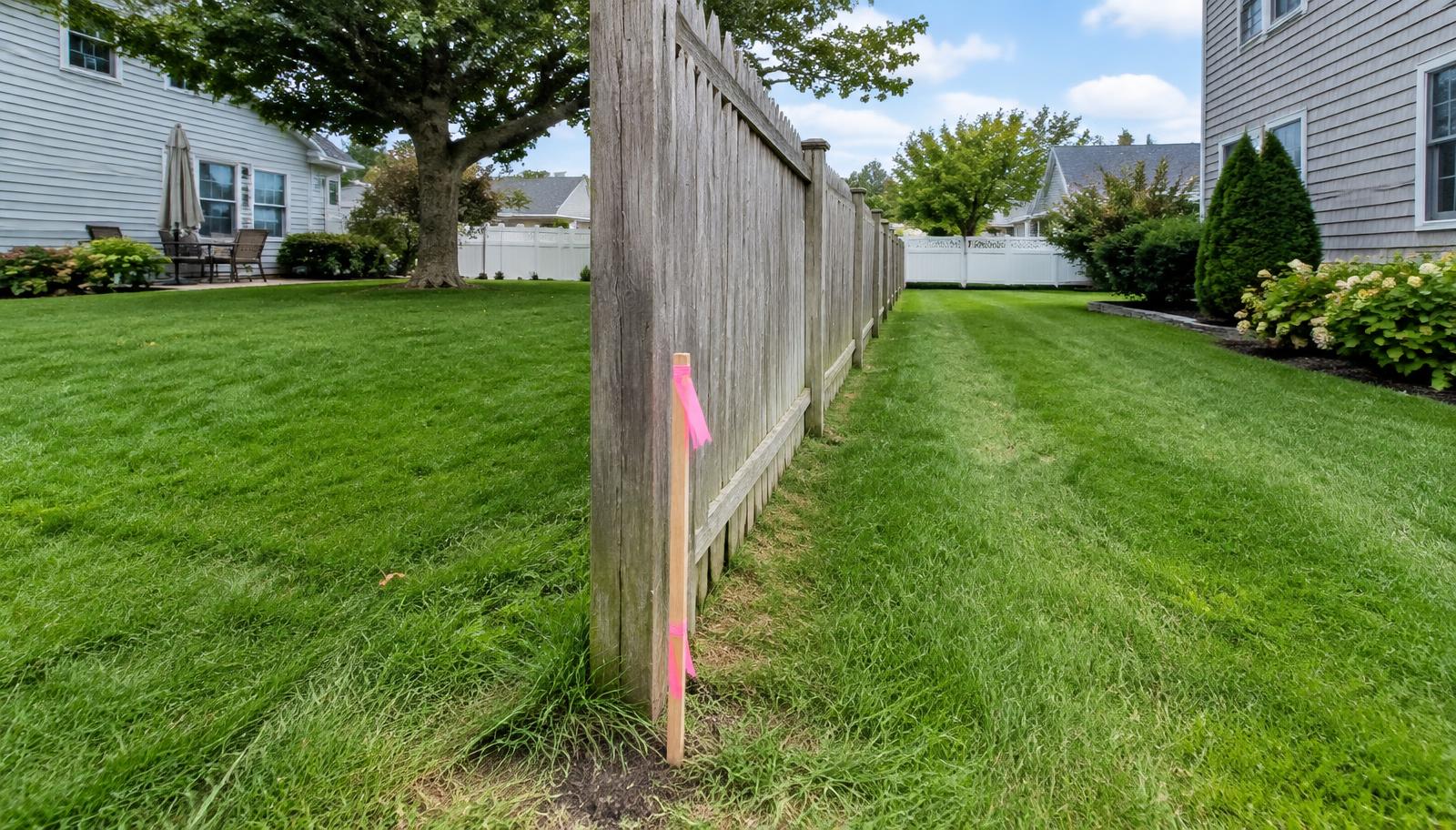
- Under RPAPL 543, a fence, hedge, planting, shed, or non-structural wall that crosses the line is deemed permissive, and so is mowing the neighbor's grass. These are the most common facts people bring me, and they do not count.
- Title by adverse possession is not automatic in any practical sense. To sell, insure, or borrow against the land, you need a judgment in a quiet title action under RPAPL Article 15 and a recorded judgment.
- If you are the owner, the defense is simple and cheap if you act early: get a survey, put permission in writing, or sue before year ten.
How long does adverse possession take in New York?
Adverse possession takes 10 years in New York. CPLR 212(a) bars an owner from suing to recover real property unless the owner was seized or possessed of it within the prior ten years, and RPAPL 501(2) provides that the adverse possessor gains title when that ten year period expires, provided the possession met every statutory element for the whole time. There is no shorter period for residential lots, and paying the taxes does not shorten it.
Ten years sounds like a long time, and on Long Island it usually is not the problem. Subdivisions in Nassau and Suffolk were laid out decades ago, fences went up in the 1970s and 1980s, and nobody pulled a survey until a sale or a pool permit forced the issue. By the time the dispute lands on my desk, the encroachment is often 20 or 30 years old. The clock ran long ago.
What decides these cases is everything else in the statute. Was the use exclusive, or did the neighbor's kids cut through it every summer? Was it continuous, or was the strip a gravel pile for a decade? Was there a reasonable basis to believe the land was yours, or did the old survey in your closet show exactly where the line was? Those are the questions I ask in the first meeting, because they are the questions a Supreme Court judge in Mineola or Riverhead will ask at trial.
What are the requirements for adverse possession in New York?
To acquire title by adverse possession in New York, the possession must be actual, open and notorious, exclusive, continuous for 10 years, and hostile under a claim of right, as set out in RPAPL 501 and RPAPL 522. For land held without a deed or court judgment, RPAPL 522 recognizes only two kinds of qualifying occupation: acts sufficiently open to put a reasonably diligent owner on notice, or protection of the land by a substantial enclosure, subject to the de minimis rule in RPAPL 543.
In plain English, each element with a Long Island example. Actual means physically using the land the way an owner would, not just claiming it. Open and notorious means the use was visible enough that an owner paying reasonable attention would have seen it, which is why a paved driveway extension qualifies and a buried sprinkler line usually does not. Exclusive means you kept everyone out, including the record owner. Continuous means uninterrupted for the whole 10 years, though seasonal use consistent with the type of property can count and successive owners in privity can tack their periods together. Hostile under claim of right means without the owner's permission and with a reasonable basis to believe the land was yours.
Then the hard truth: permission kills the claim. If the neighbor ever said “sure, park there,” or a prior owner had a written license, the possession was never hostile and the ten years never started. This is also why a smart owner defends a boundary by granting permission in writing rather than by threats.
Does a fence, shed, or hedge over the property line count as adverse possession?
Generally no, not anymore. RPAPL 543, added in 2008, provides that de minimis non-structural encroachments, including fences, hedges, shrubbery, plantings, sheds, and non-structural walls, are deemed permissive and non-adverse, and that mowing or similar maintenance across a neighbor's line is also deemed permissive. A fence that has stood six feet over the line for 25 years usually does not, by itself, transfer that six foot strip.
This is the single most misunderstood point in New York boundary law, and the internet is full of advice written for other states or for the pre-2008 rules. Before 2008, a fence and cultivation could carry an adverse possession claim, and plenty of Long Island lots changed shape that way. The Legislature changed it deliberately. Today, the encroachments the statute lists are treated as neighborly, which means they do not start the clock no matter how long they stand.
What can still qualify is structural: a garage, an addition, a paved driveway, a pool and its deck, a retaining wall that is genuinely structural, or a substantial enclosure combined with real, exclusive, owner-like use of the land inside it. And there is a timing wrinkle that matters on older lots: courts have held that where the 10 years fully ran and title vested before the July 2008 amendments, the old rules govern, so a fence-and-garden claim that was complete by 2008 can still be viable today. Whether your facts fall on the right side of that line takes a survey, deed history, and a careful look at what was there and when.
Do you have to believe the land is yours to claim adverse possession in New York?
Yes, since 2008. RPAPL 501(3) defines claim of right as a reasonable basis for the belief that the property belongs to the adverse possessor. The Legislature added that definition specifically to reverse the Court of Appeals' 2006 decision in Walling v. Przybylo, which had allowed a possessor who knew the land belonged to someone else to acquire it anyway. Under current law, knowing encroachment generally does not ripen into title.
What “reasonable basis” looks like in practice: a deed description that plausibly covers the strip, a prior owner's representation at closing that the fence was the line, a survey that turned out to be wrong, or a long-standing layout that any buyer would have taken as the boundary. What does not qualify: a strip you knew was the neighbor's and used anyway, or land you took over after reading the survey. There is one statutory exception from RPAPL 501(3): claim of right is not required where the record owner cannot be identified in the county clerk's records and located by reasonable means, which occasionally comes up with abandoned paper streets and orphan parcels.
How do you actually get title by adverse possession in New York?
Even when every element is satisfied, no deed magically appears, and no title company will insure a boundary based on your say-so. Getting usable title means a quiet title action under RPAPL 1501, and it follows this sequence in Nassau or Suffolk County Supreme Court:
- Order a boundary survey (weeks 1 to 4). A licensed surveyor stakes the record line and maps every encroachment. This is the exhibit the whole case is built on, for either side.
- Pull the chain of title and assemble proof (weeks 2 to 8). Deeds, prior surveys, aerial photos, permits, tax maps, and affidavits from prior owners and long-time neighbors establish when the use began and what it looked like. Tacking to a prior owner's possession requires showing privity, meaning the prior owner intended to transfer the disputed area along with the lot.
- File the complaint and a notice of pendency (month 2 to 3). The action is brought under RPAPL Article 15, with the complaint contents required by RPAPL 1515, in the Supreme Court of the county where the land sits. A notice of pendency under CPLR 6501 warns any buyer or lender that the boundary is in litigation. The index number is $210 and the request for judicial intervention is $95.
- Serve the record owner and any lienholders (month 3 to 4). The defendant has 20 to 30 days to answer depending on service. If the record owner is a bank, an estate, or unknown, service by publication may be needed, which adds time.
- Discovery, and usually a motion for summary judgment (months 4 to 12). Boundary cases are document and photograph heavy. Many are decided on motion when the survey and the timeline are clear; contested ones go to a bench trial.
- Judgment and recording (months 6 to 24). The judgment declares who owns the disputed area. It is then recorded with the county clerk so the title becomes marketable and insurable. Until it is recorded, you do not have title you can sell.
How do I stop a neighbor from claiming my land by adverse possession?
You stop an adverse possession claim by breaking one of the elements before the 10 years run: give written permission, which makes the use permissive; remove the encroachment or retake possession; or bring an action to recover the land under RPAPL 1501 or for ejectment within the ten year period. A current survey is the first step, because you cannot defend a line you have not located.
The most effective tool is also the least dramatic. A short signed letter, ideally a license agreement, saying "you may keep your shed on my land until I revoke this permission in writing" converts the neighbor's use from hostile to permissive on the day it is signed. Many owners resist it because it feels like giving something away. It is the opposite. Permission is what defeats the claim. Pair it with a survey in your file and a copy sent by certified mail, and most claims are over before they start.
Can a squatter get my house by adverse possession in New York?
Only after 10 years of open, exclusive, continuous possession under a reasonable claim of right, which is why true squatters almost never acquire title to a Long Island home. A squatter who knows the house is not theirs cannot satisfy the claim of right requirement in RPAPL 501(3), and an owner who acts within the ten years cuts off the claim entirely.
What does an adverse possession case cost and how long does it take?
Thomas A. Sirianni, Esq.
1 Pine Valley Road, Upper Brookville, NY (Nassau County)
(516) 314-1343
thomassirianniesq.com
Frequently Asked Questions
How many years is adverse possession in New York?
Ten years. Under CPLR 212(a) and RPAPL 501, title passes to an adverse possessor only after 10 years of possession that was actual, open and notorious, exclusive, continuous, and under a claim of right for the entire period.
What are the 5 requirements for adverse possession in New York?
The possession must be (1) actual, (2) open and notorious, (3) exclusive, (4) continuous for 10 years, and (5) hostile under a claim of right, meaning a reasonable basis to believe the land was yours. For land held without a deed, RPAPL 522 also requires either acts open enough to put a diligent owner on notice or a substantial enclosure.
Does a fence count as adverse possession in New York?
Generally no. Since 2008, RPAPL 543 deems fences, hedges, shrubbery, plantings, sheds, and non-structural walls that cross a boundary to be permissive and non-adverse, and the same is true of mowing across the line. Structural encroachments and substantial enclosures with owner-like use can still qualify.
Can you claim adverse possession if you know the land is not yours in New York?
Generally no. RPAPL 501(3), added in 2008, requires a reasonable basis for believing the property belongs to you. That change reversed the Court of Appeals' decision in Walling v. Przybylo, which had allowed knowing possessors to acquire title under the old law.
Is adverse possession automatic after 10 years in New York?
Legally the statute says title passes when the period expires, but in practice you cannot sell, insure, or borrow against the land without a judgment. You need a quiet title action under RPAPL 1501 and a recorded judgment to turn a claim into marketable title.
How do I protect my property from adverse possession in New York?
Get a survey, put any neighbor's use in writing as revocable permission, and act before the 10 years run by removing the encroachment or bringing an action to recover the land. Written permission makes the use permissive, which defeats the hostility element.
Does paying property taxes give you adverse possession in New York?
No. Paying taxes on someone else's land is not one of the statutory elements in New York and does not shorten the 10 year period. It can be evidence of a claim of right, but it does not substitute for actual, exclusive, continuous possession.
Fence, driveway, or survey dispute with a neighbor? Call before the ten years run.
Nassau and Suffolk County property owners: I will review your survey and deed, tell you plainly whether the claim on either side holds up under the 2008 rules, and lay out the cheapest way to fix the line, at no cost for the initial consultation. I answer my own phone, 7 days a week, 6:00 AM to 8:00 PM.
Attorney advertising. This article is general information about New York law only, not legal advice, and does not create an attorney-client relationship. Statutes and court rules change and deadlines vary by case; consult a licensed New York attorney about your specific situation promptly. Prior results do not guarantee a similar outcome.