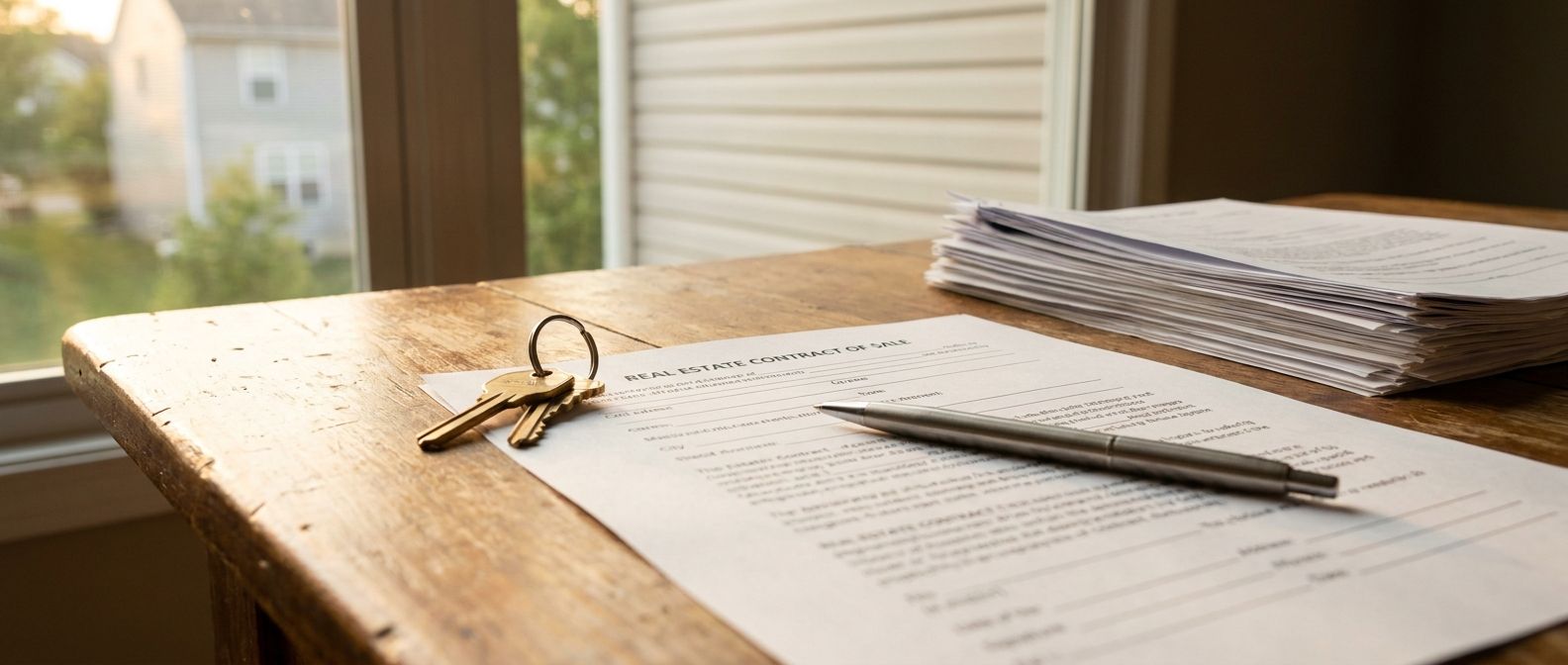
How Much Does a Real Estate Attorney Cost in New York? The Real Fees for Long Island Buyers and Sellers (2026)
Most real estate attorneys on Long Island charge a flat fee of about $1,500 to $3,000 to represent a buyer or seller through a standard residential closing, from contract review to the closing table. In New York City the same work commonly runs $2,500 to $5,000 or more, and complicated matters, such as estate sales, short sales, or contested deals, are often billed hourly at roughly $350 to $500 per hour instead. You typically pay nothing up front: the fee is collected at closing. New York does not have a law that forces you to hire an attorney, but in practice nearly every downstate deal has lawyers on both sides, and going without one is how small problems become expensive ones.
Key Takeaways
- The standard structure on Long Island is a flat fee, about $1,500 to $3,000 for a typical residential purchase or sale, paid at the closing rather than up front.
- Each side pays its own attorney. Buyers with a mortgage also pay a separate fee to the lender's attorney, which is a closing cost many first time buyers never see coming.
- No New York statute requires you to hire a real estate attorney, but the contract of sale must be in writing under General Obligations Law 5-703, and downstate custom puts attorneys at the center of every stage from contract to closing.
- The attorney fee is one of the smallest lines on your closing statement. Transfer taxes, title insurance, and mortgage recording tax each commonly cost more than the lawyer.
- Flat fees cover the standard path. Estate sales, short sales, hard negotiations after a bad inspection, and deals that fall apart mid-contract are where hourly billing and higher costs appear.
- The expensive attorney mistake is not overpaying by $500. It is signing a contract of sale you did not understand, because in New York almost everything that matters is locked in at contract signing.
How much does a real estate attorney cost in New York?
A real estate attorney in New York typically costs $1,500 to $3,000 as a flat fee for a standard residential closing on Long Island, and $2,500 to $5,000 or more in New York City, where prices and complexity run higher. Hourly billing, usually around $350 to $500 per hour, generally appears only in complicated or contested matters. The fee is almost always collected at the closing itself, so you are not writing a check the day you hire counsel.
In my practice on Long Island, I quote the fee up front, in writing, before I touch the file. That is the standard you should hold any attorney to. A flat fee should be a real number, and you should know exactly what it covers: reviewing and negotiating the contract of sale, handling attorney review changes, reviewing the title report and clearing routine objections, coordinating with the lender, and representing you at the closing table.
I will also tell you what nobody selling you a service says out loud: within the normal range, price tells you very little about quality. I have cleaned up messes left by $4,000 attorneys and I know $1,800 attorneys who are meticulous. What actually matters is whether the person reviewing your contract does residential real estate every week, answers the phone, and reads the title report themselves. Ask those three questions before you ask about price.
Do you need a real estate attorney to buy or sell a house in New York?
No New York law forces you to hire a real estate attorney for a home purchase or sale. But New York custom, especially downstate, builds the entire transaction around attorneys: the contract of sale is drafted and negotiated by the seller's attorney and reviewed by the buyer's attorney before anyone signs, and lenders bring their own counsel to every closing. The contract itself must be in writing to be enforceable under General Obligations Law 5-703, and that written contract is where your rights are won or lost.
Here is the reality I want you to sit with. In New York, by the time you are at the closing table, the game is over. The contract controls what happens if the appraisal comes in low, if the inspection finds a cracked foundation, if the buyer's financing dies, if the seller gets a better offer and wants out. Every one of those fights is decided by language signed months earlier. Skipping the attorney to save $2,000 on a transaction where a single contract clause can move $20,000 or more is not thrift. It is playing high stakes poker without looking at your cards.
Who pays the real estate attorney fees in New York, the buyer or the seller?
In New York, each side pays its own attorney. The seller pays the seller's attorney and the buyer pays the buyer's attorney, typically at closing out of the transaction proceeds. Buyers financing with a mortgage also pay the lender's attorney a separate fee, commonly several hundred to over a thousand dollars, because the bank's lawyer works for the bank but bills the borrower.
There is no rule preventing the parties from negotiating something different, and in some deals, such as a seller concession package, attorney costs get shifted as part of the horse trading. But the default everyone expects is each side carrying its own counsel. What you should never do is rely on the other side's attorney, or the lender's, to protect you. Each lawyer in the room has exactly one client, and if you did not hire one, nobody in that room is yours.
What does a real estate attorney actually do for the fee?
Here is what the flat fee buys you, following the deal in the order it actually happens:
- Contract review and negotiation. Your attorney reviews or drafts the contract of sale, negotiates the rider terms that protect you, such as the mortgage contingency, inspection provisions, and what happens to the down payment, and makes sure you understand what you are signing before you sign it.
- Down payment and escrow. The seller's attorney typically holds the buyer's down payment, usually 10 percent of the price, in escrow under the contract terms. Your attorney makes sure the escrow language actually protects you if the deal collapses.
- Title examination. The buyer's attorney orders the title report and reviews it for liens, judgments, open permits, and defects, then pushes to get objections cleared before closing. This is where problems like an old unsatisfied mortgage or a boundary issue surface.
- Lender coordination. For financed buyers, your attorney tracks the commitment letter, its deadlines, and its conditions, and protects your contingency rights if the loan hits turbulence.
- Closing preparation. The attorneys prepare and review the deed, transfer documents, closing statement, and the tax filings that go with a New York transfer, and schedule the closing with all parties.
- The closing itself. Your attorney attends the closing, reviews every document you sign, verifies the numbers on the settlement statement line by line, and does not let you leave with a problem you cannot fix afterward.
What makes a New York closing cost more than the standard flat fee?
Flat fees cover the standard path from signed contract to routine closing. Fees rise, or convert to hourly billing at roughly $350 to $500 per hour, when the deal leaves that path: estate sales that need Surrogate's Court involvement, short sales requiring lender negotiation, for sale by owner deals where the attorney drafts everything from scratch, title defects that need real curative work, or a party threatening to walk and forcing contract enforcement questions.
A good attorney tells you the moment the file starts drifting out of flat fee territory, not after the bill arrives. When I see an open permit from 1994, a deceased owner still on the deed, or a seller getting cold feet, that conversation happens the same day. If the title search turns up a serious defect, resolving it can become its own legal matter entirely, called a quiet title action, and I have written separately about what a quiet title action costs in New York. Ask any attorney you interview how they handle the transition from routine to complicated, because that answer is worth more than their base price.
How do attorney fees compare to your other closing costs in New York?
The attorney fee is usually one of the smaller closing costs in a New York deal. Sellers pay New York State transfer tax of $2 for every $500 of the sale price, which is $4,000 on a $1,000,000 sale. Buyers of homes at $1,000,000 or more pay the 1 percent mansion tax, financed buyers pay mortgage recording tax of roughly 1 percent of the loan amount in Nassau and Suffolk County, and an owner's title insurance policy at regulated New York rates commonly costs several thousand dollars on a typical Long Island purchase.
On a typical Long Island transaction, the person protecting your interests is one of the cheapest lines on the sheet.
Is a cheap real estate attorney worth it in New York?
Sometimes, but not because of the price tag. A low flat fee from an attorney who closes residential deals every week can be excellent value, while the same fee from a high volume operation that assigns your file to a paralegal and appears only at closing can cost you far more than it saves. The fee tells you what you pay. It does not tell you what you get.
The volume closing shops are the ones I want you to look at with clear eyes. Some are competent. But when one office is running dozens of closings a week at rock bottom fees, the economics only work if nobody senior reads your contract carefully, and the whole New York system is built on the premise that somebody reads your contract carefully. The bad outcomes I get hired to fix, a waived contingency someone did not understand, a down payment fight, a title problem that surfaced after closing instead of before, almost never come from the fee being too high.
Interview the lawyer, not the price sheet. Ask who will actually review your contract and take your calls. Ask how many residential closings they handled in the last year. Ask what happens, and what it costs, if the deal turns contentious. Any attorney worth hiring answers all three without flinching. If you cannot get the lawyer on the phone before you hire them, you have learned exactly how it will go after.
When do you need a real estate lawyer for more than a closing?
You need a real estate attorney beyond the closing context when a deal or a property turns into a dispute: a seller trying to back out of a signed contract, a buyer refusing to close, a fight over the down payment, a title defect or fraudulent deed, a boundary or easement problem, or co-owners who cannot agree on selling. These matters are litigation, they are billed differently than closings, and the deadlines can be short.
The most common of these I see on Long Island is the deal that wobbles after signing, and your rights there depend almost entirely on the contract, which is the whole theme of this article. I have written separately about whether a seller can back out of an accepted offer in New York, and my Long Island real estate closing checklist walks through the full transaction step by step.
Buying or selling on Long Island? Get the fee, and the answers, in one phone call.
Nassau and Suffolk County buyers and sellers: call me before you sign anything. I will quote you a flat fee up front, review your deal honestly, and tell you where the real risks are, at no cost for the initial consultation. I answer my own phone, 7 days a week, 6:00 AM to 8:00 PM.
Frequently Asked Questions
How much does a real estate attorney cost for a closing on Long Island?
Most Long Island real estate attorneys charge a flat fee of about $1,500 to $3,000 to handle a standard residential purchase or sale from contract review through closing. Complicated files, such as estate sales or short sales, often cost more or shift to hourly billing, so get the fee and its scope in writing before you hire.
When do you pay your real estate attorney in New York?
Almost always at the closing. The standard arrangement is a flat fee collected on the closing statement, with no retainer up front for a routine residential deal. If a deal dies before closing, many attorneys charge a reduced fee for the work performed, which is another term worth confirming in writing at the start.
How much does it cost to have a lawyer just review a contract in New York?
Contract review is normally built into the flat closing fee rather than sold separately, because in the downstate process your attorney reviews and negotiates the contract before you sign as a standard part of the representation. Attorneys who offer standalone contract review typically charge a few hundred dollars for it, but piecemeal review without representation through closing leaves you unprotected for everything that follows.
Do I need an attorney to buy a house in cash in New York?
No law requires it, but cash buyers arguably need counsel more, not less. With no lender in the deal, no bank attorney or underwriting is double checking title, taxes, or the closing documents. Your attorney is the only professional at the table confirming you actually receive clean title to what you paid for.
Can the buyer and seller use the same attorney in New York?
As a practical matter, no. A buyer and seller have directly conflicting interests in the same transaction, and one lawyer cannot negotiate a contract against their own client. Each side should have its own counsel, and the modest fee is cheap insurance against a conflict nobody can fix later.
Are real estate attorney fees negotiable in New York?
Within reason, yes. Flat fees are set by each attorney, not by any fee schedule, and quotes vary between offices for the same work. But the difference between quotes in the normal range is small compared to the money the contract controls, so choose on competence and responsiveness first, then discuss the number.
Do I need a real estate attorney for a for sale by owner deal in New York?
Yes, more than in any other deal. In a for sale by owner transaction there is no broker managing the process, and someone still must draft an enforceable contract of sale, which New York law requires to be in writing, hold the down payment in escrow, clear title, and run the closing. In practice the attorneys end up running the entire transaction.
Attorney advertising. This article is general information about New York law only, not legal advice, and does not create an attorney-client relationship. Statutes and court rules change and deadlines vary by case; consult a licensed New York attorney about your specific situation promptly. Prior results do not guarantee a similar outcome.
Thomas A. Sirianni, Esq.
Long Island Attorney · 27 Years Experience
- Admitted to the New York State Bar (1999)
- Juris Doctor, Touro Law Center (Jacob D. Fuchsberg Law Center), 1998
- Practicing in Nassau County Supreme Court, Suffolk County Supreme Court, Nassau District Court, and Suffolk District Court