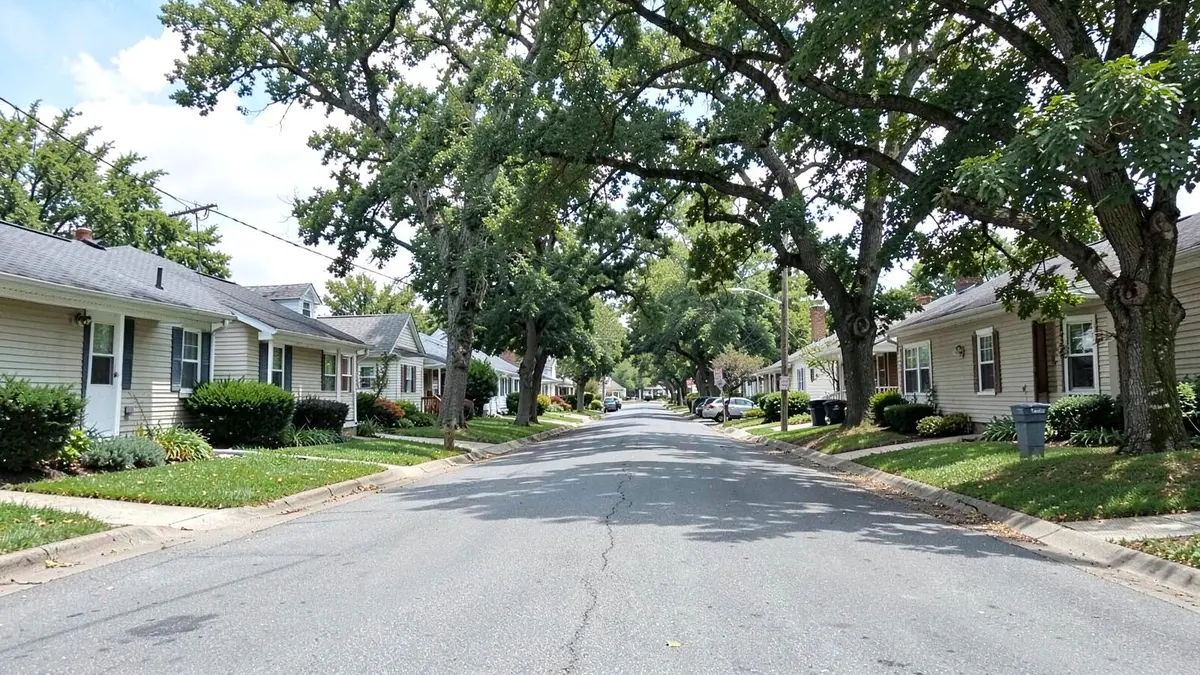
Bay Shore Foreclosure Lawyer: Your Deadlines, the Riverhead Court, and Your Options
Bay Shore homeowners served with a foreclosure summons have 20 days to answer if it was delivered by hand and 30 days if it arrived any other way, and the case is decided in Suffolk County Supreme Court in Riverhead, not at Islip Town Hall. Bay Shore has changed fast: values doubled in a decade, the downtown filled in, and a large share of homeowners in foreclosure now have real equity at stake. Protecting that equity, rather than just the house, is usually the point of the defense.
Key Takeaways
- Bay Shore is in the Town of Islip; foreclosures are heard in Suffolk County Supreme Court in Riverhead, about 35 minutes east.
- Bay Shore values roughly doubled in ten years, so a homeowner in default today often has six figures of equity that an auction would consume.
- South of Montauk Highway, flood insurance obligations feed the arrears when a policy lapses and force-placed coverage is billed to the loan.
- Many Bay Shore loans date to the 2000s and have been in and out of default; prior accelerations can make a revived case time-barred under CPLR 213(4).
- The 20 or 30 day answer deadline preserves the RPAPL 1304, RPAPL 1306, standing and statute of limitations defenses; silence waives them.
- There is no redemption after a New York referee's sale, so a market sale has to close before the Riverhead auction, not after.
What happens to my equity if the house sells at auction?
Most of it is consumed. A Riverhead auction bidder pays a discount for buying sight unseen, and the referee pays the lender's principal, default interest, legal fees and costs before any surplus exists. What is left belongs to the former Bay Shore owner under RPAPL 1361 but must be claimed through a surplus money proceeding.
Bay Shore is the clearest example on the South Shore of a town where the foreclosure question has changed. Fifteen years ago the typical homeowner I met from Bay Shore was underwater. Today most of them own a house worth well more than the mortgage, and the fight is over who ends up with the difference. The lender's process is built to consume it: interest accrues at the note rate for the years the case takes, legal fees and inspection charges pile onto the balance, and then the auction itself discounts the price.
If the sale brings more than the debt and costs, the surplus is deposited with the Suffolk County Treasurer, and the former owner has to file a surplus money proceeding under RPAPL 1361 to get it. I handle those, and I also see how many Bay Shore families never file one. The better route is to never let the equity reach the courthouse steps. A homeowner who answers the complaint controls the timeline for two to four years, and that is more than enough time to list the house, sell at Bay Shore prices, pay the lender at closing, and walk away with the equity. The homeowner who defaults gets an auction in about a year and a discounted price set by strangers.
Why does flood insurance matter in a Bay Shore foreclosure?
Homes south of Montauk Highway, and especially along the bay and the Penataquit and Awixa creeks, sit in mapped flood zones where the mortgage requires flood coverage. When a struggling homeowner drops the policy, the servicer force-places one and bills it to the loan at 2 to 3 times the market rate, growing the arrears and the modification balance.
I see the pattern every year on the south side of Bay Shore. A family behind on the mortgage lets the flood policy lapse because the premium jumped after the FEMA remapping, and six months later the servicer's letters show a payoff that grew by thousands with no additional missed payments. That growth is force-placed insurance, purchased by the servicer, often through an affiliated agent, at a rate no homeowner would accept voluntarily.
There are two responses. The first is prevention: if there is any way to keep a private flood policy in force, do it, because a lapse here compounds faster than almost any other mistake in a foreclosure. The second is challenge. Servicers get force-placed premiums wrong constantly: coverage billed for months when a private policy existed, premiums backdated, escrow cushions above the federal limit. When the referee appointed under RPAPL 1321 computes the debt, each of those is an objection, and Riverhead referees have struck them. Bring me the declarations pages for every policy you have held and every escrow analysis the servicer sent. If coverage was force-placed, the notices announcing it are evidence, and an inflated charge is leverage at the settlement conference.
Where are Bay Shore foreclosure cases heard?
Bay Shore foreclosures are heard in Suffolk County Supreme Court in Riverhead, about 35 minutes east on Sunrise Highway. Islip Town Hall and the Fifth District Court in Bay Shore handle other matters and have no part in a mortgage foreclosure.
Bay Shore has a courthouse in town, the Fifth District Court on East Main Street, and clients regularly assume their foreclosure will be heard there. It will not. Mortgage foreclosures are Supreme Court actions, venued in the county where the property sits, and for all of Suffolk that means the Cromarty Court Complex in Riverhead. Nothing about the case, from the first conference to the auction, happens in Bay Shore.
After 27 years of appearing in Riverhead, I can tell a Bay Shore homeowner what the courthouse is actually like. The foreclosure part is run by court attorney referees who supervise the CPLR 3408 conferences and who remember which servicers negotiate and which ones run out the clock. Their notes follow the file to the justice deciding summary judgment, and when those notes show a homeowner's complete package sitting unreviewed for months, the court has tolled interest for the entire period. The calendar is heavy; a contested Suffolk case takes two to four years to reach an auction. For a Bay Shore homeowner with equity who is using that time to arrange a sale or qualify for a modification, the pace is exactly right. For a homeowner who never answered and is now watching a sale date approach, the same courthouse moves quickly, and there is very little I can do from the back of the room.
Did the lender comply with RPAPL 1304 and 1306?
Before filing, the lender had to mail each Bay Shore borrower a separate RPAPL 1304 notice, 14-point type, certified and first-class, with the statutory language and a Suffolk County housing counselor list, and file it with the Department of Financial Services within three business days under RPAPL 1306. Both are conditions precedent.
Bay Shore has a deep stock of loans written between 2003 and 2008, and those loans have passed through more servicers than anyone can count. Every transfer is a place where the notice history can break. The lender suing today has to prove that the 90-day notice was mailed correctly, and the Second Department requires that proof to come from someone who either handled the mailing or can describe the servicer's standard practice from personal knowledge. A form affidavit signed in another state by someone reciting the statute does not meet that bar, and Riverhead justices have said so.
The details matter. One notice per borrower, in its own envelope. Fourteen-point type. Both certified and first-class mail. The exact statutory warning, with a current list of at least five Suffolk counseling agencies. Then the RPAPL 1306 filing with the state within three business days, which the lender must plead and prove separately. A dismissal for any of these is without prejudice, meaning the lender can cure and refile, but refiling takes a year or more, and on a Bay Shore loan whose first acceleration was in 2010 or 2011, that delay can carry the claim past the six-year limit under CPLR 213(4). Since the Foreclosure Abuse Prevention Act, that limit cannot be reset by discontinuing and starting again.
What is the deadline to answer a foreclosure summons in Suffolk County?
A Bay Shore homeowner has 20 days to answer after personal delivery and 30 days after any other form of service, and for substituted service the period starts ten days after the affidavit of service is filed in Riverhead. Negotiating with the servicer, applying for a modification, or waiting for a conference date does not extend it.
The answer is not a formality and it is not a form. It responds to each allegation in the complaint and pleads the affirmative defenses that the case will turn on: noncompliance with RPAPL 1304 and 1306, lack of standing, the CPLR 213(4) statute of limitations, and disputes over the amount claimed, including force-placed insurance and escrow errors. Standing, in particular, must be raised in the answer or a pre-answer motion, or it is waived for the life of the case.
Bay Shore homeowners lose cases at this stage more than any other. They call the servicer, get told a review is pending, and let the deadline pass. The servicer's review does not answer the summons. A modification application does not answer the summons. Only an answer does. Once it is served and filed, the homeowner has every defense in hand and a seat at the CPLR 3408 conference, and the lender has to prove its case over two to four years instead of taking a default in one. If the deadline has already passed, a motion to vacate the default on a reasonable excuse and a meritorious defense is available, and Riverhead grants them, but the argument gets harder with every month and much harder after a judgment is signed.
What are my options if I want to keep or sell the house?
You stay the owner of your Bay Shore home until the referee delivers a deed after the auction, and every option runs until then: reinstatement, a modification through the CPLR 3408 conference, a market sale that pays the lender at closing and keeps your equity, or a short sale with a written RPAPL 1371 deficiency waiver.
For a Bay Shore family that can carry a modified payment, the settlement conference in Riverhead is the path. The lender must review a complete application in good faith, and Suffolk courts have penalized the ones that stall by tolling interest. A modification adds the arrears to the balance and stretches the term; it rarely forgives principal, and it requires income, so we run the real numbers at the first meeting rather than chasing an approval that will not come.
For a family that cannot, the goal is the equity. A listing during the case is legal, and the notice of pendency simply means the lender is paid from the closing proceeds and releases its lien. Islip town taxes and school taxes settle at the same closing. If the house is worth less than the debt, a short sale requires the lender's consent, and the approval letter must waive the deficiency in writing before anyone signs. If the case does reach an auction, the lender has 90 days from the referee's deed to seek a deficiency under RPAPL 1371, measured against fair market value, and any surplus belongs to you under RPAPL 1361 on a filed claim. What a homeowner should never do is walk away. Abandonment leaves you owning a vacant house that Islip code enforcement will cite, that force-placed insurance will inflate, and that will sell for less at auction than it ever would have from a listing.
How a foreclosure moves through Suffolk County Supreme Court
- Default and the 90-day notice
At about 90 days past due the servicer mails the RPAPL 1304 notice to each Bay Shore borrower with a Suffolk counselor list and files it under RPAPL 1306. Suit cannot follow until the loan is over 120 days delinquent. If the flood policy has lapsed, reinstate it before the case begins.
- Summons filed in Riverhead
The lender files in Suffolk County Supreme Court, records a notice of pendency against the Bay Shore property, and serves you. The answer is due 20 days after in-hand service or 30 days after substituted or mail service. Standing and the statute of limitations must be pleaded now or lost.
- Settlement conferences under CPLR 3408
Within about 60 days after proof of service, Riverhead schedules the first conference for owner-occupied homes. A court attorney referee runs the review and keeps a written record of each side's conduct. This phase commonly runs six months to a year in Suffolk.
- Summary judgment and referee
If unresolved, the lender moves for summary judgment and an order of reference under RPAPL 1321. The justice rules on the pleaded defenses. The referee then computes the debt, and force-placed premiums, fees and bad-faith interest are challenged in that computation.
- Judgment and notice of sale
The court confirms the referee's report and signs the judgment of foreclosure and sale; the lender publishes a notice of sale. This is the last window for a Bay Shore homeowner with equity to close a market sale rather than lose that equity at auction.
- Auction, surplus and deficiency
In Riverhead the referee sells the home and conveys it by referee's deed. Surplus is claimed under RPAPL 1361. Any deficiency judgment under RPAPL 1371 must be sought within 90 days of the deed. Former owners and RPAPL 1305 tenants are removed only through further proceedings.
Frequently Asked Questions
Where is a Bay Shore foreclosure case heard?
In Suffolk County Supreme Court in Riverhead. The Fifth District Court on East Main Street in Bay Shore and Islip Town Hall handle other matters and have no role in a mortgage foreclosure. Every conference, motion and the auction itself take place in Riverhead.
Will the bank pay my flood insurance if I stop paying it?
The servicer will buy a force-placed policy and charge the premium to your loan, at a rate typically 2 to 3 times what you were paying, and the charges become part of the arrears you must cure. Improper force-placed charges can be contested when the referee computes the debt, but the cheaper path is to keep a private policy in force.
How long does a foreclosure take in Bay Shore?
A contested Suffolk County case commonly takes two to four years from the summons to an auction, moving through the CPLR 3408 conferences, summary judgment, the order of reference and the judgment of foreclosure and sale. If no one answers, the auction comes in about a year.
Can I sell my Bay Shore house during the foreclosure?
Yes, and for a homeowner with equity it is usually the right move. You own the house until the referee's deed is delivered and can list and close at any point before the auction. The lender and the tax liens are paid from the proceeds and the balance is yours. An underwater property requires lender consent to a short sale, with the deficiency waived in writing.
What if my case was filed years ago and then went quiet?
Pull every paper from that earlier case. The lender had six years from its first acceleration under CPLR 213(4), and the Foreclosure Abuse Prevention Act of 2022 stops it from resetting the clock by discontinuing and refiling. Many revived Bay Shore cases on 2000s-era loans are time-barred, and a time-barred mortgage can be cancelled of record under RPAPL 1501(4).
Do I need a lawyer who handles Suffolk County specifically?
You need one who appears in Riverhead regularly. The foreclosure part there has its own referees, its own scheduling habits, and its own tolerance for servicer delay, and knowing those makes a measurable difference at the settlement conference and on the lender's motions. I have practiced there for 27 years.
Is the consultation free for Bay Shore homeowners?
Yes. Call (516) 314-1343. Bring the summons, the 90-day notice, recent mortgage statements with any escrow analysis, flood and homeowner's declarations, two years of tax returns, and anything from an earlier foreclosure on the same loan. If you have equity, bring a sense of what the house is worth; that number shapes the whole strategy.
More on New York foreclosure defense
- How Long Does Foreclosure Take in New York? The Complete Timeline for Long Island Homeowners (2026)
Most New York foreclosures take 1 to 3 years, and Long Island cases often run longer. A breakdown of all 7 stages and the deadlines that matter.
- What Happens If You Don't Answer a Foreclosure Summons in New York? A Long Island Defense Attorney Explains Your 3 Ways Back In (2026)
In New York you have 20 to 30 days to answer a foreclosure summons. Miss it and you are in default, but three routes back into the case remain open...
- How to Stop a Foreclosure Sale in Nassau County: A Step-by-Step Guide from a Long Island Foreclosure Defense Attorney
A foreclosure sale date is not the end of the road. New York gives homeowners multiple legal tools to stop, delay, or dismiss a foreclosure, but...
- Can a Sibling Force the Sale of an Inherited House in New York? RPAPL 901 and the Heirs Property Buyout (2026)
Under RPAPL 901 any co-owner can force the sale of an inherited house in New York. The buyout right that can stop the sale and who pays the costs.
- How Much Does a Quiet Title Action Cost in New York? The Real Numbers and the Timeline (2026)
Court fees for a New York quiet title action run about $400, and attorney fees depend on who fights back. The real numbers and the timeline.
- Surplus Money Proceedings in New York Foreclosure: How to Claim the Excess
How surplus money proceedings work after a New York foreclosure sale: who gets the excess, how to file a claim, and the deadlines Nassau & Suffolk...
Served with foreclosure papers in Bay Shore? Call for a free consultation.
Suffolk County homeowners: I will review where your case actually sits, which deadlines are live, and which options are still open, at no cost for the initial consultation. I answer my own phone, 7 days a week, 6:00 AM to 8:00 PM.
Attorney advertising. This page is general information about New York law only, not legal advice, and does not create an attorney-client relationship. Prior results do not guarantee a similar outcome.