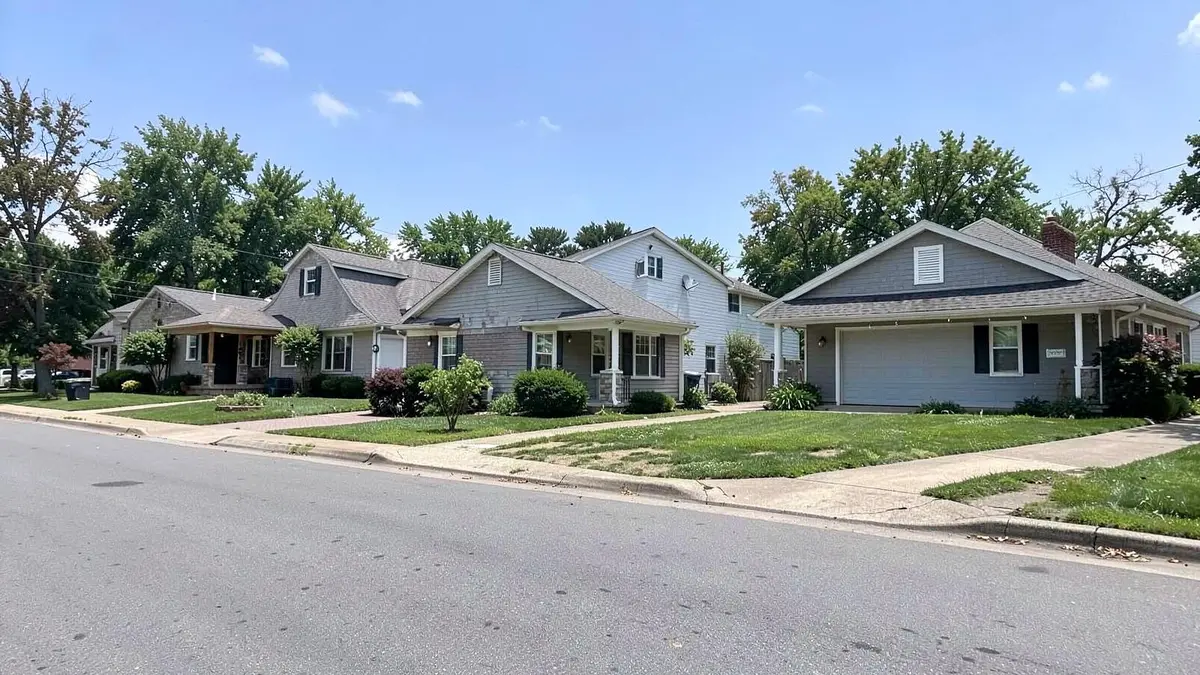
Farmingdale, NY Foreclosure Defense Lawyer: Protecting Nassau County Homeowners
Farmingdale homeowners have 20 days to answer a foreclosure summons handed to them and 30 days to answer one served any other way, and a Nassau-side Farmingdale home is heard in Nassau County Supreme Court in Mineola, about 25 minutes west, while East Farmingdale, across the Suffolk line, goes to Riverhead. Some Farmingdale families reach me after a judgment or even the auction and assume nothing is left. Often wrong: sales get vacated, surplus gets recovered, deficiencies get defeated. I have handled late-stage cases for 27 years.
Key Takeaways
- The Village of Farmingdale and the Nassau hamlet are in the Town of Oyster Bay and go to Mineola; East Farmingdale addresses in the Town of Babylon are Suffolk and go to Riverhead.
- A judgment of foreclosure and sale is not the end: a motion to vacate for defective service, a missing RPAPL 1304 notice, or an improperly noticed sale can undo it.
- Under RPAPL 1371 the lender must move for a deficiency within 90 days of the referee's deed, and the deficiency is measured against fair market value, not the auction price.
- Surplus money above the debt and costs belongs to the former Farmingdale owner and is recovered through an RPAPL 1361 proceeding.
- After the sale, occupants can be removed only through a further court proceeding, and tenants keep their lease or 90 days under RPAPL 1305.
- The earlier the answer, the more options exist; the 20 or 30 day deadline preserves standing, RPAPL 1304, RPAPL 1306 and CPLR 213(4) defenses.
The judgment was entered on my Farmingdale house. Is it too late?
No. A judgment of foreclosure and sale can be vacated in Mineola for defective service, a missing or non-compliant RPAPL 1304 notice, a plaintiff without standing, or a default entered while an application was pending. Until the referee delivers a deed, a Farmingdale homeowner can still reinstate, refinance, sell or move to vacate, and the sale can be stayed.
Farmingdale families come to me at every stage, and the ones who arrive after judgment believe the case is over because a document with the word judgment on it says the house will be sold. The judgment is a court order, and court orders can be vacated. If the homeowner was never properly served, the court never had jurisdiction, and the judgment is void regardless of how much time has passed. If the homeowner was served but defaulted, a motion to vacate the default requires a reasonable excuse and a meritorious defense, and the defenses in these cases, a defective 90-day notice, a plaintiff without standing, a time-barred claim under CPLR 213(4), are frequently strong enough.
The practical steps run in parallel. A motion to vacate is filed with a request to stay the sale, and Nassau justices grant stays where the motion has substance. Meanwhile the homeowner's other options remain open until the deed is delivered: paying the judgment amount to redeem, refinancing, or selling with the lender paid at closing. A sale that has been scheduled can also be attacked if the notice of sale was not published as the judgment and RPAPL 231 require. Even a completed auction can be set aside where the sale was conducted improperly or the price was so low as to shock the conscience, though those motions are harder. The point for a Farmingdale homeowner is that the calendar has not run out until the referee's deed is recorded, and sometimes not even then.
The house sold at auction. What happens to the money and can the lender come after me?
If the Farmingdale auction brought more than the debt and costs, the surplus is deposited with the Nassau County Treasurer and belongs to the former owner, recovered through an RPAPL 1361 proceeding. If it brought less, the lender may seek a deficiency only by motion within 90 days of the deed under RPAPL 1371, measured against fair market value.
Two very different things can happen after a Farmingdale auction, and both are governed by statutes most homeowners never hear about. The first is surplus. Farmingdale values have risen enough that auctions regularly produce more than the judgment amount, and that money does not go to the lender or the bidder. It goes to the Nassau County Treasurer, and the former owner, or any junior lienholder, must file a surplus money proceeding under RPAPL 1361 to claim it. A referee is appointed to determine priorities, and the former owner receives what remains after junior liens. I have recovered six-figure surpluses for families who assumed the auction left them with nothing.
The second is the deficiency. When the sale brings less than the debt, the lender may ask for a personal judgment against the borrower for the shortfall, but only by motion under RPAPL 1371 made within 90 days after the referee's deed is delivered, and only for the difference between the debt and the fair market value of the property, whichever is higher than the sale price. A lender that misses the 90 days forfeits the deficiency entirely, and the proceeds of the sale are deemed full satisfaction. A lender that moves on time must prove fair market value with an appraisal, and I contest low appraisals with my own. Deficiency judgments in Nassau are far rarer than homeowners fear, and a Farmingdale homeowner who watches the 90-day window and answers the motion usually defeats or sharply reduces the claim.
Where are Farmingdale foreclosure cases heard?
Nassau-side Farmingdale foreclosures are heard in Nassau County Supreme Court at 100 Supreme Court Drive in Mineola, about 25 minutes west; East Farmingdale homes in the Town of Babylon are heard in Riverhead. In Mineola, CPLR 3408 conferences run before court attorney referees, and the assigned justice decides motions, including motions to vacate.
Farmingdale sits on the county line, and the first thing I confirm is the county on the tax bill, because it determines whether the case, the motion to vacate, the surplus proceeding and any deficiency motion belong in Mineola or Riverhead. The statutes are identical, the timelines are similar, and neither court is faster or friendlier than the other. I have appeared in both on foreclosure matters since 1999.
For late-stage Farmingdale cases the courthouse matters differently than for a fresh summons. A motion to vacate is heard by the assigned justice, and Nassau justices take jurisdictional defects seriously: a homeowner who was never served gets the judgment vacated, and a homeowner whose default was entered during a pending application or without a compliant RPAPL 1304 notice has a real chance. Surplus money proceedings under RPAPL 1361 are referred to a referee, and the process is orderly once the papers are filed. Deficiency motions under RPAPL 1371 are decided on the appraisals, and the justices expect the lender to prove fair market value rather than assert it. A contested case from the summons runs two to four years to an auction; a homeowner arriving after judgment has weeks, not years, and the work has to start the day they call. An unanswered case reaches auction in about a year, which is why the late-stage calls come when they do.
Was the judgment obtained without a compliant RPAPL 1304 and 1306 record?
A default judgment does not cure a defective notice. The lender still had to mail each Farmingdale borrower a separate RPAPL 1304 90-day notice by certified and first-class mail with a Nassau County counselor list, and file under RPAPL 1306 within three business days, and a failure of either is a meritorious defense on a motion to vacate.
When a Farmingdale homeowner defaulted, no one examined the lender's notice compliance, and that is exactly what a motion to vacate asks the court to do now. The Second Department requires strict compliance with RPAPL 1304 and proof of the mailing by a witness with personal knowledge or of a standard practice the witness actually follows; a default judgment obtained on a form affidavit rests on a record that would not have survived an answer. Notices to two borrowers in one envelope, notices with the wrong county's counselor list, and notices that were simply never mailed all appear in default files.
RPAPL 1306 requires the electronic filing with the Department of Financial Services within three business days, and a plaintiff that never pleaded or proved it obtained a judgment it was not entitled to. On a motion to vacate, these defects supply the meritorious defense, and the reasonable excuse comes from the circumstances of the default: improper service, illness, a pending application the servicer said would resolve the matter. Where the judgment is vacated, the case reopens and the lender must prove compliance or face dismissal without prejudice, and on a Farmingdale loan first accelerated years earlier, the restart may fall outside the six years CPLR 213(4) allows, with the Foreclosure Abuse Prevention Act, effective December 30, 2022, preventing the lender from claiming the acceleration was revoked.
What if I am still living in the house after the sale?
A referee's deed transfers title to the purchaser, but it does not remove anyone. A former Farmingdale owner or any occupant can be removed only through a further court proceeding, typically a writ of assistance or a summary proceeding, and tenants keep their lease or at least 90 days under RPAPL 1305. No lockout happens without a court order.
The days after a Farmingdale auction are frightening, and purchasers sometimes exploit that with letters demanding the family leave in a week or with visits from people claiming to be the new owner. The law does not work that way. The purchaser holds a deed, and the deed entitles it to possession, but possession is obtained through the court, not by self-help. The purchaser must move in the foreclosure action for a writ of assistance, or bring a summary proceeding in the district court, and the occupant is entitled to notice and a hearing. The process takes weeks at minimum and often months.
Tenants have specific protections. A bona fide tenant with a lease keeps it for its term, and a month-to-month tenant receives at least 90 days notice, under RPAPL 1305 and the federal Protecting Tenants at Foreclosure Act. Former owners do not have the same statutory protection, but they are entitled to the court process, and that process is where negotiation happens: purchasers, particularly investors, will often pay a former owner to leave on an agreed date rather than litigate possession, and I negotiate those agreements so the family moves on its own schedule with money in hand. Meanwhile, if a motion to vacate the sale is pending, the possession proceeding is typically stayed. A Farmingdale family that calls me the week after the auction has more room than the purchaser's letter suggests.
What are my options at each stage of a Farmingdale foreclosure?
Before judgment, everything is available: reinstatement, modification through the CPLR 3408 process in Mineola, a sale, or a short sale with a written RPAPL 1371 waiver. After judgment but before the deed, redemption, sale, refinance and a motion to vacate remain. After the deed, surplus recovery under RPAPL 1361 and defense of any deficiency motion are the tools.
The options narrow as the case advances, which is why answering the summons is always the first advice, but they never disappear entirely. A Farmingdale homeowner who answers on time controls a two to four year process in which a modification, a repayment plan or a sale on the family's terms is the normal outcome. A homeowner who reaches me after judgment can still pay the judgment to redeem, still sell before the auction with the lender paid at closing, still refinance if credit allows, and can move to vacate where the judgment rests on defective service or notice, with a stay of the sale while the motion is decided.
After the deed, the work shifts to protecting what is left. Surplus above the debt and costs is recovered through the RPAPL 1361 proceeding. A deficiency claim is defeated if the lender misses the 90-day window under RPAPL 1371 or cannot prove fair market value, and is minimized if it can. Possession is negotiated through the court process rather than surrendered on a purchaser's demand, and tenants' RPAPL 1305 rights are enforced. Farmingdale equity built over decades does not vanish at the auction; it converts into surplus that must be claimed and deficiency exposure that must be defended. The family that knows the statutes leaves with more than the family that does not, at every stage.
How a foreclosure moves through Nassau County Supreme Court
- Default and the 90-day notice
At about 90 days delinquent the servicer mails the RPAPL 1304 notice to each Farmingdale borrower and files under RPAPL 1306; federal rules bar suit until more than 120 days of delinquency. This is the cheapest moment to reinstate, apply or list.
- Summons in the correct county
The lender files in Nassau County Supreme Court for a Nassau-side home or in Riverhead for East Farmingdale, records a notice of pendency, and serves you. Twenty days to answer after hand delivery, 30 otherwise; a defective service now is a vacatur ground later.
- CPLR 3408 conferences and motions
About 60 days after proof of service, the owner-occupied home gets its first Mineola conference. If the case does not settle, the lender moves for summary judgment and an RPAPL 1321 order of reference; a default at this stage is what a later motion to vacate must excuse.
- Judgment of foreclosure and sale
The referee's report is confirmed, the judgment signed and the sale published under RPAPL 231. Redemption, sale, refinance and a motion to vacate with a stay remain available until the referee's deed is delivered.
- Auction and the referee's deed
The referee sells the Farmingdale property and delivers a deed to the purchaser. Surplus above the debt and costs is deposited with the county treasurer; the lender's 90-day RPAPL 1371 deficiency window starts running from the deed.
- Surplus, deficiency and possession
The former owner claims surplus through an RPAPL 1361 proceeding and defends any deficiency motion on fair market value. Occupants are removed only through a writ of assistance or summary proceeding, and tenants keep their lease or 90 days under RPAPL 1305.
Frequently Asked Questions
A judgment of foreclosure was entered against my Farmingdale home. Can anything be done?
Yes. Until the referee delivers a deed you can redeem, refinance, sell with the lender paid at closing, or move to vacate the judgment for defective service, a missing RPAPL 1304 notice, lack of standing or a default entered during a pending application, with a stay of the sale while the motion is decided.
The house sold for more than I owed. Who gets the extra money?
You do. Surplus above the debt and costs is deposited with the county treasurer and recovered by the former owner through an RPAPL 1361 surplus money proceeding, after any junior liens are addressed. Many Farmingdale families never file and never receive money that is theirs.
Can the bank sue me for the difference if the house sold for less than I owed?
Only by motion within 90 days after the referee's deed under RPAPL 1371, and only for the shortfall measured against fair market value rather than the auction price. A lender that misses the 90 days forfeits the deficiency, and one that moves must prove value with an appraisal that can be contested.
How long does a Farmingdale foreclosure take?
A contested case in either county generally runs two to four years from the summons to an auction, through the CPLR 3408 conferences, motions, the RPAPL 1321 order of reference and the judgment of foreclosure and sale. When no one answers, a Farmingdale home can be auctioned about a year after service.
The buyer at the auction says I have to leave in a week. Do I?
No. A referee's deed gives the purchaser title, not the right to remove you without court process. The purchaser must obtain a writ of assistance or bring a summary proceeding, with notice and a hearing, and tenants keep their lease or at least 90 days under RPAPL 1305. Move-out dates and payments are commonly negotiated.
My Farmingdale address is in Suffolk. Does that change anything?
Only the courthouse. East Farmingdale in the Town of Babylon is Suffolk County, and the case, any motion to vacate, the surplus proceeding and any deficiency motion are heard in Riverhead rather than Mineola. The statutes and deadlines are the same.
Is the first consultation free even if my case is already at judgment or past the sale?
Yes, and the sooner the better. Call (516) 314-1343 and bring every court paper you have received, the referee's notice of sale or deed if there is one, the 90-day notice and its envelope, and anything showing how you were served. I will tell you what is still recoverable and how many days you have to act.
More on New York foreclosure defense
- How Long Does Foreclosure Take in New York? The Complete Timeline for Long Island Homeowners (2026)
Most New York foreclosures take 1 to 3 years, and Long Island cases often run longer. A breakdown of all 7 stages and the deadlines that matter.
- What Happens If You Don't Answer a Foreclosure Summons in New York? A Long Island Defense Attorney Explains Your 3 Ways Back In (2026)
In New York you have 20 to 30 days to answer a foreclosure summons. Miss it and you are in default, but three routes back into the case remain open...
- How to Stop a Foreclosure Sale in Nassau County: A Step-by-Step Guide from a Long Island Foreclosure Defense Attorney
A foreclosure sale date is not the end of the road. New York gives homeowners multiple legal tools to stop, delay, or dismiss a foreclosure, but...
- How to Protect Your Long Island Home From Nursing Home Costs
The biggest threat to most Long Island homes isn't foreclosure, it's the cost of long-term care. Here is how a Medicaid Asset Protection Trust, New...
- Can a Sibling Force the Sale of an Inherited House in New York? RPAPL 901 and the Heirs Property Buyout (2026)
Under RPAPL 901 any co-owner can force the sale of an inherited house in New York. The buyout right that can stop the sale and who pays the costs.
- Surplus Money Proceedings in New York Foreclosure: How to Claim the Excess
How surplus money proceedings work after a New York foreclosure sale: who gets the excess, how to file a claim, and the deadlines Nassau & Suffolk...
Served with foreclosure papers in Farmingdale? Call for a free consultation.
Nassau County homeowners: I will review where your case actually sits, which deadlines are live, and which options are still open, at no cost for the initial consultation. I answer my own phone, 7 days a week, 6:00 AM to 8:00 PM.
Attorney advertising. This page is general information about New York law only, not legal advice, and does not create an attorney-client relationship. Prior results do not guarantee a similar outcome.