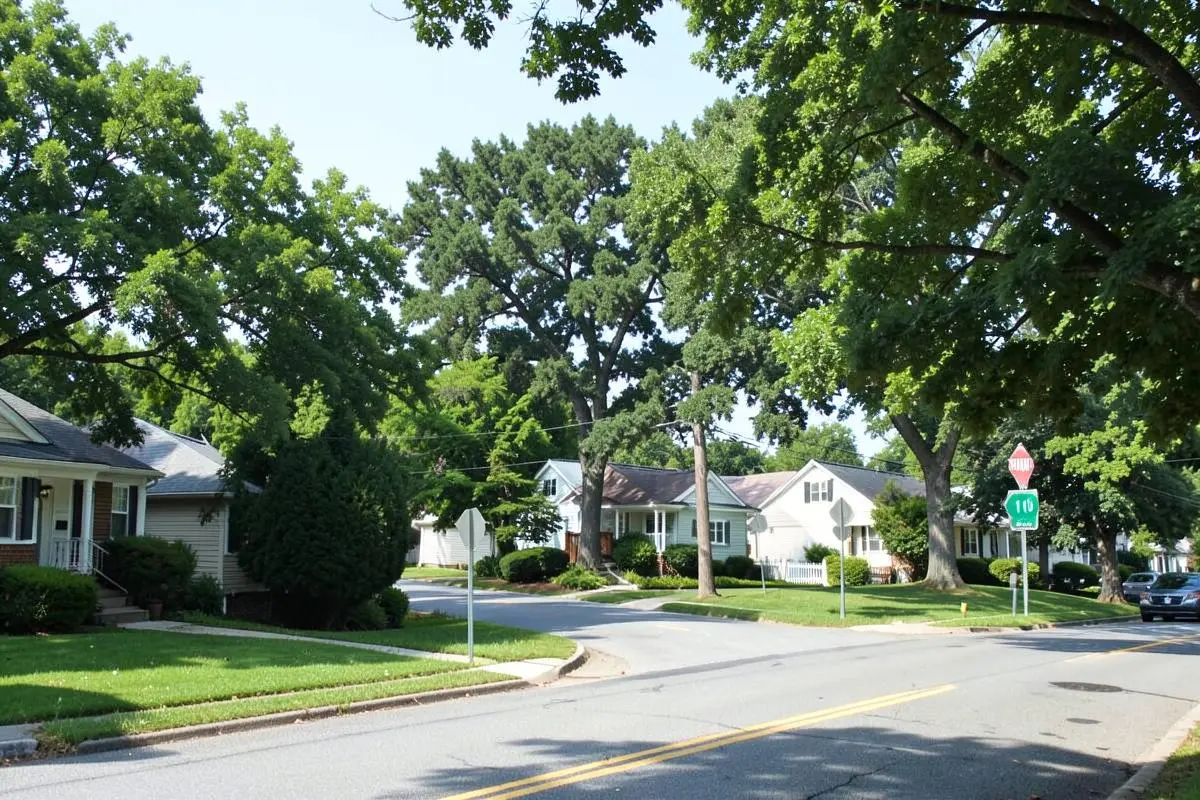
Melville, NY Foreclosure Defense Lawyer: Protecting Suffolk County Homeowners
Melville homeowners served with a foreclosure summons must answer within 20 days when the papers were handed to them and within 30 days otherwise, and the case is decided in Suffolk County Supreme Court in Riverhead. Melville loans skew large: many exceed the conforming limit, are held by private investors rather than Fannie Mae or Freddie Mac, and sit outside the standard modification programs. That changes the strategy, not the defenses. I have defended Suffolk homeowners for 27 years and handle jumbo cases regularly.
Key Takeaways
- Melville is part of the Town of Huntington; its foreclosures are heard in Suffolk County Supreme Court in Riverhead, about 45 minutes east.
- Jumbo and portfolio loans common in Melville are not governed by Fannie Mae or Freddie Mac modification guidelines, so the workout is negotiated case by case at the CPLR 3408 conference.
- A servicer's claim that the investor does not allow modifications must be documented; the court can require proof of the restriction.
- Jumbo lenders must still satisfy RPAPL 1304, RPAPL 1306, standing and the CPLR 213(4) statute of limitations, and their files are no cleaner than anyone else's.
- Twenty days after personal delivery or 30 days after other service is the answer deadline; a job loss or business downturn does not extend it.
- Melville values are high enough that an auction almost always sacrifices equity a pre-sale listing would have kept.
How is a jumbo loan foreclosure different in Melville?
A Melville mortgage above the conforming limit is usually held in a bank's portfolio or a private trust rather than by Fannie Mae or Freddie Mac, so the servicer is not bound by standardized Flex Modification rules. Every term is negotiable at the Riverhead CPLR 3408 conference: no program assures an offer, but none caps what a documented borrower gets.
The professionals and business owners who make up much of Melville's housing market tend to carry loans that were never eligible for the government-sponsored programs, and the servicer's first answer at a settlement conference is often that the investor does not permit modifications. That statement is not the end of the discussion. CPLR 3408 requires the plaintiff to negotiate in good faith, and Riverhead referees have required servicers to produce the actual pooling and servicing agreement or investor guidelines when they claim a restriction. Frequently the document says something narrower than the servicer's representative did.
Where a modification truly is unavailable, the negotiation shifts to what the investor can do: a repayment plan that spreads arrears over a period of years, a forbearance while a Melville homeowner's business recovers or a new position starts, a reinstatement with fees waived, or a consensual sale with a deficiency release. The lender's interest is in a performing loan or a clean exit, not in owning a house in Melville, and the more clearly the borrower's numbers demonstrate what is sustainable, the closer the outcome comes to what the borrower proposed. I prepare those numbers the way a lender's underwriter would read them, because that is who ultimately says yes.
Can a temporary income loss still be fixed before I lose the house?
Yes. Melville defaults often follow a layoff from the Route 110 corridor or a slow year in a practice, and a homeowner whose income has recovered can reinstate by paying the arrears or negotiate a repayment plan spreading them over 12 to 24 months. The lender must accept a full reinstatement up to the judgment.
The typical Melville call comes six to twelve months after the income disruption that caused the default, when the household is back on its feet but the arrears have grown past what can be paid in one check. There is more room here than servicers admit on the phone. A repayment plan is a standard loss mitigation option that spreads the delinquency over a defined period; a servicer that will not modify a portfolio loan will very often agree to one, because it produces a performing loan without changing the investor's terms.
The timing rules matter. Under the federal servicing regulations, a complete loss mitigation application received more than 37 days before a scheduled sale must be evaluated before the servicer can proceed, and the servicer has 30 days to decide and must give written reasons for a denial, with appeal rights on a modification denial. In a Melville case that has already been filed, the CPLR 3408 conference is where these applications are tracked and where a servicer's delays are recorded. Bring proof of the new income the day it starts: an offer letter, the first pay stubs, a signed contract, or a year-to-date profit and loss statement for a business. The sooner the file shows recovery, the sooner the servicer's own metrics favor a workout over litigation.
Where are Melville foreclosure cases heard?
Melville foreclosures are heard in Suffolk County Supreme Court in Riverhead, about 45 minutes east on the Long Island Expressway. Huntington Town Hall has no role in a mortgage case. The CPLR 3408 settlement conferences are run by court attorney referees in the Riverhead foreclosure part, and the assigned justice decides motions and signs the judgment of foreclosure and sale.
Clients from Melville are often surprised that a case involving a house ten minutes from the Nassau line is heard at the far end of Suffolk County, but venue follows the county, and Suffolk's foreclosure part sits in Riverhead. I have appeared there on foreclosure matters since 1999, and the courthouse has a rhythm worth understanding before your first conference.
The court attorney referees who supervise settlement conferences are experienced, and they are not impressed by either side's posturing. What they respond to is a record: the date a complete application was submitted, the date the servicer acknowledged it, the date it asked for the same bank statement a second time. When a Melville homeowner's file shows that pattern, the referee notes it, and the assigned justice sees those notes when the lender later moves for summary judgment. On jumbo cases, the referees are also accustomed to servicers claiming investor restrictions and are willing to direct that the restriction be proven. A contested case in Riverhead runs two to four years, and a homeowner who uses that time to build a documented record of good faith arrives at every stage with leverage. One who ignores the case sees an auction in about a year.
Did the lender comply with RPAPL 1304 and RPAPL 1306?
Loan size does not exempt a lender from the notice statutes. Each Melville borrower had to receive a separate RPAPL 1304 notice by certified and first-class mail with a Suffolk County counselor list, filed with the state under RPAPL 1306 within three business days. Portfolio lenders with small servicing shops miss these steps as often as anyone.
RPAPL 1304 applies to any home loan secured by the borrower's principal dwelling, regardless of the balance, and the Second Department, which reviews Suffolk decisions, requires strict compliance. The lender must prove the mailing through a witness with personal knowledge of it or of a standard mailing practice they actually follow, and a conclusory affidavit does not qualify. The notice may not share an envelope with other material, may not be addressed jointly to two borrowers, and may not include language beyond what the statute allows.
Melville's jumbo loans introduce a particular failure point. Many were originated by regional banks or mortgage bankers and later transferred into private trusts serviced by specialty firms, and the records of the original 90-day mailing frequently did not survive the transfer. A servicer that cannot produce a witness to the mailing cannot prove compliance, and the case is dismissed without prejudice. The RPAPL 1306 electronic filing is a separate condition precedent that must be pleaded and proven with the filing confirmation. When the lender has to start over on a loan accelerated years earlier, the CPLR 213(4) six-year limit may bar the second attempt, and the Foreclosure Abuse Prevention Act prevents the lender from claiming the acceleration was withdrawn. I check both statutes on every Melville file before discussing settlement.
How long do I have to answer, and what happens if I am negotiating with the bank?
The answer is due 20 days after personal delivery or 30 days after any other service, measured from ten days after the affidavit is filed in Riverhead for substituted service. Negotiations, a pending application or a promise from a loss mitigation representative do not extend that deadline; only a written stipulation from the plaintiff's attorney does.
The most common way a Melville homeowner loses a defensible case is by treating the bank's workout department as if it were the court. A servicer's representative may say the file is under review and nothing will happen, and that representative may believe it, but the foreclosure attorneys operate on their own calendar and will take a default the day they are entitled to. The default eliminates every defense, converts a two to four year case into a one-year path to auction, and leaves the homeowner asking a judge to vacate it on a reasonable excuse and a meritorious defense, which is a much harder posture than simply answering on time.
The answer itself should plead lack of standing, which must be raised at the outset, the CPLR 213(4) limitations defense, the RPAPL 1304 and 1306 conditions precedent, and any dispute about the amount claimed, including fees, force-placed insurance and default interest. Filing the answer does not end the workout discussion; it puts the homeowner into the CPLR 3408 process, where the negotiation is supervised and documented by the court. Melville homeowners who answer and negotiate at the same time consistently end up with better outcomes than those who negotiate alone and answer never.
What are my options if I want to keep or sell the Melville house?
You remain the owner until a referee's deed is delivered after an auction, so every path stays open: reinstatement, a repayment plan or modification through the CPLR 3408 conferences in Riverhead, a market sale that pays the lender at closing, or a short sale with a written RPAPL 1371 deficiency waiver, which on a Melville balance is not optional.
The right option depends on income and equity, and Melville households often have more of both than the default suggests. When the income has returned, reinstatement or a repayment plan restores the original loan and ends the case. When the income has changed permanently, a portfolio lender will often negotiate a term extension or rate reduction if the documentation shows the new payment is sustainable, even without a formal program. When the household is leaving, the equity in a Melville home is captured through a listing while the case is pending; the notice of pendency does not prevent the sale, and the lender is paid at closing and releases its lien.
If the debt exceeds the value, which happens on jumbo loans taken at the peak with little down, a short sale requires the investor's consent, and the approval letter must expressly waive any deficiency. Without that language the lender may move under RPAPL 1371 within 90 days of the referee's deed for a judgment on the shortfall, measured against fair market value, and on a Melville-sized loan that judgment can follow a family for years. Any surplus at an auction is recoverable under RPAPL 1361, but I have yet to see an auction outperform a properly marketed sale in this community. The decision should be made deliberately, with the numbers on the table, well before the sale date is published.
How a foreclosure moves through Suffolk County Supreme Court
- Default and the 90-day notice
At roughly 90 days delinquent the servicer must mail the RPAPL 1304 notice to each Melville borrower and file it under RPAPL 1306; federal rules bar a foreclosure filing until the loan is more than 120 days past due. Submit a complete loss mitigation application now if income has recovered, and keep the confirmation.
- Summons filed in Riverhead
The lender files in Suffolk County Supreme Court, records a notice of pendency against the Melville property with the Suffolk County Clerk, and serves you. The answer is due in 20 days after personal delivery or 30 days after other service, and negotiations do not extend it.
- CPLR 3408 settlement conferences
Roughly 60 days after proof of service, the first conference is calendared for owner-occupied homes. The court attorney referee tracks the application, and a servicer claiming an investor restriction on modifications can be directed to produce it.
- Summary judgment and order of reference
If the conferences end without a resolution, the lender moves for summary judgment and an RPAPL 1321 order of reference; standing, notice and limitations defenses are decided by the assigned justice, and the referee's computation of the debt is subject to objection.
- Judgment of foreclosure and sale
The referee's report is confirmed, the judgment is signed and a sale is noticed. A reinstatement, refinance or market sale can still close before the auction date, and a complete loss mitigation application submitted more than 37 days before the sale must be reviewed first.
- Auction and afterward
The Melville property is sold by the referee and a deed delivered. Surplus is recoverable under RPAPL 1361, a deficiency requires an RPAPL 1371 motion within 90 days of the deed, tenants are protected by RPAPL 1305, and no occupant is removed without a further court order.
Frequently Asked Questions
My servicer says the investor does not allow modifications. Is that the end of it?
No. The servicer must negotiate in good faith under CPLR 3408, and Riverhead referees have required servicers to produce the actual investor guidelines when a restriction is claimed. Even where modifications are barred, repayment plans, forbearance, reinstatement with fee waivers and consensual sales with deficiency releases usually remain available.
I lost my job but I am working again. Can I just catch up?
Usually, yes. You have the right to reinstate the loan by paying the arrears up to the entry of judgment, and if the arrears are too large for one payment, a repayment plan spreading them over 12 to 24 months is a standard option that most Melville servicers will agree to once the new income is documented.
How long does a foreclosure take in Melville?
A defended Suffolk County case typically takes two to four years from the summons to an auction in Riverhead, including the CPLR 3408 conferences, motions, the RPAPL 1321 order of reference and the judgment of foreclosure and sale. A case where no answer is filed can reach auction in about a year.
Do the 90-day notice rules apply to a jumbo loan?
Yes. RPAPL 1304 covers any home loan secured by your principal residence regardless of balance, and RPAPL 1306 requires the state filing within three business days of mailing. A Melville lender that cannot prove both with competent evidence has its case dismissed.
Can I sell the house while the foreclosure is pending?
Yes. You own the Melville home until the referee's deed is delivered after the auction, and you can list and close at any point before then. The lender is paid from the proceeds at closing and releases its lien, and any remaining equity is yours.
What if the house is worth less than I owe?
A short sale or deed in lieu is available with the lender's consent, and the approval must include a written waiver of any deficiency under RPAPL 1371. Without that waiver the lender may move for a deficiency judgment within 90 days of the referee's deed, and on a jumbo balance that exposure is significant.
Is there a charge for the first meeting about a Melville foreclosure?
No, the initial consultation is free. Call (516) 314-1343 and bring the summons and complaint, the 90-day notice and its envelope, your recent mortgage statements, any loss mitigation correspondence, and proof of current income. I will map the case and the realistic options in that first meeting.
More on New York foreclosure defense
- How Long Does Foreclosure Take in New York? The Complete Timeline for Long Island Homeowners (2026)
Most New York foreclosures take 1 to 3 years, and Long Island cases often run longer. A breakdown of all 7 stages and the deadlines that matter.
- What Happens If You Don't Answer a Foreclosure Summons in New York? A Long Island Defense Attorney Explains Your 3 Ways Back In (2026)
In New York you have 20 to 30 days to answer a foreclosure summons. Miss it and you are in default, but three routes back into the case remain open...
- How to Stop a Foreclosure Sale in Nassau County: A Step-by-Step Guide from a Long Island Foreclosure Defense Attorney
A foreclosure sale date is not the end of the road. New York gives homeowners multiple legal tools to stop, delay, or dismiss a foreclosure, but...
- How Much Does a Quiet Title Action Cost in New York? The Real Numbers and the Timeline (2026)
Court fees for a New York quiet title action run about $400, and attorney fees depend on who fights back. The real numbers and the timeline.
- Can a Sibling Force the Sale of an Inherited House in New York? RPAPL 901 and the Heirs Property Buyout (2026)
Under RPAPL 901 any co-owner can force the sale of an inherited house in New York. The buyout right that can stop the sale and who pays the costs.
- What Every Nassau County Landlord Must Know About Evictions Under HSTPA
Eviction in New York changed significantly with the 2019 Housing Stability and Tenant Protection Act (HSTPA). For Nassau and Suffolk County...
Served with foreclosure papers in Melville? Call for a free consultation.
Suffolk County homeowners: I will review where your case actually sits, which deadlines are live, and which options are still open, at no cost for the initial consultation. I answer my own phone, 7 days a week, 6:00 AM to 8:00 PM.
Attorney advertising. This page is general information about New York law only, not legal advice, and does not create an attorney-client relationship. Prior results do not guarantee a similar outcome.