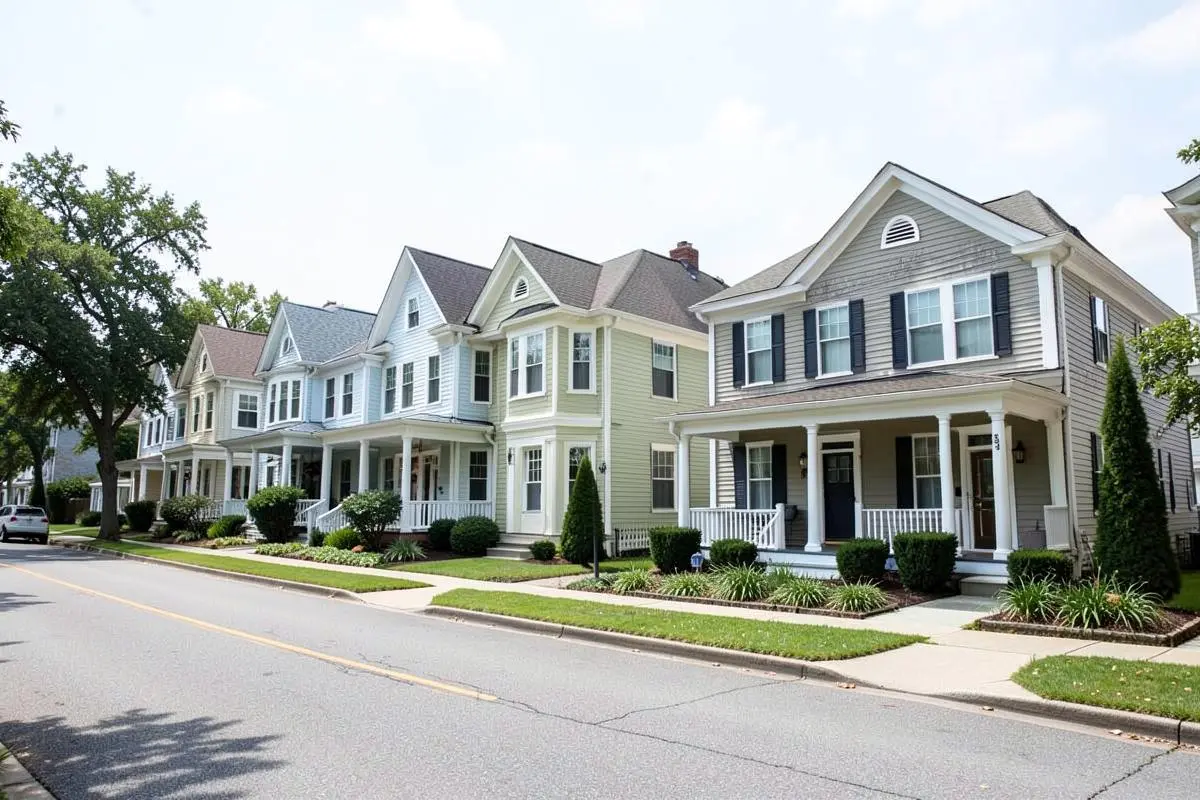
Hauppauge Foreclosure Lawyer: Your Deadlines, the Riverhead Court, and Your Options
Hauppauge homeowners served with a foreclosure summons have 20 days to answer if it was handed to them and 30 days if it arrived any other way, and the case is filed in Suffolk County Supreme Court in Riverhead whether the house is on the Smithtown or Islip side of town. Many Hauppauge owners run businesses in the industrial park, and their foreclosures come tangled with business debt: a guaranty, an SBA loan on the house, or a tax lien. I have untangled those in Suffolk for 27 years.
Key Takeaways
- Hauppauge straddles the Towns of Smithtown and Islip; either way, the mortgage foreclosure is heard in Suffolk County Supreme Court in Riverhead.
- An SBA or bank business loan secured by a second lien on the Hauppauge home is foreclosed on the same terms as a mortgage and carries the same RPAPL 1304 obligations if it qualifies as a home loan.
- Federal and state tax liens attach to the home but sit behind a recorded mortgage; the IRS has a 120-day right to redeem after a foreclosure sale.
- Business income documented through profit and loss statements and bank records supports a modification; a servicer must evaluate it.
- The answer is due 20 days after personal delivery or 30 days after other service and preserves standing, RPAPL 1304, RPAPL 1306 and CPLR 213(4) defenses.
- Equity in a Hauppauge home is often the owner's largest asset outside the business; a sale before the Riverhead auction keeps it out of an auction bidder's hands.
How does business debt affect a Hauppauge home foreclosure?
A Hauppauge business owner often pledged the house twice: once for the first mortgage and again for an SBA loan or a bank line. When the business falters, both lenders may foreclose in Riverhead, and the junior lender's case turns on whether its lien is a home loan under RPAPL 1304 and whether it was properly perfected and served.
The industrial park that anchors Hauppauge employs and is owned by a great many of the people who live nearby, and the loans that built those businesses frequently reached back to the family home. SBA 7(a) lenders routinely take a lien on the owner's residence when business collateral is thin, and a bank line of credit for the business may have been cross-collateralized the same way. When the business slows and the payments stop on both, the homeowner receives two sets of default letters and, eventually, one or two Riverhead summonses.
Each lien has to be examined on its own terms. The first mortgage is a conventional foreclosure with the full set of RPAPL 1304, RPAPL 1306, standing and CPLR 213(4) defenses. The business lender's lien is different: if the loan was made primarily for business purposes it may fall outside the RPAPL 1304 home loan definition, but that has to be established from the loan documents, and business lenders who assumed they were exempt have been wrong. The junior lender takes subject to the first mortgage, which means its practical recovery depends on equity, and where the equity is thin it is usually willing to accept a discounted payoff or a payment plan rather than litigate. Where a personal guaranty accompanies the business loan, the exposure extends beyond the house, and I address the guaranty in the same negotiation so the homeowner is not solving one problem and leaving another.
What happens if there is an IRS or state tax lien on my Hauppauge home?
A federal tax lien attaches to the Hauppauge property but is junior to a mortgage recorded before it, and the IRS must be named in the foreclosure. After a sale the IRS has 120 days to redeem, which rarely happens on a residence. The lien does not stop a market sale; it is paid or released at closing.
Business owners in Hauppauge who fell behind on payroll or income taxes often have a Notice of Federal Tax Lien recorded against the house, and the first question they ask is whether that lien makes a sale or a modification impossible. It does not. The lien is subordinate to the earlier-recorded mortgage, and the mortgage foreclosure, if it proceeds, extinguishes it subject only to the IRS's 120-day right of redemption after the sale. The plaintiff must name the United States and serve it properly, and a foreclosure that omits the IRS leaves the lien in place, which is a title defect the plaintiff has to cure.
For a homeowner who wants to sell, the IRS will issue a certificate of discharge for the property when the sale proceeds are insufficient to reach the lien after the mortgage is paid, or when the government receives its share of any surplus. New York State tax warrants work similarly. For a homeowner who wants to modify, the lien is not a bar; servicers do not require its release to modify a first mortgage, though some ask for it and can be corrected. The practical work is coordination: the tax matter, the business debt and the mortgage case are resolved together so that the closing or the modification does not stall on a lien that could have been addressed months earlier. I do that coordination with the client's accountant, and the tax authorities are far more cooperative in that setting than most Hauppauge business owners expect.
Where are Hauppauge foreclosure cases heard?
Hauppauge foreclosures are heard in Suffolk County Supreme Court in Riverhead, about 35 minutes east on the Long Island Expressway, whether the home is in the Town of Smithtown or the Town of Islip. The county offices in Hauppauge have no role in a mortgage case. CPLR 3408 conferences are held before court attorney referees in the Riverhead foreclosure part.
Hauppauge residents live next to the Suffolk County government complex, and more than one client has assumed the foreclosure would be handled there. It is not; the foreclosure part sits in Riverhead, and every Suffolk mortgage case is assigned to it. I have appeared in that courthouse on foreclosure matters since 1999, and I know how its foreclosure part treats self-employed homeowners and cases with layered debt.
The court attorney referees who supervise the settlement conferences are accustomed to business owners whose income arrives unevenly and whose documentation is a profit and loss statement rather than a pay stub. They will hold a servicer to evaluating that income under its own guidelines, and they will record a servicer's repeated requests for documents already in the file. When a second lienholder or a taxing authority is also in the case, the referees manage the parties practically, and I have resolved junior liens at those conferences alongside the first mortgage. The assigned justices decide the motions, and Suffolk justices have tolled interest and barred fees where a servicer's conduct at the conferences fell short of good faith. A contested Hauppauge case runs two to four years from summons to auction, and a business owner who uses that time to stabilize the company and document its recovery arrives at the end with the house. An unanswered case reaches auction in about a year.
Did the lender comply with RPAPL 1304 and 1306?
For a home loan on a Hauppauge residence, each borrower had to receive a separate RPAPL 1304 90-day notice by certified and first-class mail, with a Suffolk County counselor list, and the lender had to file it under RPAPL 1306 within three business days. Both are conditions precedent the plaintiff must plead and prove.
The Second Department requires strict compliance with RPAPL 1304, and the burden is on the plaintiff to prove the mailing through a witness with personal knowledge of it or of a standard practice they actually follow. Notices mailed to two Hauppauge borrowers in one envelope and notices whose cure amount was inflated by fees or force-placed insurance have both been held defective. RPAPL 1306 adds the electronic filing with the Department of Financial Services within three business days, which the plaintiff must prove with the filing confirmation.
Business-owner cases add a wrinkle. A lender that treated the loan as a business loan and skipped the RPAPL 1304 notice must prove the loan falls outside the home loan definition, and where the loan was secured by the borrower's principal residence and used in part for personal purposes, that argument often fails. When either statute is not satisfied, the Hauppauge case is dismissed without prejudice and the lender must restart. On a loan first accelerated in an earlier action that was abandoned, the restart may be barred by the six-year limit in CPLR 213(4), and the Foreclosure Abuse Prevention Act, effective December 30, 2022, prevents the lender from claiming the acceleration was withdrawn. I review the notice, the envelopes, the filing confirmation and the loan purpose on every Hauppauge file.
What is the deadline to answer, and what should the answer include?
The answer is due 20 days after the summons is handed to you or 30 days after any other service, with substituted service complete ten days after the affidavit is filed in Riverhead. It should plead lack of standing, the CPLR 213(4) statute of limitations, the RPAPL 1304 and 1306 conditions precedent, and any dispute over fees and advances.
A Hauppauge business owner juggling creditors sometimes treats the mortgage summons as one more letter to deal with later, and later is when the default judgment arrives. A defaulted defendant never gets to test the lender's notice, its standing or its numbers, and the case reaches auction in about a year. An answered case runs two to four years and puts the homeowner into the CPLR 3408 process with rights the court enforces. Given what a Hauppauge home is worth, the difference between those two paths is measured in hundreds of thousands of dollars.
Lack of standing has to appear in the Hauppauge answer; raise it later and it is gone. CPLR 213(4) is an affirmative defense and is waived if the answer omits it. The RPAPL 1304 and 1306 challenges belong there, along with a specific denial of the amount due, which opens discovery into the payment history, fees and any force-placed insurance. Where a junior business lender has also sued, its case gets its own answer with its own defenses, including whether the loan was a home loan and whether the lien was properly perfected. Conversations with any lender's workout department do not extend a deadline; a written stipulation from the plaintiff's attorney does, and I obtain one where the client needs time to assemble business records.
What are my options for keeping or selling the Hauppauge house?
You own the Hauppauge home until a referee delivers a deed after an auction, and until then you can reinstate, modify the first mortgage through the CPLR 3408 process while negotiating a discounted payoff on any business lien, sell with all liens paid at closing, or arrange a short sale with written RPAPL 1371 deficiency waivers from every lienholder.
The resolution of a layered Hauppauge case is a negotiation with several parties at once, and sequencing matters. The first mortgage is addressed through the Riverhead conferences, where a modification based on documented business income ends that case. The junior business lien is negotiated in its shadow: a lender behind a first mortgage on a home with limited equity has little to gain from an auction and will usually accept a discounted lump sum, a payment plan or a subordination to a refinance. Tax liens are discharged or paid from proceeds at closing. Personal guaranties are settled in the same conversation so the business owner is not left exposed after the house is resolved.
Where the family is leaving, a market sale while the case is pending pays the first mortgage, satisfies or discharges the junior liens according to their priority, and leaves the remaining equity with the seller. An auction does the opposite: a discounted price, years of default interest and fees off the top, junior liens fighting over any surplus deposited with the Suffolk County Treasurer under RPAPL 1361, and the possibility of an RPAPL 1371 deficiency motion within 90 days of the deed from any lender left short. On a short sale, every lienholder's approval must waive its deficiency in writing. Hauppauge business owners are used to negotiating; this is a negotiation where the homeowner holds more cards than the default letters suggest.
How a foreclosure moves through Suffolk County Supreme Court
- Business slowdown and default
Payments on the mortgage and any business loan secured by the Hauppauge home fall behind together. At about 90 days delinquent the home lender must mail the RPAPL 1304 notice and file under RPAPL 1306; federal rules bar suit until more than 120 days of delinquency. Pull the loan documents on every lien now.
- Summons and notice of pendency
Each lender that sues files in Suffolk County Supreme Court, records a notice of pendency against the Hauppauge property, and serves you and every junior lienholder, including the IRS if a tax lien is recorded. You have 20 days to answer after hand delivery or 30 days otherwise, per case.
- CPLR 3408 conferences in Riverhead
About 60 days after proof of service, the owner-occupied home gets its first conference on the first mortgage. Business income is evaluated from profit and loss statements and bank records, and junior liens are often negotiated alongside; the court attorney referee documents good faith.
- Summary judgment and RPAPL 1321 referee
If the Hauppauge conferences produce no agreement, the lender moves for summary judgment and asks for a referee under RPAPL 1321. The assigned justice decides standing, notice, loan purpose and limitations defenses; a referee computes the debt, and fees, advances and force-placed insurance are objected to here.
- Judgment of foreclosure and sale
Once the referee's figures are confirmed, the Hauppauge judgment is signed and a sale date advertised. A refinance, market sale with liens discharged at closing, or completed modification can still close before the auction, and a complete loss mitigation application filed more than 37 days before the sale must be reviewed first.
- Auction and post-sale
The referee sells the Hauppauge property and delivers a deed. Surplus is distributed by lien priority under RPAPL 1361, the IRS has 120 days to redeem, any deficiency requires an RPAPL 1371 motion within 90 days of the deed, RPAPL 1305 protects tenants, and occupants are removed only by further court order.
Frequently Asked Questions
The bank that financed my business has a lien on my house. Can it foreclose on my home?
Yes, if the lien was properly recorded, and it will be a foreclosure in Riverhead on the same footing as a mortgage. Its recovery is limited to the equity behind your first mortgage, which is why business lenders in that position usually accept a discounted payoff or payment plan rather than litigate.
Does an IRS tax lien stop me from selling or modifying?
No. The lien is junior to your earlier-recorded mortgage and is paid or discharged at closing on a sale, and a modification of the first mortgage does not require its release. If the house is foreclosed, the IRS must be named and has 120 days after the sale to redeem, which it almost never does on a residence.
How long does a Hauppauge foreclosure take?
A contested Suffolk County case usually runs two to four years from the summons to an auction in Riverhead, through the CPLR 3408 conferences, motions, the RPAPL 1321 order of reference and the judgment of foreclosure and sale. Cases with junior lienholders often take longer. Skip the answer and a Hauppauge case is at auction in roughly twelve months.
My income is from my business and it varies. Can I still get a modification?
Yes. Servicer guidelines accept a year-to-date profit and loss statement supported by business bank statements and two years of returns, and permit averaging when income fluctuates. A servicer that refuses to evaluate business income is held to its guidelines at the Riverhead conference.
Can I sell the Hauppauge house while the foreclosure is pending?
Yes. You hold title until a referee's deed is delivered after an auction, and a sale can close at any time before then. The first mortgage, any business lien and any tax lien are paid or discharged at closing in order of priority, and the remaining equity is yours.
Does it matter whether my house is on the Smithtown or Islip side of Hauppauge?
Only for property taxes, which are adjusted at closing. The foreclosure itself is filed in Suffolk County Supreme Court in Riverhead either way, and the same statutes and deadlines apply.
Is the first consultation free for Hauppauge homeowners with business debt involved?
Yes. Call (516) 314-1343 and bring every summons and complaint, the loan documents and guaranties for each lien on the house, any tax lien notices, the 90-day notice and its envelope, recent statements, and your business profit and loss statement. I will map the liens, the defenses and the order in which to resolve them.
More on New York foreclosure defense
- How Long Does Foreclosure Take in New York? The Complete Timeline for Long Island Homeowners (2026)
Most New York foreclosures take 1 to 3 years, and Long Island cases often run longer. A breakdown of all 7 stages and the deadlines that matter.
- What Happens If You Don't Answer a Foreclosure Summons in New York? A Long Island Defense Attorney Explains Your 3 Ways Back In (2026)
In New York you have 20 to 30 days to answer a foreclosure summons. Miss it and you are in default, but three routes back into the case remain open...
- How to Stop a Foreclosure Sale in Nassau County: A Step-by-Step Guide from a Long Island Foreclosure Defense Attorney
A foreclosure sale date is not the end of the road. New York gives homeowners multiple legal tools to stop, delay, or dismiss a foreclosure, but...
- Can a Sibling Force the Sale of an Inherited House in New York? RPAPL 901 and the Heirs Property Buyout (2026)
Under RPAPL 901 any co-owner can force the sale of an inherited house in New York. The buyout right that can stop the sale and who pays the costs.
- How Much Does a Quiet Title Action Cost in New York? The Real Numbers and the Timeline (2026)
Court fees for a New York quiet title action run about $400, and attorney fees depend on who fights back. The real numbers and the timeline.
- Quiet Title Action New York: Clearing a Fraudulent or Stolen Deed
Deed theft is now grand larceny in New York. Here is how a quiet title action under RPAPL Article 15 cancels a forged or stolen deed, clears stale...
Served with foreclosure papers in Hauppauge? Call for a free consultation.
Suffolk County homeowners: I will review where your case actually sits, which deadlines are live, and which options are still open, at no cost for the initial consultation. I answer my own phone, 7 days a week, 6:00 AM to 8:00 PM.
Attorney advertising. This page is general information about New York law only, not legal advice, and does not create an attorney-client relationship. Prior results do not guarantee a similar outcome.