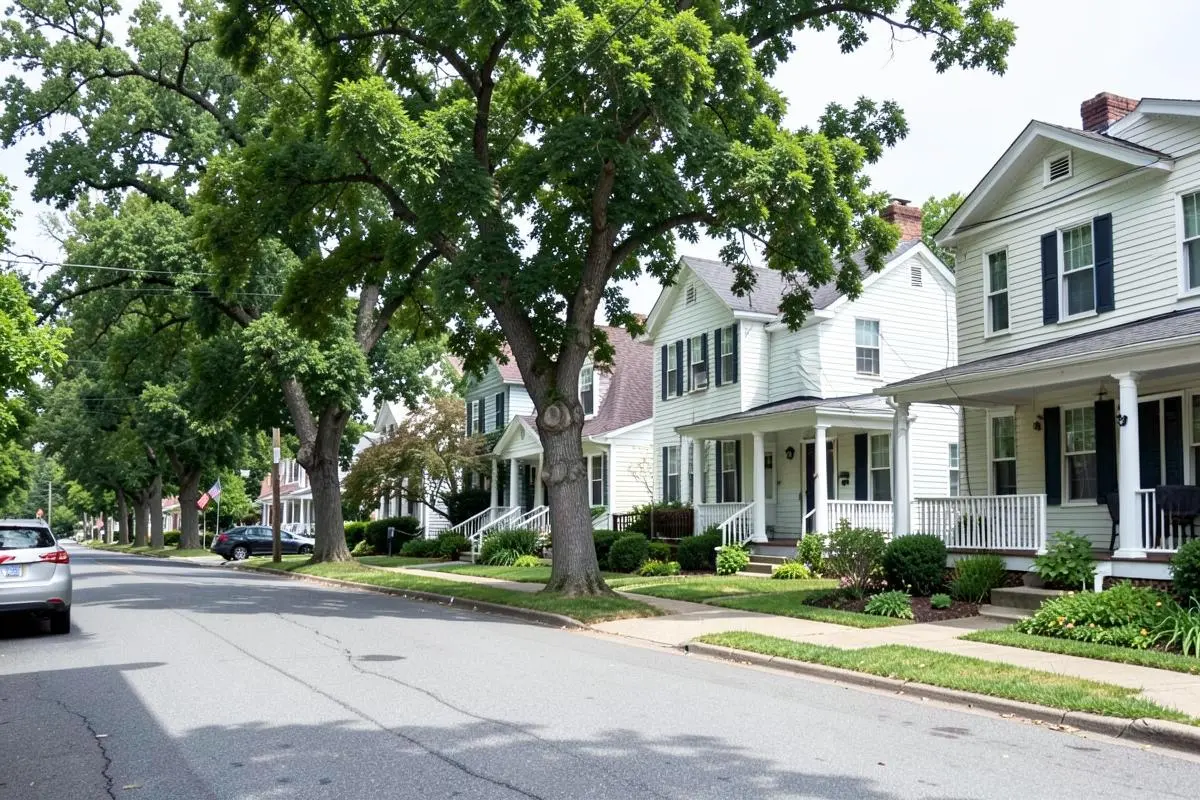
Smithtown, NY Foreclosure Defense Lawyer: Protecting Suffolk County Homeowners
Smithtown homeowners must answer a foreclosure summons within 20 days of personal delivery or within 30 days of any other service, and the case is heard in Suffolk County Supreme Court in Riverhead, not at Smithtown Town Hall. A striking number of the Smithtown files I open involve a divorce: one spouse left, the other kept the house and the payment, and the mortgage is in both names. Those cases have their own rules, and I have handled them in Suffolk for 27 years.
Key Takeaways
- Smithtown foreclosures, whether in the hamlet, Nesconset, St. James or Head of the Harbor, are filed in Suffolk County Supreme Court in Riverhead.
- A divorce judgment that assigns the mortgage to one spouse does not bind the lender; both borrowers remain liable on the note until it is refinanced or paid.
- A spouse who stayed in the Smithtown home can apply for a modification on their own income, and a spouse who left can still be pursued for a deficiency under RPAPL 1371.
- Both borrowers must be served and both may answer; a lender that skips the absent spouse has a defective case.
- The 20 or 30 day answer deadline runs separately for each defendant, and the answer is where standing, RPAPL 1304, RPAPL 1306 and CPLR 213(4) defenses are preserved.
- Equity in a Smithtown home is a marital asset; an auction destroys it for both former spouses, while a sale before the Riverhead auction preserves it.
What happens to the mortgage when Smithtown spouses divorce?
Nothing, as far as the lender is concerned. A Smithtown divorce judgment can order one spouse to pay the mortgage, but both signers remain liable on the note until the loan is refinanced or paid. When the occupying spouse defaults, the lender sues both in Riverhead, and the spouse who left learns of it from a process server.
The pattern repeats across Smithtown, Nesconset and St. James. The settlement agreement gave the house to one spouse with a promise to refinance within a year or two, the refinance never happened because rates rose or income fell, and the payments eventually stopped. The lender does not care who was supposed to pay. It names both borrowers, records a notice of pendency against the property, and moves forward in Riverhead against whoever answers and whoever does not.
Each spouse has separate interests that need separate attention. The occupying spouse wants to keep the house or control its sale, and can apply for a modification based on their own income, with the servicer required to evaluate them even though the other borrower will not sign. The departed spouse wants to avoid a deficiency judgment and a foreclosure on their credit, and has standing to answer, to insist on a sale rather than an auction, and to enforce the hold-harmless provision in the divorce judgment against the other spouse in a separate proceeding. I represent one side of that divide, not both, and I say so at the first meeting. What I can do for either side is make sure the case in Riverhead is defended on the merits and that the equity in the house, which is usually the largest asset either spouse has, is not handed to an auction bidder because the two of them could not coordinate.
Can the spouse who stayed in the house get a modification alone?
Yes. Federal servicing rules and the CPLR 3408 process allow a Smithtown co-borrower who occupies the home to be evaluated for a modification on their own income, and the servicer may not refuse because the other borrower will not participate. A quitclaim deed from the departed spouse is often required, and the divorce judgment usually compels it.
The servicer's first response to a single-spouse application is frequently that both borrowers must sign, and that response is wrong more often than it is right. Where the divorce judgment awarded the Smithtown home to the occupying spouse, the servicer's own guidelines generally permit the modification to be processed for that borrower alone, with the other borrower released from the modified loan or left on the original obligation. What the servicer legitimately needs is proof of the award, usually the judgment and the deed, and sometimes a quitclaim from the former spouse. When the former spouse refuses to sign, the divorce judgment's transfer provisions can be enforced in the matrimonial court, and I coordinate that with the foreclosure defense so the two cases move together.
At the CPLR 3408 conferences in Riverhead, the court attorney referee treats a documented single-borrower application as a good faith submission and holds the servicer to the 30-day decision requirement. Income is the occupying spouse's earnings plus any maintenance or child support that is court-ordered and documented; support payments count as income for modification purposes when they are reliable, and a servicer that ignores them can be corrected. The modification, once completed, ends the foreclosure case, and the occupying spouse holds the house on terms they can carry alone.
Where are Smithtown foreclosure cases heard?
Smithtown foreclosures are heard in Suffolk County Supreme Court in Riverhead, about 40 minutes east on Route 25 or the Long Island Expressway. Smithtown Town Hall has no role. CPLR 3408 conferences are held before court attorney referees in the Riverhead foreclosure part, and the assigned justice decides motions and signs the judgment of foreclosure and sale.
Clients from Smithtown sometimes assume that because their divorce was heard in the matrimonial part in Central Islip, the foreclosure will be too. It will not. Every Suffolk mortgage foreclosure is assigned to the foreclosure part in Riverhead, and the two cases, if both are still active, run in different courthouses with different judges. I have handled foreclosure matters in Riverhead since 1999, and I keep the matrimonial side informed so that neither court is surprised by the other.
The Riverhead foreclosure part is practical about divided households. The court attorney referees who run the settlement conferences see co-borrower cases constantly and are accustomed to a single spouse appearing and applying. They will note when a servicer insists on the absent spouse's signature without a guideline that requires it, and they will note when the absent spouse has been served improperly or not at all, which is common when the lender relies on an old address. The assigned justices have denied summary judgment where the plaintiff's service on a co-borrower was defective. A contested Smithtown case runs two to four years from summons to auction, which is time enough to complete a modification, enforce a divorce judgment, or sell the house with both spouses' cooperation compelled if necessary. An unanswered case reaches auction in about a year and leaves both former spouses with the consequences.
Did the lender comply with RPAPL 1304 and 1306 for both borrowers?
RPAPL 1304 requires a separate 90-day notice to each Smithtown borrower by certified and first-class mail to that borrower's last known address with a Suffolk County counselor list, and RPAPL 1306 requires the state filing within three business days. A notice sent only to the marital home after a spouse moved out may fail as to that spouse.
Divorce creates notice problems that lenders handle badly. The statute requires the notice to go to each borrower, and when a Smithtown spouse has moved to a new address and told the servicer, a notice addressed only to the marital home does not satisfy the requirement for that borrower. Two notices in a single envelope addressed to both spouses fail for the same reason. The Second Department demands strict compliance, and the plaintiff must prove the mailing through a witness with personal knowledge of it or of a standard practice they actually follow; a form affidavit is not proof.
RPAPL 1306 requires the filing with the Department of Financial Services within three business days of mailing, and the plaintiff must plead and prove it with the filing confirmation for each borrower. Where either statute fails as to either defendant, the case is dismissed without prejudice, and the lender must restart the 90-day process. On a Smithtown loan that was accelerated years earlier, perhaps during the marriage in a case the couple resolved and the lender later abandoned, the restart may fall outside the six years allowed by CPLR 213(4), and the Foreclosure Abuse Prevention Act, effective December 30, 2022, prevents the lender from claiming that acceleration was revoked. I review the notice history for each borrower separately, because the defects rarely line up.
What is the answer deadline, and does each spouse need to answer?
Each Smithtown defendant has their own deadline: 20 days after the summons is handed to them, or 30 days after any other service, with substituted service complete ten days after the affidavit is filed in Riverhead. Each borrower may answer separately and raise their own defenses. One spouse's answer does not protect the other from a default.
The most damaging assumption in a co-borrower case is that one spouse will handle it. If the occupying spouse answers and the departed spouse does not, the departed spouse is in default, and while the case still has to be litigated against the answering defendant, the defaulted spouse has lost the ability to contest the debt, to challenge service, or to be heard on how the property is disposed of. When the deficiency motion comes under RPAPL 1371, the defaulted spouse is the easier target. Both borrowers should answer, even if they are not speaking to each other, and even if they retain different lawyers.
The answer for each spouse pleads standing, which must come first or is waived, the CPLR 213(4) limitations defense where the history supports it, the RPAPL 1304 and 1306 conditions precedent as they apply to that borrower, and any defect in service on that borrower, which for a departed spouse served at the former marital home is often substantial. The occupying spouse also asserts the right to a CPLR 3408 conference. Nothing said to the servicer or the plaintiff's attorney extends the deadline; a written stipulation does, and I obtain one when a spouse needs time to locate documents held by the other.
What are our options for the Smithtown house now?
Until a referee delivers a deed after an auction, the Smithtown home can be kept by the occupying spouse through a modification, refinanced into one name, sold with the lender paid at closing and the equity divided per the divorce judgment, or resolved by short sale with a written RPAPL 1371 deficiency waiver protecting both borrowers.
Smithtown homes generally carry equity, and in a divorce that equity is often the main thing either spouse has left from the marriage. An auction in Riverhead sells the house at a discount, subtracts years of default interest and the lender's legal fees, and leaves whatever remains with the Suffolk County Treasurer until one of the former spouses files an RPAPL 1361 surplus claim, at which point they will likely litigate with each other over the division. Nothing about that serves either of them.
The better outcomes require some cooperation, and where cooperation is not forthcoming, the divorce judgment usually supplies the leverage. If the occupying spouse can carry the payment, a modification through the CPLR 3408 conferences ends the case, and a later refinance removes the other spouse's name. If neither can carry it, a market sale while the case is pending pays the lender at closing and puts the proceeds where the judgment says they go. A short sale on a rare underwater Smithtown home requires the lender's consent and a written deficiency waiver naming both borrowers, because without it the lender may move under RPAPL 1371 within 90 days of the deed against whichever spouse is easier to collect from. The case in Riverhead gives the family two to four years to work this out, if someone answers.
How a foreclosure moves through Suffolk County Supreme Court
- Default after separation
Payments stop when the spouse responsible under the divorce judgment cannot carry them. At about 90 days delinquent the servicer must mail a separate RPAPL 1304 notice to each Smithtown borrower and file under RPAPL 1306; federal rules bar suit until more than 120 days of delinquency. Update your address with the servicer immediately.
- Summons to both borrowers
The lender files in Suffolk County Supreme Court, records a notice of pendency against the Smithtown property, and must serve each borrower. Each has 20 days to answer after personal delivery or 30 days otherwise, and a spouse served at an old address may have a service defense.
- CPLR 3408 conferences
About 60 days after proof of service, the owner-occupied home gets its first conference in Riverhead. The occupying spouse may apply for a modification alone, and the court attorney referee documents whether the servicer processes it in good faith.
- Summary judgment and RPAPL 1321 referee
If the case does not settle, the lender moves for summary judgment and an order of reference. Standing, notice, service and limitations defenses are decided by the assigned justice; a referee then computes the debt, subject to each defendant's objections.
- Judgment of foreclosure and sale
The referee's report is confirmed, the judgment signed, and a sale published. A market sale, refinance or completed modification can still close before the auction, and defective service on either spouse supports a motion to vacate.
- Auction and deficiency exposure
The referee sells the Smithtown property and delivers a deed. Surplus is claimed under RPAPL 1361 and divided per the divorce judgment; a deficiency under RPAPL 1371 requires a motion within 90 days of the deed and may be pursued against either borrower; tenants keep RPAPL 1305 protections.
Frequently Asked Questions
My divorce judgment says my ex-husband is responsible for the mortgage. Why am I being sued?
Because the judgment binds him, not the lender. You signed the note, so you remain liable until the loan is refinanced or paid. You should answer the Smithtown complaint to protect yourself, and you can enforce the hold-harmless provision against him in the matrimonial court.
Can I modify the loan without my ex-wife's signature?
Usually, yes. If the divorce judgment awarded you the home, the servicer's guidelines generally permit a modification processed on your income alone, often with a quitclaim deed from her. A servicer that insists on her signature can be held to its own guidelines at the CPLR 3408 conference in Riverhead.
How long does a Smithtown foreclosure take?
A contested Suffolk County case commonly takes two to four years from the summons to an auction in Riverhead, through the settlement conferences, motions, the RPAPL 1321 order of reference and the judgment of foreclosure and sale. Co-borrower cases with service disputes often run longer. If neither spouse answers, the Smithtown house can be auctioned in about a year.
I moved out years ago. The lender never sent me anything. Is that a defense?
Often. RPAPL 1304 requires a 90-day notice mailed to each borrower at the last known address, and a notice sent only to the Smithtown home after you notified the servicer of your move may fail as to you. Improper service of the summons at that address is a separate defense.
Can we sell the house while the foreclosure is pending?
Yes. Title stays with the owners until a referee's deed is delivered after an auction, and a sale can close at any time before then. The lender is paid at closing and releases its lien, and the remaining equity is divided as the divorce judgment directs.
Who gets the surplus if the house does go to auction?
Any surplus above the debt and costs is deposited with the Suffolk County Treasurer and claimed through an RPAPL 1361 proceeding. Between former spouses the division follows the divorce judgment, which frequently means a second round of litigation. A pre-auction sale avoids both the discount and the dispute.
Is the first consultation free for a Smithtown homeowner going through this?
Yes. Call (516) 314-1343 and bring the summons and complaint, the divorce judgment and settlement agreement, the deed, the 90-day notice and envelope, recent mortgage statements, and proof of your own income including any court-ordered support. I represent one spouse, not both, and I will tell you at that meeting where you stand.
More on New York foreclosure defense
- How Long Does Foreclosure Take in New York? The Complete Timeline for Long Island Homeowners (2026)
Most New York foreclosures take 1 to 3 years, and Long Island cases often run longer. A breakdown of all 7 stages and the deadlines that matter.
- What Happens If You Don't Answer a Foreclosure Summons in New York? A Long Island Defense Attorney Explains Your 3 Ways Back In (2026)
In New York you have 20 to 30 days to answer a foreclosure summons. Miss it and you are in default, but three routes back into the case remain open...
- How to Stop a Foreclosure Sale in Nassau County: A Step-by-Step Guide from a Long Island Foreclosure Defense Attorney
A foreclosure sale date is not the end of the road. New York gives homeowners multiple legal tools to stop, delay, or dismiss a foreclosure, but...
- How Much Does a Quiet Title Action Cost in New York? The Real Numbers and the Timeline (2026)
Court fees for a New York quiet title action run about $400, and attorney fees depend on who fights back. The real numbers and the timeline.
- Partition Action New York: Forcing the Sale of Inherited or Jointly Owned Property
Long Island home values have made buyouts of co-owned and inherited property hard. Here is how a partition action in New York actually forces a sale...
- Quiet Title Action New York: Clearing a Fraudulent or Stolen Deed
Deed theft is now grand larceny in New York. Here is how a quiet title action under RPAPL Article 15 cancels a forged or stolen deed, clears stale...
Served with foreclosure papers in Smithtown? Call for a free consultation.
Suffolk County homeowners: I will review where your case actually sits, which deadlines are live, and which options are still open, at no cost for the initial consultation. I answer my own phone, 7 days a week, 6:00 AM to 8:00 PM.
Attorney advertising. This page is general information about New York law only, not legal advice, and does not create an attorney-client relationship. Prior results do not guarantee a similar outcome.