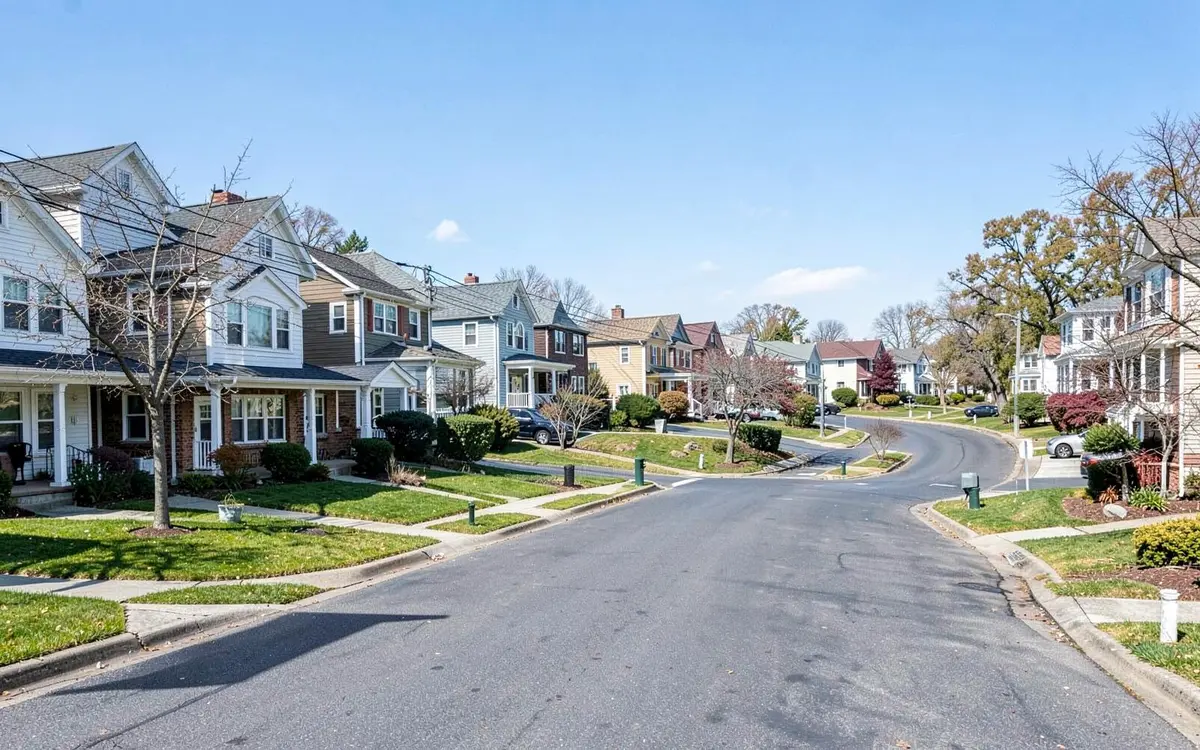
Levittown Foreclosure Lawyer: Your Deadlines, the Mineola Court, and Your Options
Levittown homeowners have 20 days to answer a foreclosure summons after personal delivery and 30 days after any other service, and that answer is the difference between a contested case that runs two to four years in Nassau County Supreme Court in Mineola and a default judgment in about a year. The lender must prove a proper RPAPL 1304 notice, prove standing, and negotiate in good faith at CPLR 3408 conferences before any auction. Answer first, then decide whether to modify, sell with equity, or move to dismiss.
Key Takeaways
- Levittown is an unincorporated hamlet in the Town of Hempstead; foreclosures are heard in Nassau County Supreme Court in Mineola, about 15 minutes away.
- Levittown's original capes and ranches, most expanded over the decades, carry substantial equity today; an auction consumes it and a planned sale preserves it.
- Many Levittown homes are passing from original owners to children; heirs can defend the case and be reviewed for a modification as successors in interest.
- The first CPLR 3408 conference is set within about 60 days after the lender files proof of service, and Nassau courts penalize servicer bad faith.
- Under CPLR 213(4) and FAPA, a Levittown loan first foreclosed on in 2010 and refiled today may be time-barred.
- A lender that wants a deficiency judgment after a Levittown sale must move under RPAPL 1371 within 90 days of the deed, and a written waiver in a short sale approval eliminates that exposure.
How does a foreclosure work for a Levittown homeowner?
A Levittown foreclosure runs from the RPAPL 1304 notice, through a summons filed in Nassau County Supreme Court in Mineola with a 20 or 30 day answer window, into CPLR 3408 settlement conferences, then summary judgment, an order of reference under RPAPL 1321, a judgment of foreclosure and sale, and an auction.
Levittown was built in a few years after the war and has been remodeled ever since, and the mortgages on it reflect that history: original loans long since paid off, refinances that pulled equity for a dormer or a second story, home equity lines, and in a growing number of cases a reverse mortgage or an inherited loan. Whatever the paper looks like, the process for a conventional mortgage is the same New York judicial foreclosure. The lender must mail the 90-day notice under RPAPL 1304 and file it under RPAPL 1306, then file a summons and complaint in Nassau County Supreme Court in Mineola and serve you.
You answer within 20 or 30 days depending on how service was made. The court sets a CPLR 3408 settlement conference for an owner-occupied home, and the modification review happens under a court attorney referee's supervision, often for a year or more in Nassau. If nothing settles, the lender moves for summary judgment and an order of reference under RPAPL 1321, a referee computes the debt, the lender moves for a judgment of foreclosure and sale, and an auction is scheduled in Mineola. In a contested Levittown case that arc runs two to four years. Unanswered, roughly a year. Every step is an opportunity to oppose, negotiate, or sell, but only for a homeowner who is in the case.
What happens at the CPLR 3408 settlement conference?
CPLR 3408 entitles an owner-occupied Levittown homeowner to a court-supervised conference in Mineola where the lender must appear with authority and negotiate in good faith. The first is set within about 60 days after proof of service. Mineola justices have tolled interest when servicers stalled Levittown homeowners with repeated document requests.
The settlement conference is the heart of a Levittown foreclosure defense for a family that wants to stay. CPLR 3408 requires it in every residential foreclosure on an owner-occupied one to four family home, it is held in the foreclosure conference part in Mineola before a court attorney referee, and both sides are under a statutory duty to negotiate in good faith. In practice, the conference is where the loan modification application gets submitted, tracked, reviewed and either approved or denied, with the referee watching the calendar.
Good faith has real consequences in Nassau. Courts here have barred lenders from collecting interest and fees for periods in which they repeatedly demanded documents already provided, let applications expire through their own delay, or denied modifications without an explanation, and on a Levittown mortgage that can mean tens of thousands of dollars taken off the balance. Good faith is required of the homeowner too; skipping conferences or ignoring document requests forfeits the protection. My approach is to arrive at the first conference with a complete package and to track every servicer request in writing so the record shows who is negotiating. A modification recapitalizes arrears, extends the term, and sometimes reduces the rate; it rarely forgives debt, and it requires income to support the payment. If the numbers do not work, the conference is also where a short sale or deed in lieu with a deficiency waiver is negotiated.
Where are Levittown foreclosure cases heard?
Levittown foreclosures are heard in Nassau County Supreme Court in Mineola, about 15 minutes west on Hempstead Turnpike and Old Country Road. CPLR 3408 conferences are held before referees, and the lender's motions are decided by the assigned justice. Town of Hempstead offices play no role in the court case.
Every Levittown foreclosure is venued in Nassau County Supreme Court on Supreme Court Drive in Mineola. Nassau is my home county; my office is in Upper Brookville and I have appeared in the Mineola courthouse on foreclosure matters for all 27 years of my practice. The foreclosure part there is staffed by court attorney referees who have run CPLR 3408 conferences since the 2008 crisis and who know each servicer's habits.
What I see in practice is a court that takes good faith seriously and has grown impatient with servicers who stall. When I can put a dated submission log in front of the referee showing a Levittown client's complete package sat unreviewed for months, the referee's notes reflect it, and the assigned justice sees those notes when the lender's summary judgment motion arrives. Nassau also carries one of the deepest foreclosure backlogs in the state, so a contested case moves slowly, and for a represented homeowner that pace is an asset: time to rebuild income, qualify for a modification, or sell at market. For a homeowner who defaulted, the same court moves quickly, and the people I meet at the auction stage who never answered have the fewest options in a court that would have given them years.
Can I stay in my Levittown home during the foreclosure?
Yes, and you should. A Levittown homeowner remains the legal owner until the referee delivers a deed after an auction, typically two to four years into a contested Nassau case. Moving out forfeits both and invites Town of Hempstead code enforcement.
The instinct after the summons is to start packing. Resist it. During that entire period you can live in your Levittown home, repair it, rent part of it, or sell it. The lender cannot change the locks, shut off utilities, or remove you, and anyone who tells you otherwise is wrong. The CPLR 3408 conference applies to owner-occupied property, so a homeowner who moves out mid-case can lose the right to that conference and the good faith duty that comes with it. Most modification programs require the property to be your primary residence. A vacant house deteriorates, draws Town of Hempstead code violations that remain your responsibility, and triggers force-placed insurance premiums the lender adds to your debt. If at some point selling is the right answer, an occupied, maintained Levittown cape sells for far more than an abandoned one.
What if I inherited the Levittown house and the mortgage is in a deceased relative's name?
You can defend the foreclosure and, in most cases, be evaluated for a modification even though your name is not on the note, because federal servicing rules treat a successor in interest who inherited the home as a borrower for loss mitigation. Open the estate in Nassau Surrogate's Court in Mineola and notify the servicer in writing.
Levittown is in the middle of a generational handoff. Original owners and their children who bought in the 1950s through 1970s are passing homes to the next generation, and a meaningful share of the foreclosures I see here involve a house that came with a mortgage, a home equity line, or a reverse mortgage still attached. The lender sues the estate and the heirs, and family members often assume they have no right to do anything because the loan was never theirs. That is not the law.
Under the federal mortgage servicing rules, a person who acquires ownership of a home through inheritance is a successor in interest, and once the servicer confirms that status it must treat you as a borrower for loss mitigation, including a modification review. The Garn-St Germain Act generally prevents the lender from calling the loan due simply because the property passed to a relative on death, so assuming the loan is often possible. The practical steps are to open the estate in Nassau County Surrogate's Court so someone has authority to act, send the servicer the death certificate and proof of your interest in writing, and answer the foreclosure complaint on time so the case does not default while the estate is sorted out. If the loan is a reverse mortgage, heirs have specific rights to sell or refinance before the lender completes a foreclosure. In Levittown the equity in the house is usually the estate's largest asset, and it is protected by acting before the deadlines.
What is a deficiency judgment, and can the lender come after me?
After a Levittown auction the lender may move for a deficiency judgment under RPAPL 1371 within 90 days of the referee's deed, limited to the amount the debt exceeds fair market value as found by the court. With Levittown values, deficiencies are rarer than surplus claims under RPAPL 1361, but a written waiver in any short sale eliminates the risk.
A deficiency judgment is a personal money judgment for whatever the foreclosure sale did not cover, and New York limits it two ways under RPAPL 1371. Given what Levittown homes sell for today, that calculation frequently produces no deficiency at all, and the more common post-auction issue is a surplus, which belongs to the former owner under RPAPL 1361 and must be claimed. The hard truth for anyone considering walking away from a Levittown house is that abandonment makes a deficiency more likely, not less. You remain the owner until title transfers, so the taxes and Town of Hempstead code violations stay yours, and a vacant house sells for less at auction, widening any gap. A negotiated exit does the opposite. For most Levittown homeowners with equity, though, the better answer is not to reach the auction at all: answer the complaint, use the time, and sell at market if the house cannot be kept.
How a foreclosure moves through Nassau County Supreme Court
- Default and RPAPL 1304 notice
Around 90 days past due, the servicer mails the 90-day notice to each Levittown borrower and files it under RPAPL 1306. Both the notice period and the 120-day federal threshold have to pass before any suit.
- Summons filed in Mineola
The lender files in Nassau County Supreme Court, records a notice of pendency against the Levittown property, and serves you. Heirs and estate representatives should answer as well.
- CPLR 3408 settlement conferences
A court attorney referee supervises the modification or successor-in-interest review and records good faith. Because Nassau's docket is heavy, this stage regularly outlasts a year.
- Summary judgment and order of reference
If talks fail, the lender moves for summary judgment and for a referee to compute the debt under RPAPL 1321. A referee then computes the debt, subject to the homeowner's objections on escrow, fees and interest.
- Judgment of foreclosure and sale
After the referee's report is confirmed, the Levittown case moves to a judgment of foreclosure and sale and the lender publishes an auction date. This is the last practical window for a Levittown homeowner with equity to close a market sale rather than lose that equity at auction.
- Auction and post-sale rights
The referee's Mineola sale ends with a deed to the purchaser. No occupant is displaced without additional court action, and tenants retain RPAPL 1305 protection.
Frequently Asked Questions
How long does a foreclosure take in Levittown, NY?
A Levittown case runs from the RPAPL 1304 90-day letter to the summons, through the Mineola settlement conferences, to summary judgment, an RPAPL 1321 order of reference, judgment and the auction.
Can I get a free consultation about a Levittown foreclosure?
Yes. The first consultation on a Levittown foreclosure is free; call (516) 314-1343. Bring the summons and complaint, the 90-day notice, recent mortgage statements, two years of tax returns and current income documents. If the house was a parent's, bring the death certificate and any estate paperwork; the successor-in-interest rules are often the key to a Levittown file.
Does a loan modification stop the foreclosure case in Levittown?
During a trial modification the Levittown case sits idle while you make the trial payments, but it is not dismissed until the permanent modification is executed. Until a signed discontinuance is filed in Mineola, the Levittown case is still alive, whatever the servicer says on the phone.
What happens if I ignore the foreclosure summons?
The lender obtains a default judgment, moves for an order of reference and then a judgment of foreclosure and sale, and schedules an auction in Mineola, often within about a year. You lose the CPLR 3408 conference, waive defenses such as defective notice and lack of standing, and give up the leverage that produces modifications. Defaults can sometimes be vacated, but answering on time is far easier.
Can the lender foreclose on my Levittown home if the loan is more than six years old?
Age alone does not matter. From that date the lender has six years under CPLR 213(4), and the Foreclosure Abuse Prevention Act of 2022 prevents de-acceleration to restart the period, so a loan accelerated in a prior dismissed case more than six years ago is often time-barred.
Will a foreclosure in Levittown affect my ability to buy again later?
Credit reporting tends to treat a short sale or deed in lieu more gently than a completed foreclosure, and a modification that reinstates the Levittown loan is gentler still. For a Levittown family that expects to buy again, that gap in credit consequences is a real reason to negotiate an exit rather than let the auction happen.
More on New York foreclosure defense
- How Long Does Foreclosure Take in New York? The Complete Timeline for Long Island Homeowners (2026)
Most New York foreclosures take 1 to 3 years, and Long Island cases often run longer. A breakdown of all 7 stages and the deadlines that matter.
- What Happens If You Don't Answer a Foreclosure Summons in New York? A Long Island Defense Attorney Explains Your 3 Ways Back In (2026)
In New York you have 20 to 30 days to answer a foreclosure summons. Miss it and you are in default, but three routes back into the case remain open...
- How to Stop a Foreclosure Sale in Nassau County: A Step-by-Step Guide from a Long Island Foreclosure Defense Attorney
A foreclosure sale date is not the end of the road. New York gives homeowners multiple legal tools to stop, delay, or dismiss a foreclosure, but...
- What Every Nassau County Landlord Must Know About Evictions Under HSTPA
Eviction in New York changed significantly with the 2019 Housing Stability and Tenant Protection Act (HSTPA). For Nassau and Suffolk County...
- Quiet Title Action New York: Clearing a Fraudulent or Stolen Deed
Deed theft is now grand larceny in New York. Here is how a quiet title action under RPAPL Article 15 cancels a forged or stolen deed, clears stale...
- Partition Action New York: Forcing the Sale of Inherited or Jointly Owned Property
Long Island home values have made buyouts of co-owned and inherited property hard. Here is how a partition action in New York actually forces a sale...
Served with foreclosure papers in Levittown? Call for a free consultation.
Nassau County homeowners: I will review where your case actually sits, which deadlines are live, and which options are still open, at no cost for the initial consultation. I answer my own phone, 7 days a week, 6:00 AM to 8:00 PM.
Attorney advertising. This page is general information about New York law only, not legal advice, and does not create an attorney-client relationship. Prior results do not guarantee a similar outcome.