Lynbrook, NY Foreclosure Defense Lawyer: Protecting Nassau County Homeowners for 27 Years
Lynbrook homeowners who have been served have 20 days to answer after personal delivery and 30 days after any other service, and if an auction is already scheduled the time to act is today, because stopping a sale requires a motion, a pending modification, or a lender violation, none of which can be prepared overnight. Every Lynbrook foreclosure is heard in Nassau County Supreme Court in Mineola, where a contested case takes two to four years. Answer early and the auction question rarely comes up at all.
Key Takeaways
- Lynbrook is an incorporated village in the Town of Hempstead; foreclosures are heard in Nassau County Supreme Court in Mineola, about 15 minutes north.
- A scheduled Nassau auction can sometimes be stayed on a motion to vacate, a pending complete modification, a CPLR 3408 violation, or a bankruptcy filing; none is automatic.
- Lynbrook's older housing stock and its two-family and apartment buildings mean tenant rights under RPAPL 1305 come up often.
- Village taxes add a lien layer on top of town, county and school taxes in any modification or sale.
- The RPAPL 1304 notice, the RPAPL 1306 filing and standing are the three defenses checked on every Lynbrook file.
- Bankruptcy imposes an automatic stay that halts a Mineola auction, but it is a serious step with consequences beyond the mortgage.
Can a scheduled foreclosure auction in Lynbrook be stopped?
Sometimes, but not on request. A Lynbrook auction in Mineola can be stayed on a motion to vacate the judgment for defective service or an unheard defense, on proof that a complete modification application is pending, on a lender violation of CPLR 3408 or the RPAPL, or by a bankruptcy filing. Each takes preparation; call now.
A large share of the Lynbrook calls I receive come in the last few weeks before a scheduled sale, so let me be direct about what can and cannot be done at that stage. A court will not adjourn an auction because the homeowner asks. It will stay a sale on a motion showing a legal basis: a judgment entered on defective service, a meritorious defense that was never heard because the homeowner defaulted, a complete loss mitigation application that the servicer is obligated under federal rules to review before proceeding, or a lender that violated its good faith duty under CPLR 3408 or a provision of the RPAPL. A bankruptcy petition imposes an automatic stay that stops the sale the moment it is filed, though the lender can move to lift it and bankruptcy has consequences far beyond the mortgage.
Lenders also consent to adjournments when a short sale or payoff is close, but that is their choice, not your right. Each of these paths takes days to weeks to prepare properly, and a motion filed the day before the sale is far weaker than one filed with time for the court to read it. If you have an auction date on a Lynbrook home, call today. And if you are reading this at the summons stage, understand that every one of these problems is easier to prevent now than to fix later.
What if my Lynbrook home is a two-family or has tenants?
A Lynbrook owner who lives in one unit of a two-family still gets the mandatory CPLR 3408 conference and can count rental income toward a modification. Tenants keep a bona fide lease or at least 90 days under RPAPL 1305 after a sale.
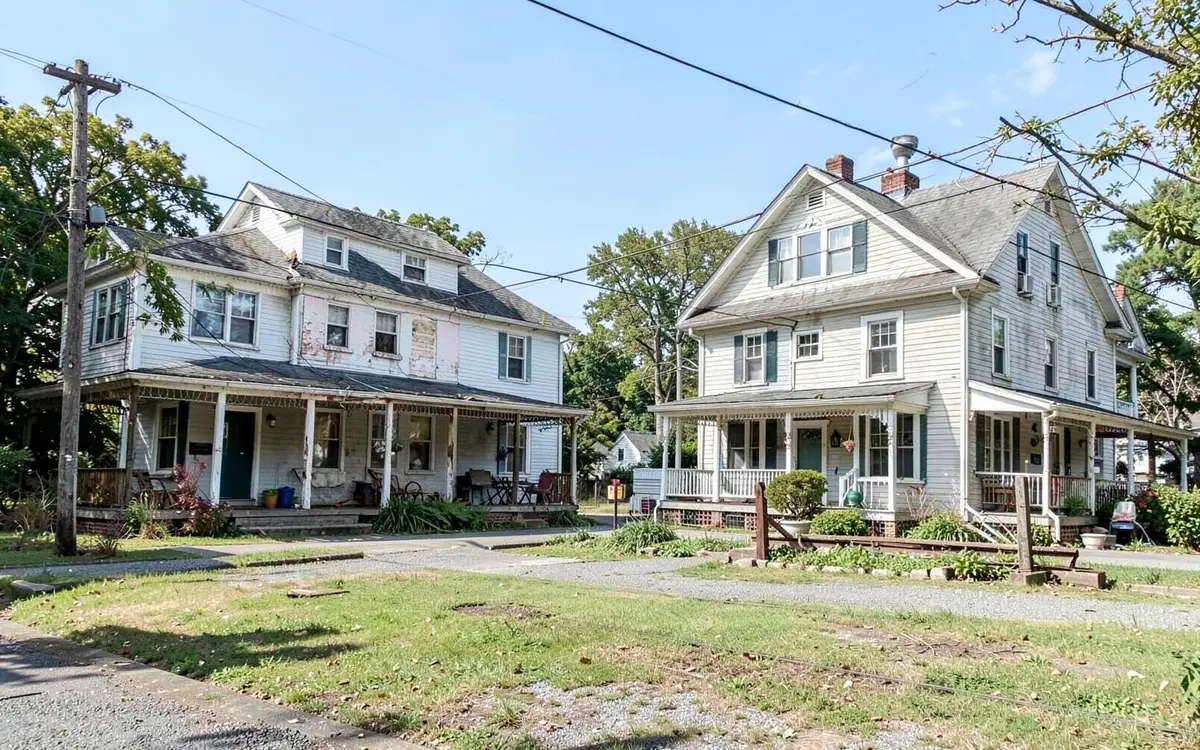
Lynbrook has more two-family homes and small apartment buildings than most of its neighbors, a legacy of its early development around the railroad, and that shapes a lot of the foreclosure files I see here. If you live in one unit and rent the other, you are still an owner-occupant for purposes of CPLR 3408, which means you get the mandatory settlement conference in Mineola and the lender's good faith duty. Your tenant's rent remains yours to collect until title transfers, and that income is part of the modification math. Do not let a tenant stop paying because the house is in foreclosure; the lease is still in force.
Your tenant has rights of their own under RPAPL 1305. After a foreclosure sale, a purchaser must honor a bona fide lease for its remaining term or give the tenant at least 90 days' written notice to vacate, whichever is longer, and a bona fide lease means an arm's-length lease at market rent, not one signed with a relative the week before the auction. Nobody can remove a tenant or a former owner without a separate court proceeding. If you are a pure investor who does not live in the Lynbrook property, the analysis is harder: no CPLR 3408 conference as of right, thinner modification programs, and genuine deficiency exposure under RPAPL 1371. Investors should be planning a negotiated sale early, not late.
How does bankruptcy interact with a Nassau County foreclosure?
Filing bankruptcy imposes an automatic stay that halts a Lynbrook foreclosure and any scheduled Mineola auction, and a Chapter 13 plan can allow arrears to be cured over three to five years. A servicer can ask the bankruptcy court to lift the stay, and a filing reaches every debt you owe, so I pair it with foreclosure defenses.
Bankruptcy is a legitimate tool in foreclosure defense and a frequently misused one. The moment a petition is filed, the automatic stay under federal law stops the Nassau County foreclosure in its tracks, including a scheduled auction. In Chapter 13, a Lynbrook homeowner with regular income can propose a plan that cures the mortgage arrears over three to five years while keeping current on the ongoing payments, and if the plan is completed the default is cured and the house is saved. Chapter 7 does not save the house in most cases, but it can discharge personal liability for a deficiency and for other debts that were making the mortgage unaffordable. The limits matter. The lender can move for relief from the stay, and if the homeowner cannot make plan payments the case is dismissed and the foreclosure resumes where it left off. Bankruptcy also affects every other debt, your credit, and in some cases property you would rather keep. I do not recommend it as a reflex, and I distrust anyone who does. It is one option to weigh against the foreclosure defenses available in Mineola, a modification, or a sale, and for some Lynbrook homeowners it is the right one. For many it is not.
Where are Lynbrook foreclosure cases heard?
Lynbrook foreclosures are heard in Nassau County Supreme Court in Mineola, about 15 minutes north via Peninsula Boulevard. Settlement conferences under CPLR 3408 are before court attorney referees, and the justice handles motion practice. The village court has no role in a mortgage foreclosure.
Every Lynbrook mortgage foreclosure is venued in Nassau County Supreme Court on Supreme Court Drive in Mineola. I have practiced in that courthouse for 27 years from my office in Upper Brookville, and Nassau's foreclosure part is the one I know best. The CPLR 3408 conferences are supervised by court attorney referees who have handled these calendars since the 2008 crisis, and the justices who rule on the lender's motions have read thousands of servicer affidavits.
What I can tell a Lynbrook homeowner from experience is that Mineola responds to a record. When I come to a conference with a dated log of every document submitted and every duplicate request the servicer made, the referee notes it, and those notes travel with the file to the justice deciding summary judgment. Bad faith findings in Nassau have tolled interest for years at a time. I can also tell you that the Nassau foreclosure calendar is among the most congested in New York, so a contested case moves slowly, and that this slowness is only useful to a homeowner who is in the case. The ones who call me the week before an auction, having never answered, have the fewest options in a court that would have given them years.
How long do I have to answer a foreclosure summons in Nassau County?
A Lynbrook homeowner has 20 days to answer after personal delivery of the summons and 30 days after any other form of service, measured from when service is complete. The answer is served on the lender's attorney and filed in Mineola, and it must plead defenses such as defective RPAPL 1304 notice, standing and CPLR 213(4).
The deadline is 20 days if the process server handed the papers to you and 30 days if they were left with someone else at the house or affixed to the door and then mailed, and for those substituted methods the period runs from ten days after the affidavit of service is filed. The answer is the single most consequential document in the case. It admits or denies each allegation and pleads your affirmative defenses: failure to comply with RPAPL 1304 and 1306, lack of standing, the six-year statute of limitations under CPLR 213(4), disputes about the amount claimed, and any others the file supports. Standing in particular must be raised in the answer or a pre-answer motion or it is waived.
Answering does not make things worse. It prevents a default judgment, it preserves every defense, and it entitles an owner-occupied Lynbrook homeowner to the CPLR 3408 conference. Lenders count on homeowners not answering, and in Nassau the difference between an answered and an unanswered case is the difference between two to four years and about one. If you have already missed the deadline, a motion to vacate the default is available where there is a reasonable excuse and a meritorious defense, and Mineola judges grant those, but the window narrows sharply once a judgment is signed.
What is a deficiency judgment, and can the lender come after me?
After a Lynbrook auction the lender may move for a deficiency judgment under RPAPL 1371 within 90 days of the referee's deed, limited to the amount the debt exceeds the property's fair market value as determined by the court. Abandoning the house does not prevent it. A short sale or deed in lieu with a written waiver does.
A deficiency judgment is a personal money judgment for the shortfall after a foreclosure sale, and New York limits it in two ways under RPAPL 1371. The lender must move within 90 days after the referee delivers the deed, or the deficiency is waived, and the deficiency is measured against the higher of the auction price or the fair market value of the property as the court finds it, not against a fire-sale bid. In Lynbrook, where values are solid, that calculation often leaves little or nothing, but a homeowner should never assume that.
The hard truth is that walking away from a Lynbrook house makes a deficiency more likely, not less. You remain the owner until the referee's deed is delivered, so the Village of Lynbrook code violations, the taxes and the insurance stay yours, and a vacant house sells for less at auction, widening the gap. A negotiated exit does the opposite. Every short sale and deed in lieu I handle includes a written deficiency waiver, and when a client's property does go to auction, I watch the 90-day window and oppose any deficiency motion with a proper appraisal. If a surplus results instead, it belongs to you under RPAPL 1361, but you must file a claim to receive it.
How a foreclosure moves through Nassau County Supreme Court
- Default and RPAPL 1304 notice
Around 90 days past due, the servicer mails the 90-day notice to each Lynbrook borrower and files it under RPAPL 1306. Filing is prohibited until the 90 days have run and the delinquency exceeds 120 days. Village, town and school tax arrears should be identified now.
- Summons in Mineola and the answer
The lender files in Nassau County Supreme Court, records a notice of pendency against the Lynbrook property, and serves you. Hand delivery in Lynbrook gives you 20 days to answer; nail-and-mail or delivery to someone else at the home gives 30, running from ten days after the affidavit is filed.
- CPLR 3408 conferences
Roughly two months after proof of service is filed, the Nassau foreclosure part calendars the first CPLR 3408 conference for owner-occupied Lynbrook homes, two-families included. Under the referee's eye the modification is reviewed and good faith is recorded for the justice. In Nassau this phase often exceeds a year.
- Summary judgment and order of reference
If the Lynbrook conferences end without a deal, the lender moves for summary judgment and asks the court to appoint a referee under RPAPL 1321. The justice decides the pleaded defenses; if the lender prevails, a referee computes the debt, subject to objections on escrow, fees and interest.
- Judgment, notice of sale and last options
The court signs the judgment of foreclosure and sale and the lender publishes a notice of sale. This is when Lynbrook homeowners call about stopping an auction: a motion to vacate, a pending modification, a consented adjournment for a sale, or a bankruptcy stay are the realistic tools.
- Auction and beyond
The Mineola auction is conducted by the referee, who then delivers the deed. Surplus is claimed under RPAPL 1361; a deficiency under RPAPL 1371 must be sought within 90 days. A purchaser must go back to court to remove anyone, and RPAPL 1305 continues to protect tenants.
Frequently Asked Questions
Can a foreclosure auction in Lynbrook be postponed?
Sometimes. A court can stay or adjourn a Mineola sale on a motion to vacate the judgment, on proof that a complete modification application is pending, or when the lender violated CPLR 3408 or the RPAPL. The lender may consent to an adjournment when a short sale or payoff is close, and a bankruptcy filing imposes an automatic stay. None is automatic and all require preparation.
Is the consultation free if I already have an auction date in Lynbrook?
Yes. Call (516) 314-1343 and call the same day you learn of the sale date. The sooner I see the file, the more realistic a stay or negotiated adjournment becomes.
What is a judgment of foreclosure and sale?
It is the court order, entered after the referee computes the debt, that directs the Lynbrook property to be sold at public auction to satisfy the mortgage. Once signed, the lender publishes a notice of sale and schedules the auction. A judgment can sometimes be vacated, but the grounds narrow considerably at that stage.
Does my tenant have to move out when my Lynbrook house is foreclosed?
Not immediately. Before a referee's deed changes hands, the Lynbrook tenant still owes rent to you, and removing a tenant requires its own court proceeding under RPAPL 1305.
Will the lender negotiate with me directly, or do I need a lawyer?
Servicers accept modification applications from homeowners directly, and some succeed that way. An attorney preserves the legal defenses a self-represented homeowner typically waives, holds the servicer to the CPLR 3408 good faith standard with a documented record, challenges the amount claimed, and protects you from a deficiency if the house cannot be saved. Lenders take represented homeowners more seriously.
What does the Village of Lynbrook have to do with my foreclosure?
Nothing in the court case itself, which is governed by state law and heard in Mineola. The village matters for its own tax lien on the property and for code enforcement on a vacant or neglected house, both of which remain your responsibility until title transfers and both of which must be resolved in any modification or sale.
More on New York foreclosure defense
- How Long Does Foreclosure Take in New York? The Complete Timeline for Long Island Homeowners (2026)
Most New York foreclosures take 1 to 3 years, and Long Island cases often run longer. A breakdown of all 7 stages and the deadlines that matter.
- What Happens If You Don't Answer a Foreclosure Summons in New York? A Long Island Defense Attorney Explains Your 3 Ways Back In (2026)
In New York you have 20 to 30 days to answer a foreclosure summons. Miss it and you are in default, but three routes back into the case remain open...
- How to Stop a Foreclosure Sale in Nassau County: A Step-by-Step Guide from a Long Island Foreclosure Defense Attorney
A foreclosure sale date is not the end of the road. New York gives homeowners multiple legal tools to stop, delay, or dismiss a foreclosure, but...
- What Every Nassau County Landlord Must Know About Evictions Under HSTPA
Eviction in New York changed significantly with the 2019 Housing Stability and Tenant Protection Act (HSTPA). For Nassau and Suffolk County...
- Can a Sibling Force the Sale of an Inherited House in New York? RPAPL 901 and the Heirs Property Buyout (2026)
Under RPAPL 901 any co-owner can force the sale of an inherited house in New York. The buyout right that can stop the sale and who pays the costs.
- Quiet Title Action New York: Clearing a Fraudulent or Stolen Deed
Deed theft is now grand larceny in New York. Here is how a quiet title action under RPAPL Article 15 cancels a forged or stolen deed, clears stale...
Served with foreclosure papers in Lynbrook? Call for a free consultation.
Nassau County homeowners: I will review where your case actually sits, which deadlines are live, and which options are still open, at no cost for the initial consultation. I answer my own phone, 7 days a week, 6:00 AM to 8:00 PM.
Attorney advertising. This page is general information about New York law only, not legal advice, and does not create an attorney-client relationship. Prior results do not guarantee a similar outcome.