Foreclosure Defense Attorney in Riverdale, NY (Served with Papers? Start Here)
Riverdale homeowners have 20 days to answer a foreclosure summons handed to them and 30 days otherwise, and the case is heard at Bronx County Supreme Court, 851 Grand Concourse in the Bronx, about 25 minutes down the Henry Hudson. Riverdale's homes are expensive enough that many are financed by private, jumbo and hard-money lenders rather than banks, and those lenders break the rules more often: unlicensed lending, usurious rates, and no RPAPL 1304 notice. I have used each of those for 27 years.
Key Takeaways
- Riverdale is in the Bronx; foreclosures are heard at Bronx County Supreme Court, 851 Grand Concourse, and appeals go to the First Department.
- RPAPL 1304 and 1306 apply to a private or hard-money lender foreclosing a loan on a Riverdale principal residence exactly as they apply to a bank, and private lenders routinely skip them.
- A residential mortgage lender in New York must be licensed or registered under Banking Law Article 12-D unless exempt, and an unlicensed lender's loan carries civil consequences the borrower can raise.
- Interest above 16 percent on a loan under $250,000 is civilly usurious in New York and voids the loan; above 25 percent on a loan under $2.5 million is criminal usury and a defense on a Riverdale mortgage of any size within that range.
- Jumbo and non-QM loans on Riverdale homes still carry the CPLR 3408 settlement conference, the six-year statute of limitations and the standing requirement.
- Riverdale equity is large, which is why private lenders foreclose quickly; a sale before the auction protects it, and any surplus is claimed under RPAPL 1361.
My Riverdale mortgage is with a private lender, not a bank. Do the same rules apply?
Yes, and some additional ones. A private, jumbo or hard-money lender foreclosing a loan on a Riverdale principal residence must comply with RPAPL 1304 and 1306, prove standing, and attend the CPLR 3408 conference like any bank. It must also hold a Banking Law Article 12-D license or exemption, and its rate must be lawful.
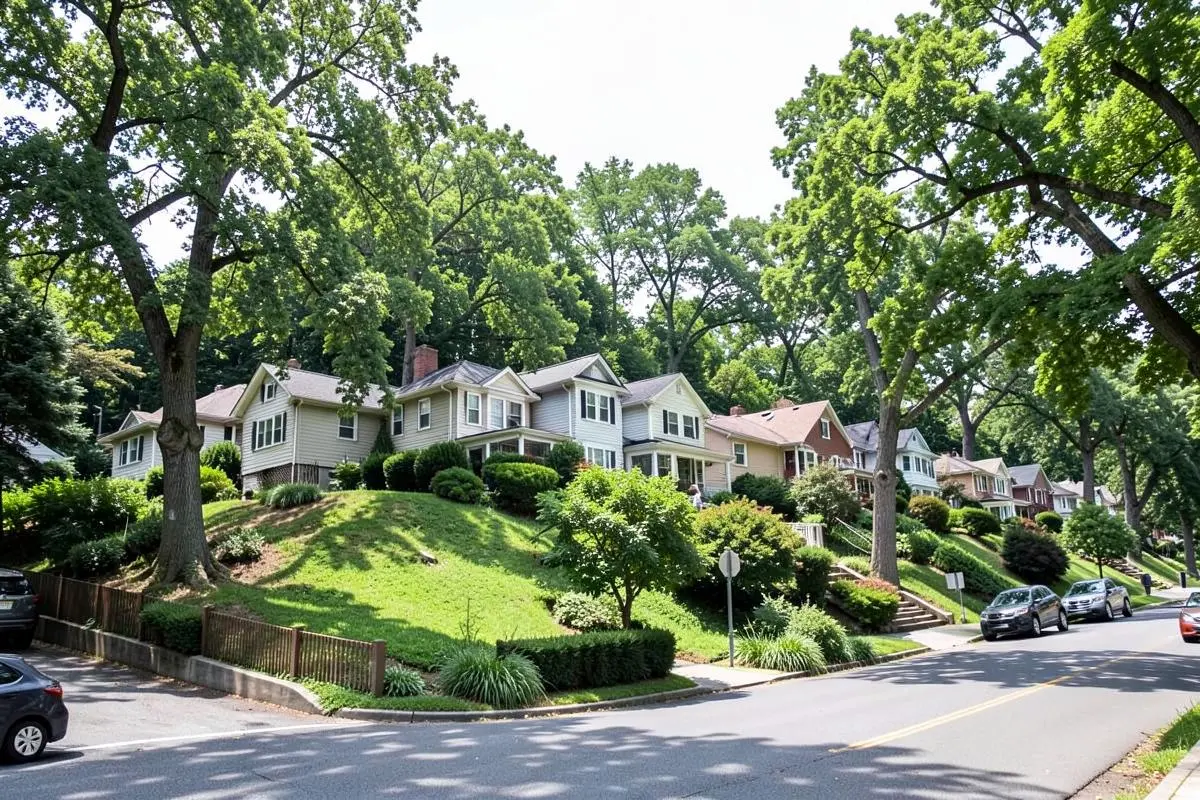
Riverdale, Fieldston and North Riverdale hold some of the most valuable single-family housing in the Bronx, and a portion of it is financed outside the banking system: a bridge loan from a private investor while an estate is settled, a hard-money loan against a house to fund a business, a jumbo loan from a non-bank lender that sold it to a fund, or a loan from a relative or business associate secured by the home. These lenders tend to assume that foreclosure law was written for banks and does not reach them. It reaches them completely. RPAPL 1304 defines a home loan by the borrower's occupancy and the loan's purpose, not by the lender's charter, and a private lender that never mailed the 90-day notice or filed under RPAPL 1306 has not satisfied a condition precedent to suit, which is the most common defect I see on Riverdale private-lender files.
The additional rules are where private lenders are most exposed. New York requires anyone making residential mortgage loans in the state to be licensed as a mortgage banker or exempt under Banking Law Article 12-D, and an unlicensed lender faces penalties and, in some circumstances, limits on enforcement. New York's civil usury cap is 16 percent, and a loan under $250,000 that exceeds it is void, principal and interest; the criminal usury cap is 25 percent, and a loan under $2.5 million above that rate is unenforceable as a matter of public policy, a defense the First Department has applied to hard-money mortgages. Points, fees and default interest are counted toward the rate in the usury analysis. Private loans also frequently omit the disclosures federal law requires, are documented on forms that do not comply with New York's mortgage requirements, and are serviced by the lender itself with no accounting a court would accept. The Riverdale homeowner facing a private lender has more defenses than the homeowner facing a bank, not fewer.
Is my Riverdale loan usurious, and what happens if it is?
Add the stated interest, the points, the fees and any default rate, and express them as an annual rate on the amount actually advanced. Under $250,000, a rate above 16 percent is civil usury and the loan is void. Under $2.5 million, a rate above 25 percent is criminal usury. A usurious Riverdale mortgage cannot be foreclosed.
Usury is the defense private lenders fear most, because the consequence is not a reduced rate but a lost loan. General Obligations Law 5-501 and Banking Law 14-a set the civil rate at 16 percent, and General Obligations Law 5-511 provides that a loan above it is void, with the lender forfeiting principal as well as interest; the civil defense is unavailable on loans of $250,000 or more, which excludes many Riverdale first mortgages but reaches second mortgages, bridge loans and business-purpose loans secured by the home. Penal Law 190.40 sets the criminal rate at 25 percent on loans under $2.5 million, and a loan above it is unenforceable in a civil action regardless of the borrower's sophistication, a rule the Court of Appeals confirmed in 2021 and the First Department applies to mortgages on Bronx homes. Corporate borrowers cannot raise civil usury but can raise criminal usury, which matters where a lender required the Riverdale home to be placed in an LLC before lending.
The calculation is where these cases are won. Hard-money lenders charge three to five points, a broker fee, a processing fee and a default rate of 24 percent that begins the day after a missed payment, and on a twelve-month bridge loan the effective annual rate on the sum actually advanced routinely exceeds 25 percent even when the note says 12. Prepaid interest held back at closing, fees paid to entities the lender controls, and mandatory extension fees are all counted. Where the analysis shows usury, the answer pleads it as an affirmative defense and counterclaims to cancel the mortgage of record, and the lender that sued to take a Riverdale house finds itself defending a claim that it is owed nothing. Where the rate is high but lawful, the same review usually turns up an RPAPL 1304 failure, a licensing problem or a standing defect, because lenders who charge these rates rarely run a compliant operation.
Where are Riverdale foreclosure cases heard?
Riverdale foreclosures are heard at Bronx County Supreme Court, 851 Grand Concourse in the Bronx, about 25 minutes away by the Henry Hudson and the Deegan, or the 1 and 4 trains. CPLR 3408 conferences run in the foreclosure settlement conference part, the assigned justice decides motions, and the referee's auction is held at the courthouse.
The Grand Concourse courthouse in the Bronx sees fewer private-lender foreclosures than bank foreclosures, and its justices look at them carefully, because the paperwork is frequently deficient and the borrowers are frequently owed something. I have practiced foreclosure defense for 27 years, and a Bronx justice presented with a hard-money note, a fee schedule and an annualized rate calculation showing 27 percent has, in my experience, stopped listening to the lender's arguments about the borrower's sophistication and started asking about the usury statute.
The court attorney referees in the conference part run the CPLR 3408 conferences for owner-occupied Riverdale homes, and a private lender must attend them and negotiate in good faith like any other plaintiff, which private lenders are poorly equipped to do because they have no loss mitigation programs; a lender that appears and offers nothing is recorded for it. The assigned justices decide standing, RPAPL 1304 and 1306, licensing, usury, the six-year statute of limitations and the amount due. Appeals from the Bronx go to the Appellate Division, First Department, which requires strict RPAPL 1304 compliance and has enforced the criminal usury bar against mortgage lenders. A contested Riverdale case runs two to four years from the summons to any auction, which is long enough to refinance a private loan with a conventional one once the case is defended. An unanswered case reaches auction in about a year, and on a Riverdale house that is a great deal of equity handed to a lender who may have had no right to it.
Did the lender comply with RPAPL 1304 and 1306 on my Riverdale loan?
The lender, bank or private, had to mail each Riverdale borrower a separate RPAPL 1304 90-day notice by certified and regular mail with a Bronx counselor list, and file under RPAPL 1306 within three business days. Private lenders often ignore both, and a loan brokered as a business loan is still a home loan if you live there.
The First Department, whose rulings bind the Bronx, requires strict compliance with RPAPL 1304 and places the burden on the plaintiff to prove the mailing through a witness with personal knowledge of it or of a standard office practice the witness actually follows. A private lender that mailed the notice at all usually mailed it once, by regular mail, without the counselor list, in ordinary type, and cannot prove even that; a hard-money lender that reads the statute for the first time when the answer arrives has a case it cannot win without starting over. Notices sent to two borrowers in a single envelope, notices without the Bronx counselor list, notices in the wrong type size and mailing affidavits from people with no knowledge of the mailing have all defeated lenders on appeal. In 2023 the Court of Appeals held that additional language in the notice envelope does not by itself void it, so the defense turns on the mailing, the contents and the counselor list rather than on extra text.
RPAPL 1306 requires the electronic filing with the Department of Financial Services within three business days of the mailing, proven by the filing confirmation, and private lenders almost never register for the filing system, let alone file. Lenders answer that the loan was a business loan, and the statute answers back: a loan is a home loan if the borrower occupies the property as a principal dwelling and the proceeds were used primarily for personal, family or household purposes, and a bridge loan to buy a Riverdale house, or a loan against the family home to pay tuition or medical bills, qualifies regardless of what the broker wrote on the application. Where either statute fails, the case is dismissed without prejudice and the lender must restart the 90-day process, and a private lender that accelerated years ago may find the restart barred by the six years CPLR 213(4) allows, with the Foreclosure Abuse Prevention Act preventing any claim that the acceleration was revoked.
What is the deadline to answer, and what should a Riverdale answer include?
A Riverdale owner has 20 days to answer after personal delivery and 30 after other service; substituted service is complete ten days after the affidavit is filed in the Bronx. Against a private lender it pleads standing, RPAPL 1304 and 1306, CPLR 213(4), usury under General Obligations Law 5-511 and Penal Law 190.40, and licensing.
Private lenders count on speed, and a Riverdale borrower who treats the summons as a negotiation opening rather than a deadline loses the leverage the law gives. The answer pleads standing first or it is waived, the six-year limitations period as an affirmative defense, the RPAPL 1304 and 1306 conditions precedent, a specific denial of the amount claimed with the lender's fees itemized and challenged, usury as an affirmative defense with the annualized rate calculation, and the lender's failure to hold a license under Banking Law Article 12-D where that applies. It counterclaims for cancellation of a usurious mortgage under RPAPL 1501 and for the return of usurious interest paid, and it states that the borrower occupies the Riverdale home so the CPLR 3408 conference is mandatory. Where the loan was placed in an LLC at the lender's insistence, the answer explains why the corporate form does not defeat the criminal usury defense.
Substituted service is complete ten days after the affidavit is filed and the 30 days run from then; a written stipulation from the plaintiff's attorney extends the deadline and a promise from the lender does not, and private lenders are quick to promise. A default is what a hard-money lender hopes for, because a default judgment forecloses every one of these defenses and delivers a Riverdale house worth several times the loan. A missed deadline is addressed by a CPLR 3012(d) or 5015 motion with a reasonable excuse and a meritorious defense, and usury is a meritorious defense that Bronx justices have allowed a late answer to raise, but the motion is a second chance the homeowner should not need.
What are my options for keeping or selling the Riverdale house?
You own the Riverdale home until a referee delivers a deed, and until then you can refinance the private loan once the case is defended, negotiate a discounted payoff from a lender facing a usury or RPAPL 1304 defense, reinstate, sell with the lender paid a lawful payoff at closing, or on a void loan seek cancellation of the mortgage.
For most Riverdale homeowners with a private or hard-money loan, the goal is to get out of it, and the defended foreclosure is what makes that possible. A conventional refinance is difficult while a foreclosure is pending and a payoff is disputed, but a lender facing a usury counterclaim, an RPAPL 1304 failure or a licensing problem will negotiate a discounted payoff and a discontinuance to avoid the risk of losing the loan entirely, and that agreed figure is what a refinancing lender or a family loan pays off. Where the loan is void for usury, the counterclaim seeks cancellation of the mortgage and the return of interest, and the Riverdale house is freed of the lien altogether; lenders facing that outcome settle for a fraction of the note.
Where the loan is lawful and the household simply fell behind, the ordinary options apply: a reinstatement, a payment plan, or a modification through the CPLR 3408 conference part on Grand Concourse, which a private lender must attend even though it has no program to offer. For the owner who is selling, Riverdale houses sell at prices that clear almost any loan, and a sale while the case is pending pays the lender at closing on a payoff figure that has been tested against the note, the usury statutes and the fee limits, with the equity kept. The auction is the outcome to avoid: a discounted price, default interest at the lender's rate and its fees deducted first, and any surplus deposited with the Bronx County Clerk until an RPAPL 1361 claim is filed. A deficiency requires an RPAPL 1371 motion within 90 days of the deed and is rare on Riverdale property. Private lenders make their money on borrowers who do not fight; the ones who do usually keep the house or the equity in it.
How a foreclosure moves through Bronx County Supreme Court
- Default and the 90-day notice
At about 90 days delinquent the lender, bank or private, must mail the RPAPL 1304 notice to each Riverdale borrower with a Bronx counselor list and file under RPAPL 1306; federal rules bar suit until more than 120 days of delinquency. Gather the note, the closing statement and every fee disclosure now.
- Summons and notice of pendency
The lender files at Bronx County Supreme Court, records a notice of pendency against the Riverdale property with the City Register, and serves you. Twenty days to answer after hand delivery, 30 otherwise; the answer pleads usury, licensing, notice and standing.
- CPLR 3408 conferences on Grand Concourse
The first Riverdale conference is calendared roughly 60 days after proof of service is filed. A private lender must attend and negotiate in good faith; the court attorney referee records a lender that appears with nothing to offer.
- Motions on usury, notice and standing
The homeowner moves for summary judgment on usury or the RPAPL 1304 failure, or opposes the lender's motion. The assigned justice decides; a usurious mortgage is cancelled and a lender without notice compliance is dismissed.
- Judgment of foreclosure and sale, if the lender prevails
Once the referee's computation is confirmed, the Riverdale judgment is signed and the sale advertised. A refinance, discounted payoff or sale can still close before the auction, and defects in service or notice support a motion to vacate.
- Auction and post-sale
The referee sells the Riverdale property at the courthouse and delivers a deed. Any surplus is recovered under RPAPL 1361, a deficiency needs an RPAPL 1371 motion within 90 days of the deed, and no Riverdale occupant is removed except through Housing Court.
Frequently Asked Questions
I took a hard-money loan on my Riverdale house and the lender is foreclosing after one missed payment. Can they do that?
They can sue, but they must have mailed a compliant RPAPL 1304 notice 90 days earlier, filed under RPAPL 1306, held a license or exemption, and charged a lawful rate. Hard-money lenders fail those tests constantly, and a loan above 25 percent all in is unenforceable. Call (516) 314-1343 with the note and closing statement.
How do I know if my loan is usurious?
Add the stated interest, points, origination and broker fees, and any default rate, and compute the annual rate on the amount you actually received. Over 16 percent on a loan under $250,000 is civil usury and voids the loan. Over 25 percent on a loan under $2.5 million is criminal usury and makes it unenforceable. I run the calculation at the first meeting.
The lender made me put the house in an LLC before closing. Does that matter?
It removes the civil usury defense, because corporations cannot raise it, but not the criminal usury defense at 25 percent, which the Court of Appeals has held a corporate borrower may assert. Lenders use the LLC structure for exactly this reason, and it does not work above 25 percent.
How long does a Riverdale foreclosure take?
A defended Riverdale case usually takes two to four years from the summons to a Grand Concourse auction, passing through the CPLR 3408 conferences, motion practice, the RPAPL 1321 order of reference and the judgment of foreclosure and sale. A private-lender case with a usury or notice defense often ends earlier, in a discounted payoff.
Does the 90-day notice requirement apply to a private lender?
Yes. RPAPL 1304 turns on whether the borrower occupies the home and the loan was for personal, family or household purposes, not on who the lender is. A private lender that never mailed the notice or filed under RPAPL 1306 cannot maintain the action.
Can I refinance out of the private loan while the foreclosure is pending?
Usually only after the case is defended and the payoff is negotiated. A lender facing a usury counterclaim or a notice defense will agree to a discounted payoff and a discontinuance, and that figure is what a conventional refinance or a family loan pays. You hold title throughout and can also sell at any time before a referee's deed.
Is the first consultation free for Riverdale homeowners?
Yes. Call (516) 314-1343 and bring the summons and complaint, the note, the mortgage, the closing statement showing every fee, the 90-day notice and its envelope if you received one, and all correspondence with the lender. I will tell you the true annual rate, whether the lender complied with the notice statutes, and what the loan is actually worth.
More on New York foreclosure defense
- How Long Does Foreclosure Take in New York? The Complete Timeline for Long Island Homeowners (2026)
Most New York foreclosures take 1 to 3 years, and Long Island cases often run longer. A breakdown of all 7 stages and the deadlines that matter.
- What Happens If You Don't Answer a Foreclosure Summons in New York? A Long Island Defense Attorney Explains Your 3 Ways Back In (2026)
In New York you have 20 to 30 days to answer a foreclosure summons. Miss it and you are in default, but three routes back into the case remain open...
- How to Stop a Foreclosure Sale in Nassau County: A Step-by-Step Guide from a Long Island Foreclosure Defense Attorney
A foreclosure sale date is not the end of the road. New York gives homeowners multiple legal tools to stop, delay, or dismiss a foreclosure, but...
- Partition Action New York: Forcing the Sale of Inherited or Jointly Owned Property
Long Island home values have made buyouts of co-owned and inherited property hard. Here is how a partition action in New York actually forces a sale...
- How Much Does a Real Estate Attorney Cost in New York? The Real Fees for Long Island Buyers and Sellers (2026)
Most Long Island real estate attorneys charge a flat fee of about $1,500 to $3,000 for a residential closing, and NYC runs higher. Here is who pays...
- Surplus Money Proceedings in New York Foreclosure: How to Claim the Excess
How surplus money proceedings work after a New York foreclosure sale: who gets the excess, how to file a claim, and the deadlines Nassau & Suffolk...
Served with foreclosure papers in Riverdale? Call for a free consultation.
The Bronx homeowners: I will review where your case actually sits, which deadlines are live, and which options are still open, at no cost for the initial consultation. I answer my own phone, 7 days a week, 6:00 AM to 8:00 PM.
Attorney advertising. This page is general information about New York law only, not legal advice, and does not create an attorney-client relationship. Prior results do not guarantee a similar outcome.