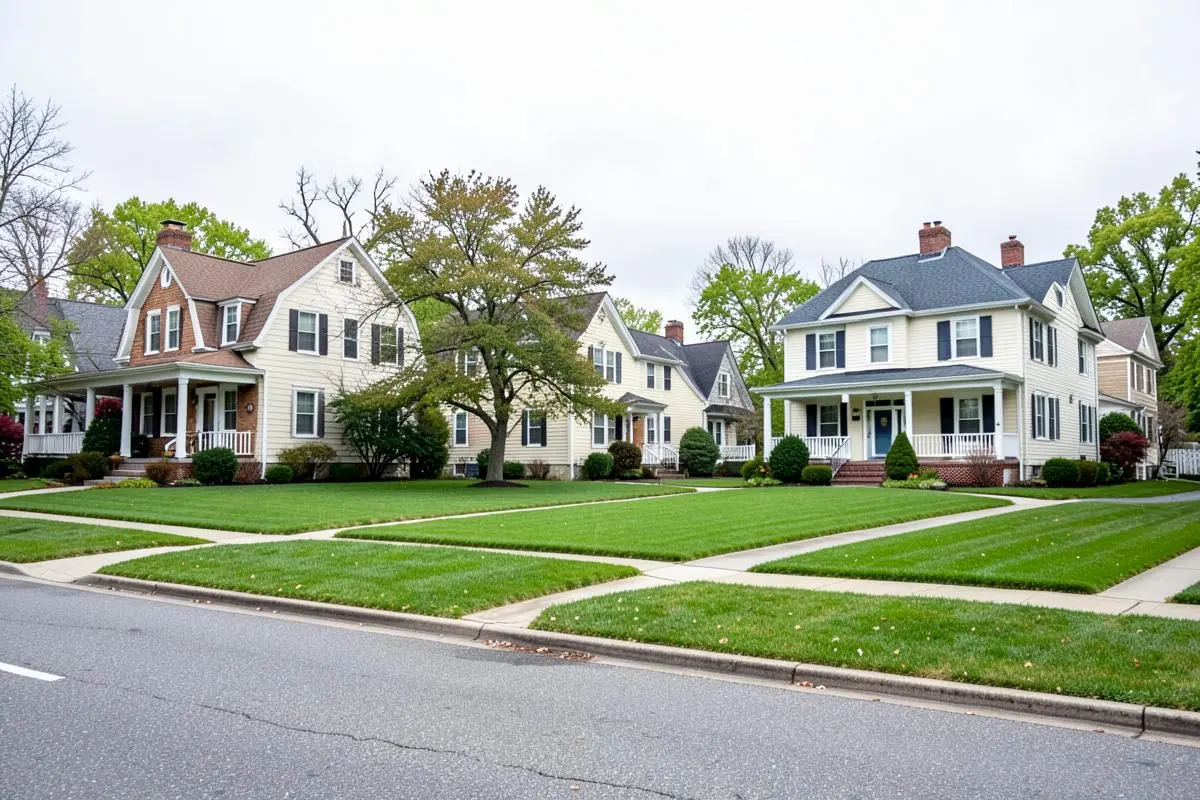
Foreclosure Defense Attorney in Tottenville, NY (Served with Papers? Start Here)
Tottenville homeowners have 20 days to answer a foreclosure summons handed to them and 30 days otherwise, and the case is heard at Richmond County Supreme Court, 26 Central Avenue in St. George, about 35 minutes up Hylan Boulevard. Tottenville's houses were refinanced heavily in the 2000s, often with cash-out loans sold by brokers who buried the terms, and a refinance made with defective federal disclosures carries a defense most homeowners never hear about: rescission under the Truth in Lending Act. I have raised it for 27 years.
Key Takeaways
- Tottenville is on Staten Island; foreclosures are heard at Richmond County Supreme Court, 26 Central Avenue in St. George; the Second Department hears appeals.
- The Truth in Lending Act gives a borrower three business days to rescind a refinance of a principal residence, extended to three years where the lender failed to deliver accurate material disclosures or the required rescission notices.
- Rescission is exercised by written notice, not by suit; the Supreme Court held in 2015 that a timely letter is enough, and the lender then has 20 days to release its lien and return what the borrower paid.
- A rescinded Tottenville mortgage is void as security, so the lender cannot foreclose on it; the borrower's obligation to tender the net loan balance can be structured through the court.
- Where rescission is unavailable, TILA disclosure violations still support a recoupment defense that reduces the debt, with no time limit when raised defensively.
- The 20 or 30 day answer deadline preserves TILA alongside standing, RPAPL 1304, RPAPL 1306 and CPLR 213(4).
What is TILA rescission, and can it stop a foreclosure on my Tottenville refinance?
The Truth in Lending Act, 15 U.S.C. 1635, lets a borrower who refinanced a principal residence cancel the loan within three business days of closing, and for up to three years if the lender never delivered accurate disclosures or two copies of the cancellation notice. A rescinded Tottenville mortgage is void and cannot be foreclosed.
Tottenville was refinanced hard between 2003 and 2008, as brokers worked the south shore with cash-out and debt-consolidation loans, and the closings were fast. Borrowers signed stacks of documents at a kitchen table or a title company office, and the federal disclosures that TILA requires, the Truth in Lending disclosure statement showing the annual percentage rate, the finance charge, the amount financed and the payment schedule, and two copies per borrower of the notice of the right to cancel, were often missing, wrong, or handed over with the date left blank. Each of those failures matters, because TILA conditions the borrower's three-day rescission window on receiving them, and where they were not properly delivered the window stays open for three years from the closing.
Rescission is a powerful remedy. Under 15 U.S.C. 1635(b), when a borrower rescinds, the security interest becomes void, the borrower is no longer liable for any finance or other charge, and the lender must within 20 days return everything the borrower paid, including closing costs, and take steps to reflect the termination of the lien; the borrower then tenders the net loan proceeds. In 2015 the Supreme Court held in Jesinoski v. Countrywide that a borrower rescinds by mailing written notice within the three-year period, and need not file suit within that time. Most Tottenville loans from the boom are now well past three years, but the analysis is not over: a loan refinanced or modified more recently may still be within the window; a loan whose three-year period expired while the borrower was in a prior action may have been rescinded by a notice sent then; and TILA violations that no longer support rescission still support recoupment, a defensive reduction of the debt by the statutory damages the violation carries, which has no time limit when raised in the lender's own action. I review the closing package on every Tottenville refinance for exactly these defects.
How do I exercise rescission, and what happens to the loan afterward?
Send the lender and servicer a written notice of rescission by certified mail, identifying the Tottenville loan and the disclosure defects, within three years of closing. The lender has 20 days to release the lien and return your payments, or to contest. In the foreclosure, the rescission is pleaded as a defense and the court supervises the unwinding.
The notice is simple and the consequences are not, so it is sent with care. It identifies the loan, states that the borrower rescinds under 15 U.S.C. 1635 and Regulation Z, 12 C.F.R. 1026.23, identifies the disclosure failures that extended the rescission period, and demands the lender's performance within 20 days. It goes by certified mail to the lender of record, the current owner of the loan and the servicer, because the right runs against assignees under 15 U.S.C. 1641(c). A lender that believes the rescission is invalid must act; silence for 20 days is itself a violation, and the courts have held that a lender that neither performs nor contests within a reasonable time forfeits arguments it might have made. Where the lender sues, or where the rescission is raised in the pending foreclosure, the Tottenville homeowner asks the court to declare the mortgage void and to direct the exchange of tenders.
The tender is where the negotiation happens. After rescission the borrower owes the lender the amount financed less every payment, finance charge and closing cost, a figure often far below the current balance, and the borrower is entitled to tender it through a refinance, a sale or a payment plan; courts may condition the release of the lien on the tender and may modify the statutory sequence to protect both sides. Because the lender loses its interest, fees and often much of its principal, rescission cases settle: the lender agrees to a reduced principal, a lower rate and a release of the deficiency in exchange for the borrower withdrawing the rescission claim. Where the three years have run, the same closing defects are pleaded as recoupment, reducing the debt by the statutory damages of up to twice the finance charge within the caps, and as a Deceptive Practices claim under General Business Law 349 where the broker's conduct was misleading. A Tottenville family that was sold a bad refinance in 2006 is not without recourse in a 2026 foreclosure.
Where are Tottenville foreclosure cases heard?
Tottenville foreclosures are heard at Richmond County Supreme Court, 26 Central Avenue in St. George, about 35 minutes away by Hylan Boulevard or the Staten Island Railway from Tottenville station to St. George. CPLR 3408 conferences are held in the foreclosure conference part, motions go to the assigned justice, and any Tottenville auction is at the courthouse.
The St. George courthouse handles every Staten Island foreclosure, and Tottenville's residents make the longest trip to reach it, the full length of the island by Hylan Boulevard or the railway. I have practiced foreclosure defense for 27 years, and Richmond County justices, who saw the south shore's refinance boom and its collapse up close, take TILA and origination defenses seriously when they are documented with the actual closing papers rather than asserted in general terms.
The court attorney referees in the conference part run the CPLR 3408 conferences for owner-occupied Tottenville homes and record whether the servicer negotiated in good faith, and a pending rescission or recoupment claim changes the servicer's calculation at those conferences, because a lender facing a void lien negotiates differently from one that does not. The assigned justices decide standing, RPAPL 1304 and 1306, the six-year statute of limitations, TILA rescission and recoupment, and the amount due, with appeals to the Appellate Division, Second Department. A contested Tottenville case runs two to four years from the summons to any auction, and a rescission case, where the lender's exposure is the whole loan, often ends in a negotiated principal reduction well before that. An unanswered case reaches auction in about a year, and a Tottenville family that never raised the closing defects has let the lender foreclose a mortgage it may not have been entitled to enforce.
Did the lender comply with RPAPL 1304 and 1306, and what about the TILA disclosures?
The lender had to mail each Tottenville borrower a separate RPAPL 1304 90-day notice by certified and regular mail with a counselor list, and file under RPAPL 1306 within three business days. Separately, at closing, it had to deliver accurate TILA disclosures and two copies of the cancellation notice to each borrower; the closing file shows whether it did.
In the Second Department, which reviews Tottenville cases, RPAPL 1304 demands strict compliance, and the plaintiff must prove the mailing by a witness with personal knowledge or an office practice that witness actually follows. Tottenville loans originated by brokers and sold into trusts have passed through several servicers, and the current plaintiff often cannot produce that witness. Notices to two borrowers in one envelope, notices without the Richmond County counselor list, notices in the wrong type size and conclusory mailing affidavits have each defeated lenders on appeal; since the Court of Appeals' 2023 decision in Kessler, extra language in the envelope does not by itself void the notice, so the analysis focuses on the mailing, the contents and the counselor list. Under RPAPL 1306 the notice must be filed electronically with the Department of Financial Services within three business days of mailing, and the Tottenville plaintiff must prove it with the confirmation.
The TILA question is answered from the closing package. Regulation Z required the lender on a Tottenville refinance to deliver, before consummation, a disclosure statement with the annual percentage rate and finance charge accurate within tight tolerances, and at closing two copies of the notice of the right to cancel to each borrower with the rescission deadline filled in; a borrower who received one copy, an undated notice, or a disclosure that understated the finance charge by more than the tolerance has a rescission period of three years rather than three days. Lenders rely on a signed acknowledgment that the disclosures were received, and TILA makes that acknowledgment only a rebuttable presumption; a borrower's sworn account of the closing, supported by a file that contains only one copy of the notice, rebuts it. Where the state notice fails, the case is dismissed without prejudice and the 90-day process restarts; where TILA was violated, the mortgage may be void or the debt reduced. I obtain the complete closing file on every Tottenville refinance before the first conference.
What is the deadline to answer, and how is TILA raised in the answer?
A Tottenville owner has 20 days to answer after personal delivery and 30 after other service; substituted service is complete ten days after the affidavit is filed in Richmond County. It pleads standing, CPLR 213(4), RPAPL 1304 and 1306, and on a Tottenville refinance TILA rescission where the notice was sent, and recoupment.
TILA defenses must be pleaded to be preserved. The answer pleads standing first or it is waived, the six-year limitations period under CPLR 213(4) as an affirmative defense, the RPAPL 1304 and 1306 conditions precedent, a specific denial of the amount claimed, and the TILA violations with particularity: which disclosures were inaccurate or missing, how many copies of the notice of the right to cancel each borrower received, and, where rescission has been exercised, the date of the notice and the lender's failure to respond within 20 days. It counterclaims for a declaration that the mortgage is void and for statutory damages, pleads recoupment as a setoff against the debt, and states that the Tottenville owner occupies the home so the CPLR 3408 conference is mandatory. Where the rescission period is still open, the notice of rescission is sent before the answer so the answer can plead it as accomplished.
Substituted service is complete ten days after the affidavit is filed and the 30 days run from then; a written stipulation from the plaintiff's attorney extends the deadline and a servicer's promise does not. A default forfeits every defense, including TILA, and moves the house toward auction in about a year; a Tottenville family with a defective closing package that never answered has surrendered a claim that might have cut the debt in half. A missed deadline is addressed by a CPLR 3012(d) or 5015 motion with a reasonable excuse and a meritorious defense, and a documented TILA violation is meritorious, but the motion is a second chance the homeowner should not need.
What are my options for keeping or selling the Tottenville house?
You own the Tottenville home until a referee delivers a deed, and until then you can rescind a defective refinance and tender the reduced balance through a new loan, negotiate a principal reduction from a lender facing rescission, modify through the CPLR 3408 conference part, reinstate, sell with the lender paid, or short sell with an RPAPL 1371 waiver.
For a Tottenville homeowner with a rescission claim, the options are unusually good. A valid rescission voids the lien and reduces the debt to the amount financed less everything paid, and the lender, facing the loss of years of interest and its fees, will typically agree to a written settlement that reduces the principal to a figure the household can carry, lowers the rate, and releases any deficiency, in exchange for the borrower's withdrawal of the rescission and a conventional modification going forward. Where the household can refinance or has family funds, the reduced balance is tendered outright and the mortgage is satisfied. Where rescission is unavailable and recoupment applies, the statutory damages are credited against the arrears and the case proceeds to a modification on the corrected figure through the conference part in St. George.
For a Tottenville family without an origination defense, the ordinary paths apply: a modification through the conference part, a reinstatement or repayment plan where the hardship has passed, or a sale while the case is pending with the lender paid at closing and the equity kept, which on Tottenville's detached houses is substantial. The courthouse auction is what every Tottenville option is built to avoid: bidders pay a discount, default interest and fees come off first, and the surplus sits with the Richmond County Clerk until an RPAPL 1361 motion. On the rare underwater Tottenville loan a short sale requires the lender's consent and a written RPAPL 1371 waiver of the deficiency. A refinance that was sold badly in 2006 is the lender's problem as much as the borrower's, and the defended case is how a Tottenville family makes it so.
How a foreclosure moves through Richmond County Supreme Court
- Default and the 90-day notice
At about 90 days delinquent the servicer mails the RPAPL 1304 notice to each Tottenville borrower with a Richmond County counselor list and files under RPAPL 1306; federal rules bar suit until more than 120 days of delinquency. Locate your complete closing package now, including every copy of the notice of the right to cancel.
- Summons and notice of pendency
The lender files at Richmond County Supreme Court, records a notice of pendency against the Tottenville property with the Richmond County Clerk, and serves you. Twenty days to answer after hand delivery, 30 otherwise; the answer pleads TILA with particularity.
- Notice of rescission, where the period is open
A written notice of rescission under 15 U.S.C. 1635 goes by certified mail to the lender, the loan's owner and the servicer. The lender has 20 days to release the lien and return payments, or to contest; silence is a violation.
- CPLR 3408 conferences in St. George
The first Tottenville conference is calendared roughly 60 days after proof of service is filed. The court attorney referee supervises the negotiation, in which a pending rescission or recoupment claim shapes the servicer's offer, and records the servicer's good faith.
- Motions on TILA, notice and standing
The homeowner moves for a declaration that the mortgage is void or for recoupment, or opposes the lender's summary judgment motion on those grounds and on RPAPL 1304. The assigned justice decides; the referee computes any debt with recoupment credited.
- Judgment, auction and post-sale
If a judgment is entered, the referee's report is confirmed, the sale published and held at the courthouse. A settlement, tender or sale can still close before the auction. Any surplus is recovered by an RPAPL 1361 motion, and a deficiency against a Tottenville borrower requires an RPAPL 1371 motion within 90 days of the deed.
Frequently Asked Questions
I refinanced my Tottenville house in 2007 with a broker who rushed the closing. Can I still cancel the loan?
Rescission must be exercised within three years of closing, so a 2007 loan is usually past it unless a notice was sent earlier or the loan was refinanced more recently. But the same disclosure defects support recoupment, a reduction of the debt by TILA's statutory damages, with no time limit when raised in the foreclosure. Bring the closing package to (516) 314-1343.
What disclosure mistakes extend the rescission period to three years?
Failure to deliver two copies of the notice of the right to cancel to each borrower, a notice with the deadline left blank, or a Truth in Lending disclosure that misstates the annual percentage rate or finance charge beyond the tolerances. A signed acknowledgment that you received them is only a rebuttable presumption.
Do I have to sue to rescind?
No. The Supreme Court held in Jesinoski v. Countrywide that written notice mailed within the three-year period is enough. The lender must then release the lien and return your payments within 20 days or contest the rescission; the unwinding, including your tender of the net balance, is supervised by the court.
How long does a Tottenville foreclosure take?
A defended Tottenville case usually takes two to four years from the summons to a St. George auction, passing through the CPLR 3408 conferences, motion practice, the RPAPL 1321 order of reference and the judgment of foreclosure and sale. A case with a rescission claim often ends earlier in a negotiated principal reduction.
What do I owe if the loan is rescinded?
The amount financed, less every payment, finance charge and closing cost you paid, which is often far below the current balance. You tender it through a refinance, a sale or a plan the court approves, and the lender releases its lien. Most lenders settle for a reduced principal and rate rather than unwind the loan.
Can I sell my Tottenville house while the case is pending?
Yes. Title stays with you until the referee's deed after an auction, so a Tottenville sale can close any time before that. The lender is paid at closing, on a figure reduced by any recoupment or rescission settlement, and the remaining equity is yours.
Is the first consultation free for Tottenville homeowners?
Yes. Call (516) 314-1343 and bring the summons and complaint, the 90-day notice and its envelope, mortgage statements, and the complete closing package from your refinance, including the Truth in Lending disclosure and every copy of the notice of the right to cancel. I will tell you whether the closing was defective and what that is worth in your case.
More on New York foreclosure defense
- How Long Does Foreclosure Take in New York? The Complete Timeline for Long Island Homeowners (2026)
Most New York foreclosures take 1 to 3 years, and Long Island cases often run longer. A breakdown of all 7 stages and the deadlines that matter.
- What Happens If You Don't Answer a Foreclosure Summons in New York? A Long Island Defense Attorney Explains Your 3 Ways Back In (2026)
In New York you have 20 to 30 days to answer a foreclosure summons. Miss it and you are in default, but three routes back into the case remain open...
- How to Stop a Foreclosure Sale in Nassau County: A Step-by-Step Guide from a Long Island Foreclosure Defense Attorney
A foreclosure sale date is not the end of the road. New York gives homeowners multiple legal tools to stop, delay, or dismiss a foreclosure, but...
- How Much Does a Quiet Title Action Cost in New York? The Real Numbers and the Timeline (2026)
Court fees for a New York quiet title action run about $400, and attorney fees depend on who fights back. The real numbers and the timeline.
- Quiet Title Action New York: Clearing a Fraudulent or Stolen Deed
Deed theft is now grand larceny in New York. Here is how a quiet title action under RPAPL Article 15 cancels a forged or stolen deed, clears stale...
- Partition Action New York: Forcing the Sale of Inherited or Jointly Owned Property
Long Island home values have made buyouts of co-owned and inherited property hard. Here is how a partition action in New York actually forces a sale...
Served with foreclosure papers in Tottenville? Call for a free consultation.
Staten Island homeowners: I will review where your case actually sits, which deadlines are live, and which options are still open, at no cost for the initial consultation. I answer my own phone, 7 days a week, 6:00 AM to 8:00 PM.
Attorney advertising. This page is general information about New York law only, not legal advice, and does not create an attorney-client relationship. Prior results do not guarantee a similar outcome.