Does a Seller Have to Disclose Termite Damage in New York? What Long Island Buyers and Sellers Need to Know (2026)
Yes. A seller of a one to four family home in New York must give the buyer a signed Property Condition Disclosure Statement before the buyer signs a binding contract, and Question 30 on that form asks directly whether there is any termite, insect, rodent or pest infestation or damage. The seller answers only from actual knowledge, the form says on its face that it is not a warranty, and a New York home inspection by law does not cover pests. A buyer on Long Island should treat the form as a starting point and order a separate termite inspection before signing.
Key Takeaways
- The disclosure statement is required by Real Property Law 462 for one to four family homes. Condos and co-ops are not covered.
- Two questions deal with pests. Question 30 asks about infestation or damage. Question 31 asks whether the property was ever tested and tells the seller to attach the report.
- Since March 20, 2024, a seller can no longer skip the form by handing the buyer a $500 credit at closing.
- A New York home inspection “shall not include an inspection for radon or pests.” A termite inspection is a separate job.
- After closing, New York is still a buyer beware state. A claim against the seller generally takes proof of active concealment, which is more than silence.
Does a seller have to disclose termite damage in New York?
What does the New York property condition disclosure statement ask about pests?
The form asks two pest questions. Question 30 asks, “Is there any termite, insect, rodent or pest infestation or damage?” Question 31 asks whether the property has been tested for termite, insect, rodent or pest infestation or damage, and tells the seller to attach the report. Each can be answered yes, no, unknown, or not applicable.
Read those two questions closely, because the wording matters. Question 30 covers infestation or damage, so old damage counts even if the insects are gone. It also covers rodents and other insects, not just termites. Question 31 asks whether a test was done. It does not tell the seller to go get one.
What happens if the seller lies on the form or never delivers it?
The $500 credit gave sellers a cheap way out of the form. The Legislature removed it in Chapter 484 of the Laws of 2023, which took effect March 20, 2024. Section 465 now says a seller who provides a statement, or who provides or fails to provide a revised one, is liable only for a willful failure to perform the requirements of the law.
“Willful” is the word that decides these cases. An honest “unknown” is not a violation. A “no” from a seller who is holding a termite company's treatment invoice is a different matter. The statute also says nothing in it limits any other existing claim, which is why buyers in this position usually look at fraud as well.
Does a home inspection cover termites in New York?
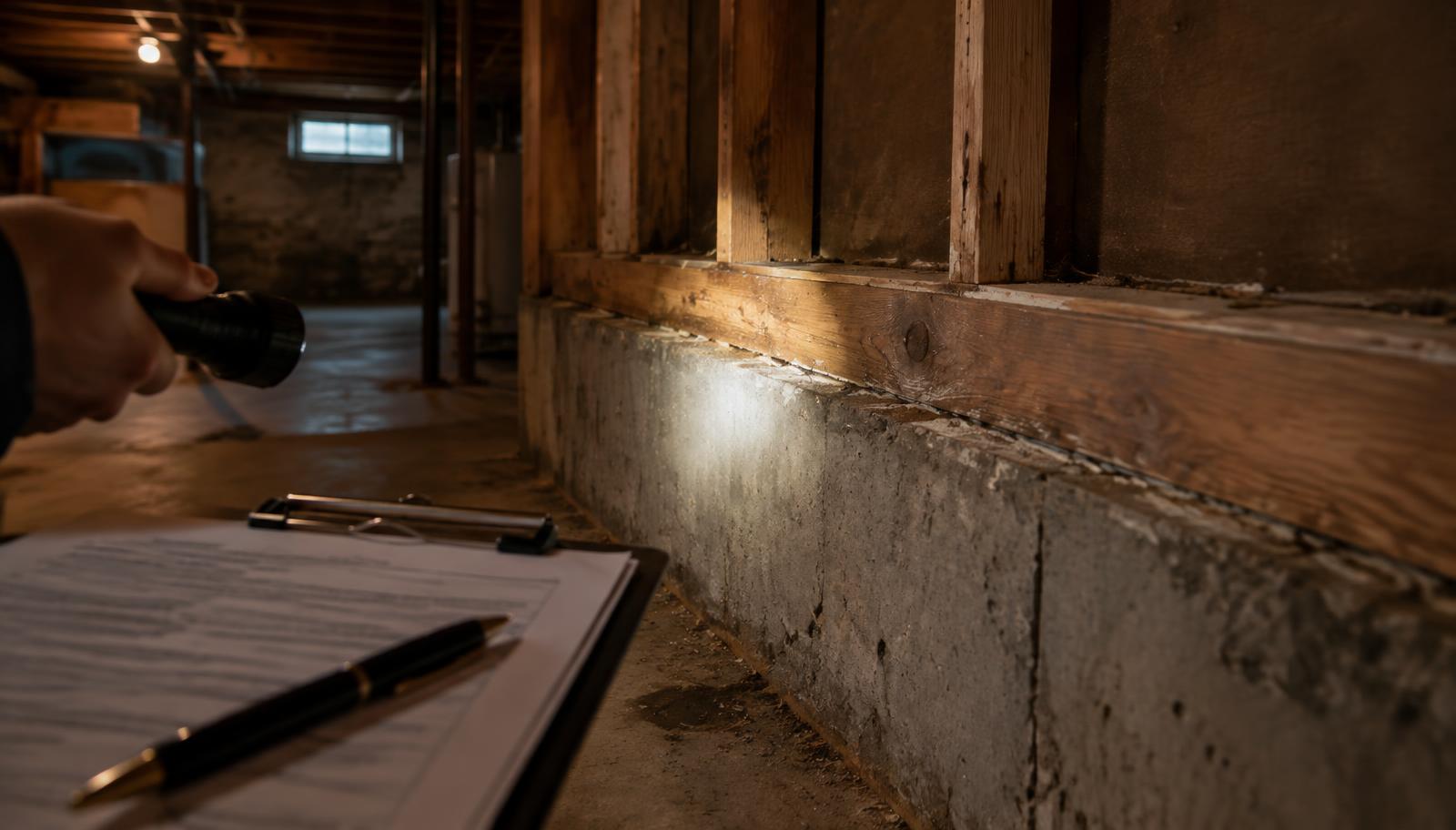
“When I inspect a house for a buyer, I'm looking at the places people don't go: the sill plate, the basement walls, the garage, around the deck. Termite damage and old rodent activity hide there. A clean-looking kitchen tells you almost nothing about what's going on in the foundation.”
What should a buyer do when an inspection finds termite or rodent damage?
Stop before you sign and get the problem in writing. On Long Island the inspections usually happen before the contract of sale is signed, or inside a short inspection window when the contract provides one. A buyer who finds damage at that stage still has leverage and four real options: repairs, a credit, a lower price, or walking away.
This is general information about New York law, not legal advice for your particular deal, and the right move depends on your contract and your facts. With that said, the order I would work in is this:
- Get the written report. It should say what was found, where, and whether the activity looks current or old. Old damage with no live insects is a different negotiation than an active colony.
- Find out how far it goes. A pest report tells you there is damage. If structural wood such as a sill plate or joist is involved, have a contractor or engineer tell you what the repair actually involves.
- Compare it to the disclosure statement. Look at how the seller answered Questions 30 and 31, and ask for any prior inspection or treatment reports. A “no” that does not match what the inspector found is something your attorney needs to see.
- Decide what you are asking for. Treatment and repair before closing, a credit, a price reduction, or ending the deal. Who pays is a matter of negotiation, not something the disclosure statute assigns.
- Put the agreement in the contract. Under General Obligations Law 5-703, a contract for the sale of real property is void unless it is in writing and signed. A seller's verbal promise to “take care of it” is not something to rely on. Ask your attorney to write the repair or credit into the contract or a rider, and to address whether that promise survives the closing.
- Check again before you close. Ask for the paid treatment invoice and look at the repair at the final walk-through.
Can I sue the seller if I find termite damage after closing?
Sometimes, but it is a hard case. New York follows caveat emptor, meaning buyer beware. A seller dealing at arm's length generally has no duty to volunteer information about the house unless the seller's conduct amounts to active concealment. Courts require more than silence, and an “as is” clause in the contract can bar a fraud claim.
The Appellate Division, Second Department, which covers Nassau and Suffolk, has repeated that rule for decades. In Jablonski v Rapalje (2005), a buyer who found bats in the attic was allowed to go forward where he alleged the sellers concealed the infestation and passed the droppings off as coming from birds. The court restated the same rule in Gordon v Connie Profaci Realty, LLC in 2024, adding that the buyer has the duty to satisfy himself as to the quality of his bargain.
The most recent word came on June 3, 2026. In Serba v Cook, the same court held that a buyer's fraud claims were barred by the “as is” clause and the specific disclaimer about the condition of the property in her contract. It also repeated that a buyer who has the means to learn the truth by ordinary intelligence has to use them. For a termite case, that means the buyer who skipped the termite inspection has the weakest claim of all.
What should a Long Island seller do about known termite or pest damage?
Disclose it, document it, and deal with it before the buyer's inspector finds it. Answer Question 30 honestly, attach any inspection or treatment report under Question 31, and update the form if something new turns up before closing. That is what the statute asks for, and it is also the best way to keep a deal from falling apart late.
Sellers get into trouble in two ways. The first is checking “no” out of habit when the honest answer is “yes” or “unknown.” With the $500 credit gone, that checkbox now carries exposure for the buyer's actual damages if the failure was willful. The second is covering a problem up instead of fixing it, which is the conduct courts call active concealment.
Thomas A. Sirianni, Esq.
1 Pine Valley Road, Upper Brookville, NY (Nassau County)
(516) 314-1343
thomassirianniesq.com
Frequently Asked Questions
Does a seller have to disclose termite damage in New York?
Yes. A seller of a one to four family home must deliver a signed Property Condition Disclosure Statement before the buyer signs a binding contract, and Question 30 asks whether there is any termite, insect, rodent or pest infestation or damage. The seller answers from actual knowledge, so "unknown" is a permitted answer when it is true.
Do sellers have to disclose past termite treatment in New York?
The form reaches it in two ways. Question 30 asks about infestation or damage, and Question 31 asks whether the property has been tested for termite, insect, rodent or pest infestation or damage and tells the seller to attach the report. A seller holding an old inspection or treatment report should expect to produce it.
Is a termite inspection required to buy a house in New York?
The disclosure statute does not require one, but your lender might. The VA requires wood destroying insect information in 18 New York counties, including Nassau, Suffolk, Queens and the Bronx. Because a New York home inspection by law does not include pests, a separate termite inspection is the only way a buyer gets a real answer.
Who pays for termite treatment when buying a house in New York?
Whoever the contract says. It is a negotiated point, not something the disclosure statute assigns to either side. Buyers commonly ask the seller to treat and repair before closing, to give a credit, or to lower the price. Whatever is agreed should be written into the signed contract.
Can a buyer back out after an inspection finds termites?
Before a contract is signed, yes. Under General Obligations Law 5-703, a contract to sell real property is void unless it is in writing and signed, so an accepted offer alone does not lock a buyer in. After signing, the answer depends on what the contract says about inspections and the condition of the house.
How long do I have to sue a seller for hiding termite damage in New York?
A fraud claim must be brought within the greater of six years from when the claim arose or two years from when you discovered the fraud or could have discovered it with reasonable diligence (CPLR 213(8)). The deadline is rarely the hard part. Proving the seller actively concealed the damage is.
Buying or selling a home on Long Island and pests have come up? Talk it through before you sign.
Nassau and Suffolk County buyers and sellers: I will go over the disclosure statement, the inspection reports, and the contract language with you and tell you plainly where you stand. I answer my own phone, 7 days a week, 6:00 AM to 8:00 PM.
Attorney advertising. This article is general information about New York law only, not legal advice, and does not create an attorney-client relationship. Statutes and court rules change and deadlines vary by case; consult a licensed New York attorney about your specific situation promptly. Prior results do not guarantee a similar outcome.