Copiague, NY Foreclosure Defense Lawyer: Protecting Suffolk County Homeowners for 27 Years
Copiague homeowners must answer a foreclosure summons within 20 days of personal delivery or 30 days of any other service, and the case is heard in Suffolk County Supreme Court in Riverhead. Copiague has one of the highest concentrations of legal two-family homes in Babylon, and a rental unit changes the defense three ways: the rent is income for the modification, the tenant holds rights under RPAPL 1305 that outlast the auction, and the lender may move to have a receiver collect the rent during the case.
Key Takeaways
- Copiague is in the Town of Babylon; foreclosures are heard in Suffolk County Supreme Court in Riverhead, about 45 minutes east.
- Documented rent from a Copiague two-family belongs on the CPLR 3408 modification application and often flips a denial to an approval.
- A tenant with a bona fide lease keeps it, or gets at least 90 days, under RPAPL 1305 after any auction; nobody can be locked out.
- The lender can ask the Riverhead court to appoint a receiver for the rents during the case; that motion should be opposed.
- An owner living in one unit gets the mandatory settlement conference; a pure investor does not as of right.
- Answer within 20 or 30 days; a summons left with your tenant and then mailed can be valid service on you.
What if my Copiague home is a two family with a tenant?
A rental unit shapes a Copiague foreclosure three ways. The rent is documented income that belongs on the CPLR 3408 modification application. The tenant has RPAPL 1305 protections that survive the auction, so a purchaser must honor a bona fide lease or give at least 90 days' notice.
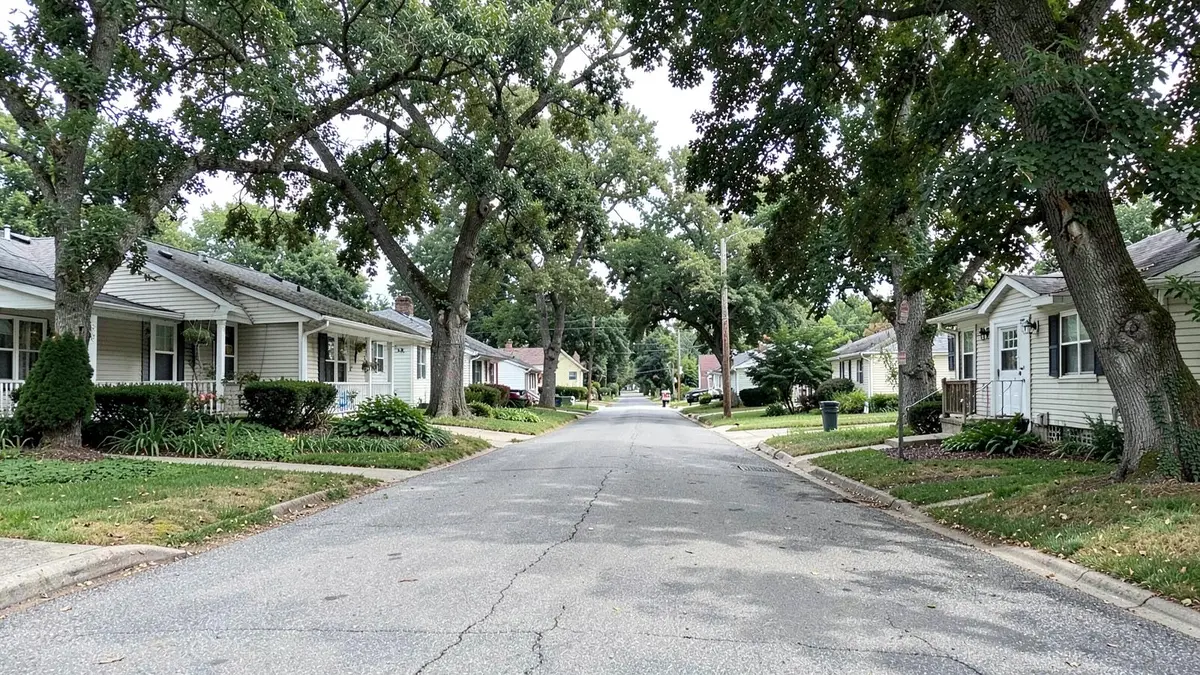
Copiague's housing stock is unusual for the South Shore: a large share of legal two-family homes, plus a good number of single-family houses converted over the years. That matters because the servicer's underwriting treats rent as income only when it is documented. A lease, a rent ledger, and bank deposits that match turn a marginal modification application into an approvable one. Undocumented cash rent is a problem I can usually solve, but only if I know about it before the first conference, not after a denial.
The receiver question is the one Copiague landlords do not see coming. New York law lets a foreclosing lender ask the court to appoint a receiver to collect rents while the case is pending, and if it succeeds, the homeowner loses the very income that would have funded the modification. The motion is discretionary, it is opposable, and in an owner-occupied two-family the equities usually favor the homeowner. If you receive a receiver motion, do not ignore it and do not hand over the rent voluntarily. And keep collecting from your tenant. The lease remains in force through the entire foreclosure, and a tenant who stops paying because the house is in foreclosure is wrong about the law, not right about it.
Where is a Copiague foreclosure heard, and how does it work?
In Suffolk County Supreme Court in Riverhead, about 45 minutes east, as a judicial action; Babylon Town Hall has no role. The lender must mail the RPAPL 1304 notice to the borrower, not the tenant, survive your answer, complete the CPLR 3408 conferences and win a judgment before any auction. Contested, two to four years.
Copiague sits toward the western end of Suffolk, and Riverhead is a long drive, but that is where every mortgage foreclosure in the county is heard. Babylon Town Hall and the First District Court in Lindenhurst handle other matters. The foreclosure part in Riverhead runs the settlement conferences through court attorney referees and assigns a justice to decide the lender's motions.
Twenty-seven years of appearing there have taught me how the part treats a two-family. The referees understand rental income and they understand receivers, and they have seen servicers deny modifications by ignoring documented rent that should have been counted. When I can put a lease, a ledger and matching bank deposits in front of the referee and show the servicer left them out, the good-faith finding that follows can toll interest for the months of delay, and Suffolk courts have done exactly that. The calendar is heavy, and a contested case takes two to four years to reach an auction, which for a landlord means two to four years of rent to collect and apply. A homeowner who never answers gets none of it and can face a sale in about a year.
Did the lender send a compliant 90 day notice?
RPAPL 1304 requires the lender to mail each Copiague borrower a separate 90-day notice, in 14-point type, by certified and first-class mail, with the statutory warning and a Suffolk County counselor list, and RPAPL 1306 requires a filing with the state within three business days.
I have seen 1304 notices addressed to the second-floor apartment of a Copiague two-family more than once, and I have seen them addressed to the property with no unit designation at all in a building where the borrower lives upstairs and the mailbox downstairs belongs to the tenant. The statute requires the notice to be sent to the borrower at the last known address and, if different, the property address, and a lender that cannot show the notice reached the borrower's own mail has a proof problem. The Second Department requires that proof to come from someone with knowledge of the mailing or the servicer's standard practice, not from a form affidavit.
RPAPL 1306 is a second, independent hurdle: the lender must file the notice information with the Department of Financial Services within three business days of mailing and must plead and prove that it did. Both statutes are conditions precedent, and Riverhead dismisses when either fails. The dismissal is without prejudice, but refiling takes the lender a year or more, and on a Copiague loan first accelerated in the years after 2008, that year can push the claim past the CPLR 213(4) six-year limit. The Foreclosure Abuse Prevention Act took away the lender's old trick of discontinuing to reset that clock.
What is the deadline to answer, and what happens if I miss it?
Twenty days from personal delivery, thirty from any other method, including papers left with your tenant and mailed to you, with substituted service complete ten days after the affidavit is filed in Riverhead. Missing the deadline puts a Copiague homeowner in default, waives every defense, and lets the lender reach an auction in about a year.
The hard truth for a Copiague landlord is that a process server who hands the summons to your tenant and then mails a copy to you may have served you validly. Open every envelope that arrives at the property, including the ones addressed to the other unit or to 'occupant.' Once service is complete, the clock does not pause for a phone call to the servicer, a modification application, or a promise that someone is reviewing the file.
The answer is where the defenses live. It must plead the RPAPL 1304 and 1306 failures, lack of standing, the CPLR 213(4) statute of limitations, and any dispute over the amount, including escrow and fee errors. Defenses not pleaded can be deemed waived, and standing must be raised at the outset or it is lost for good. A homeowner who has already missed the deadline can move to vacate the default on a reasonable excuse and a meritorious defense, and Riverhead grants those motions, but they get harder with time and much harder after a judgment of foreclosure and sale. Answer first, then negotiate. The negotiation goes better from inside the case than from outside it.
What happens at the settlement conference in Riverhead?
CPLR 3408 requires a court-supervised conference for owner-occupied Copiague homes, including two-families where you live in one unit, held in Riverhead within about 60 days after proof of service and continued over several sessions. Each side owes the other good-faith negotiation toward a modification, a repayment plan, or an agreed way out.
The conference is where a Copiague two-family owner has the most leverage and where the rent roll pays off. A servicer that evaluated the application without the rental income, or that demanded the same lease three times, has a good-faith problem, and the court attorney referee running the conference will write it down. Suffolk courts have barred lenders from collecting interest and fees for the months they spent stalling, and on a mortgage carrying years of default interest that is real money removed from the balance.
Good faith binds the homeowner too. Skipping a conference, or submitting documents late, forfeits the protection and gives the servicer an excuse. My practice is to arrive at the first session with the complete package, including the lease and a ledger the servicer cannot dispute, and to log every request in writing so the record shows who is negotiating. A modification adds the arrears to the balance and extends the term; it does not usually forgive principal, and it requires income, which is exactly where the rent matters. If the numbers still do not work, the conference is also where a short sale or deed in lieu with a written deficiency waiver gets negotiated, with the tenant's RPAPL 1305 rights accounted for in the timeline.
Can I stay, and what are my options?
Yes. You remain the owner of your Copiague home, and your tenant remains your tenant, until a referee's deed transfers title after the auction in Riverhead. The options until then are a modification built on documented rental income, reinstatement, a market sale that pays the lender at closing, or a short sale with a written RPAPL 1371 deficiency waiver.
Copiague two-families hold value well because investors and owner-occupants both want them, and many owners in foreclosure have equity that an auction would hand to a stranger. A market sale before the sale date pays the lender, the Town of Babylon and school taxes at closing and keeps the rest. A tenant in place does not prevent a sale; it often helps, because the buyer is acquiring an income property. What the tenant does hold is RPAPL 1305 protection after a foreclosure sale specifically: a purchaser at auction must honor a bona fide lease or give at least 90 days' notice, whichever is longer.
If the house is worth less than the debt, a short sale requires the lender's written consent and should include a deficiency waiver, or the lender can move under RPAPL 1371 within 90 days of the referee's deed for the shortfall measured against fair market value. Any surplus at an auction belongs to you under RPAPL 1361 but must be claimed. Walking away is the one option I will talk any Copiague owner out of: you keep the title, the code liability and the tax bills until the deed is delivered, the tenant's rent stops reaching you, and the property sells for less at auction than it would have from a listing.
How a foreclosure moves through Suffolk County Supreme Court
- Default and the RPAPL 1304 notice
Around 90 days past due, the servicer must mail each Copiague borrower a separate 90-day notice, to the borrower's address and unit, and file it under RPAPL 1306. Filing is prohibited until the delinquency exceeds 120 days. Start assembling the lease and rent ledger now.
- Summons filed in Riverhead
The lender files in Suffolk County Supreme Court, records a notice of pendency against the Copiague property, and serves you, possibly by leaving papers with your tenant and mailing. Personal delivery starts a 20-day clock; every other form of service starts a 30-day clock.
- CPLR 3408 conferences
Within about 60 days after proof of service, Riverhead sets the first conference for owner-occupied homes, including owner-occupied two-families. The referee supervises the modification review, and documented rental income goes on the application. Oppose any receiver motion.
- Summary judgment and RPAPL 1321 referee
Without a settlement, the lender files for summary judgment and an order of reference. The justice decides notice, standing and CPLR 213(4) defenses. The referee then computes the debt, subject to objections on escrow, fees and bad-faith interest.
- Judgment of foreclosure and sale
Confirmation of the referee's report leads to the signed judgment and a published notice of sale. A market sale with the tenant in place can still close before the auction, and a motion to vacate may lie for defects.
- Auction and post-sale rights
The Riverhead auction is run by the referee, who then delivers the deed. Leftover proceeds are claimed under RPAPL 1361; a shortfall can be pursued under RPAPL 1371 only within 90 days. Your tenant keeps RPAPL 1305 protections, and no occupant is removed without further court process.
Frequently Asked Questions
Does rental income help me get a modification on my Copiague two-family?
Yes, when it is documented. A lease, a rent ledger and bank deposits that match turn rent into qualifying income on the CPLR 3408 application, and it is frequently the difference between denial and approval. Undocumented cash rent can usually be addressed, but tell your attorney before the first conference, not after a denial.
Can the bank take my rent during the foreclosure?
It can ask. A foreclosing lender may move in Riverhead for a receiver to collect the rents while the case is pending. The motion is discretionary and can be opposed, and in an owner-occupied two-family the equities usually favor the homeowner. Do not hand rent over voluntarily, and keep collecting under the lease.
What happens to my tenant if the house is sold at auction?
Under RPAPL 1305 a purchaser at the foreclosure sale must honor a bona fide lease for its remaining term or give the tenant at least 90 days' written notice, whichever is longer. A bona fide lease means an arm's-length lease at market rent. No one can remove a tenant without a separate court proceeding.
Where is a Copiague foreclosure heard?
In Suffolk County Supreme Court in Riverhead. Babylon Town Hall and the First District Court in Lindenhurst handle other matters. Nothing in the case happens locally; the conferences, motions and sale are in Riverhead.
How long does a Suffolk foreclosure take?
A contested case commonly runs two to four years from the summons to an auction, through the settlement conferences, summary judgment, the RPAPL 1321 order of reference and the judgment of foreclosure and sale. With no answer filed, a sale can follow in roughly a year. For a landlord, that difference is years of rent.
Do I get a settlement conference if I do not live in my Copiague rental?
Not as of right. CPLR 3408 applies to owner-occupied residential property. An owner living in one unit of a two-family qualifies; a pure investor does not, although the court may still refer the case for settlement and the lender can still be negotiated with. Investors should plan an exit early rather than late.
Is the consultation free for Copiague homeowners?
Yes. Call (516) 314-1343. Bring the summons and complaint, the 90-day notice, recent mortgage statements, the lease and rent records for the second unit, and income documents for every adult who contributes. The rent roll often decides the strategy, so bring it even if the arrangement is informal.
More on New York foreclosure defense
- How Long Does Foreclosure Take in New York? The Complete Timeline for Long Island Homeowners (2026)
Most New York foreclosures take 1 to 3 years, and Long Island cases often run longer. A breakdown of all 7 stages and the deadlines that matter.
- What Happens If You Don't Answer a Foreclosure Summons in New York? A Long Island Defense Attorney Explains Your 3 Ways Back In (2026)
In New York you have 20 to 30 days to answer a foreclosure summons. Miss it and you are in default, but three routes back into the case remain open...
- How to Stop a Foreclosure Sale in Nassau County: A Step-by-Step Guide from a Long Island Foreclosure Defense Attorney
A foreclosure sale date is not the end of the road. New York gives homeowners multiple legal tools to stop, delay, or dismiss a foreclosure, but...
- How Much Does a Quiet Title Action Cost in New York? The Real Numbers and the Timeline (2026)
Court fees for a New York quiet title action run about $400, and attorney fees depend on who fights back. The real numbers and the timeline.
- What Every Nassau County Landlord Must Know About Evictions Under HSTPA
Eviction in New York changed significantly with the 2019 Housing Stability and Tenant Protection Act (HSTPA). For Nassau and Suffolk County...
- Can a Sibling Force the Sale of an Inherited House in New York? RPAPL 901 and the Heirs Property Buyout (2026)
Under RPAPL 901 any co-owner can force the sale of an inherited house in New York. The buyout right that can stop the sale and who pays the costs.
Served with foreclosure papers in Copiague? Call for a free consultation.
Suffolk County homeowners: I will review where your case actually sits, which deadlines are live, and which options are still open, at no cost for the initial consultation. I answer my own phone, 7 days a week, 6:00 AM to 8:00 PM.
Attorney advertising. This page is general information about New York law only, not legal advice, and does not create an attorney-client relationship. Prior results do not guarantee a similar outcome.